
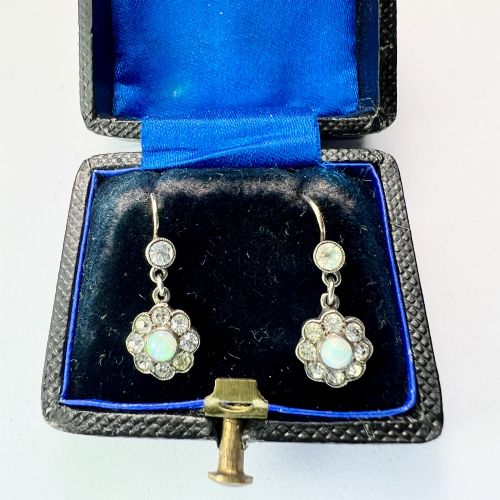


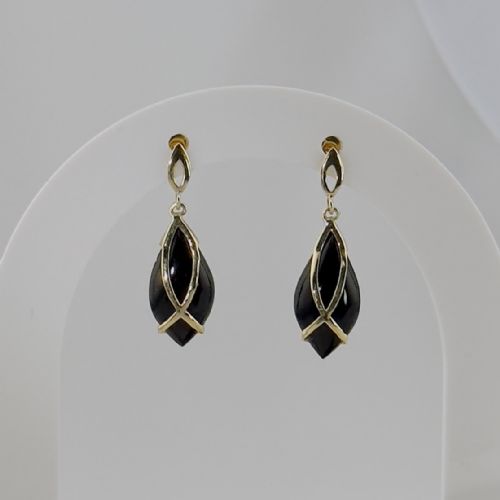

Antique Wire Drop Earrings
Antique wire drop earrings bring kinetic movement and period charm to the ear, spanning Regency, Victorian, Edwardian, and mid-century designs.
Antique Wire Drop Earrings
When searching for antique wire drop earrings, collectors encounter a diverse array of dangling forms suspended from secure wire fastenings. These pieces range from restrained Regency and Victorian iterations to decorative Edwardian and Art Deco creations.
Earrings in this category utilise various suspension methods, including standard wire hooks and specialised findings tailored for pierced ears. The forms vary from simple spherical crystals and floral motifs to substantial geometric clusters.
How they were made
Maker's hands shaped these pieces using gold, silver, and platinum alongside organic materials such as coral, tortoiseshell, and Whitby jet. Goldsmiths combined precious metals with gemstones like garnet, amethyst, sapphire, and diamond.
Construction techniques involve delicate wirework, prong settings, and metal casting to secure stones and carved cameos. Artisans utilised silver gilt and pinchbeck alongside solid 9ct and 15ct yellow and white gold to form the structural drops.
Some Victorian birds might have envied these pieces, given the popularity of delicate acorn and ivy leaf motifs dangling from the ear.
What varies in quality
The standard of these pieces rests on the precision of the metalwork and the integration of the drop mechanism. Superior examples display balanced weight, secure stone settings, and harmonious proportions between the wire fastening and the hanging element.
Material selection significantly influences the distinction between pieces, with natural gemstones and well-carved organic elements commanding greater attention. The integrity of the original wires and the crispness of decorative motifs further separate finer items from standard production.
Knoll and Pregizer
The Antique Wire Drop Earrings Glossary
- Drop earrings
- Earrings featuring a component that hangs below the earlobe. They introduce movement and elongate the wearer's silhouette.
- Pinchbeck
- An alloy of copper and zinc developed to imitate gold. It provides a warm metallic tone without utilising precious metal.
- Silver gilt
- Silver coated with a thin layer of gold. This technique offers the appearance of solid gold while maintaining a silver base.
- Cabochon
- A gemstone shaped and polished with a smooth, rounded surface rather than faceted edges. This cut highlights the natural colour and depth of stones such as garnet.
Antique Wire Drop Earrings: Frequently Asked Questions
How do I clean antique wire drop earrings safely?
Clean metal and durable gemstones using a soft cloth and mild soapy water, avoiding harsh chemical dips that damage organic materials like coral or tortoiseshell.
Dry each piece thoroughly before storage to preserve the integrity of the wire settings and prevent moisture retention.
Are these earrings suitable for daily wear?
Many antique drops function well for regular use if handled with care, though delicate wirework and softer organic elements require mindful placement.
Removing them during physical activity or sleep prevents accidental bending of the vintage wires.
How can I identify the period of drop earrings?
Period identification relies on observing material choices, gemstone cuts, and manufacturing techniques characteristic of eras like the Victorian or Edwardian periods.
Stylistic motifs such as Aesthetic Movement geometry or Art Deco symmetry offer further clues to the date of creation.
What metals are commonly found in these earrings?
Listings feature items fashioned from silver, platinum, and various grades of gold, including 9ct, 15ct, and 18ct white and yellow gold.
Alternative metallic compositions such as silver gilt and pinchbeck also appear across different periods.