


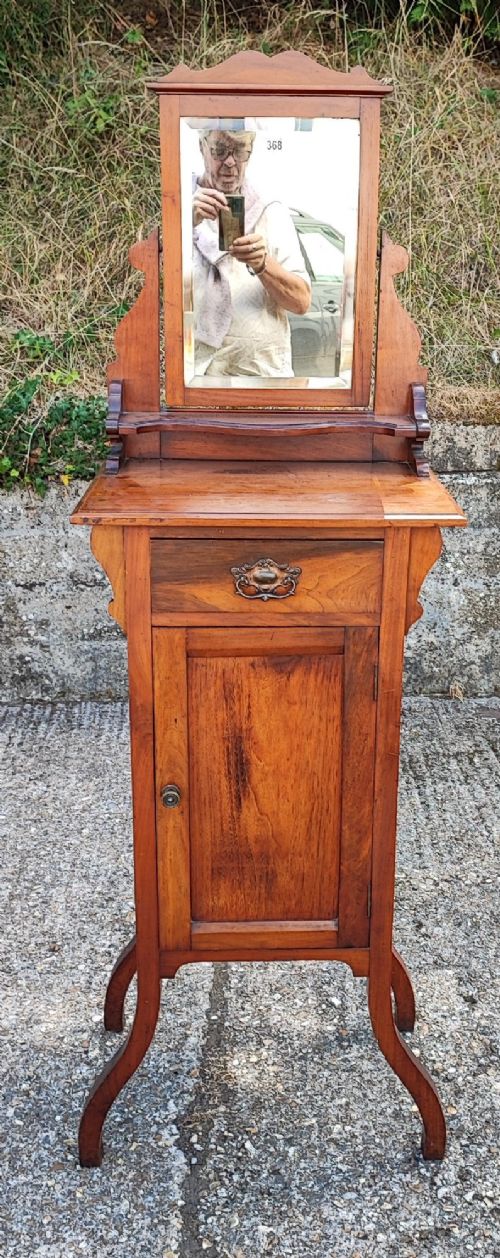

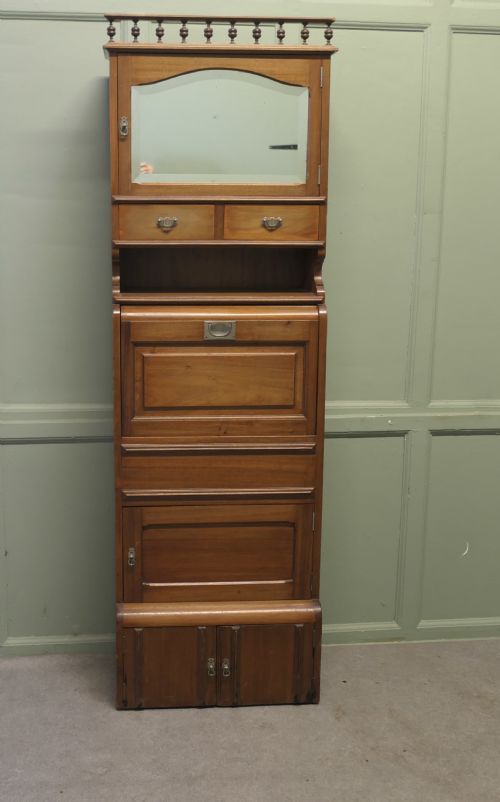
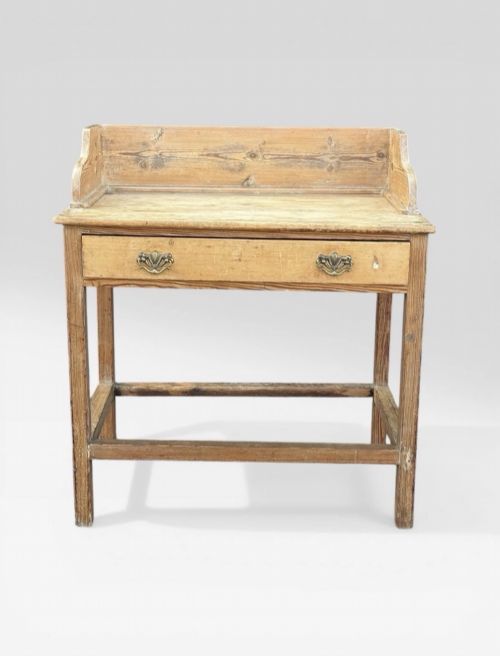
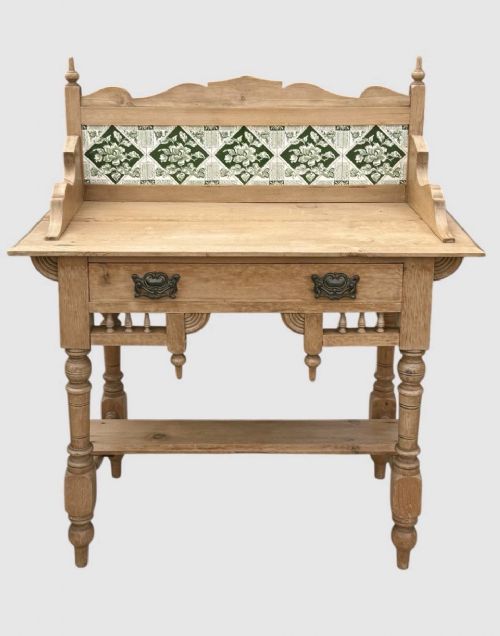
Antique Washstand Unit
An antique washstand unit brings period timber and marble into a bedroom, offering a solid surface designed for morning ablutions.
Antique Washstand Unit
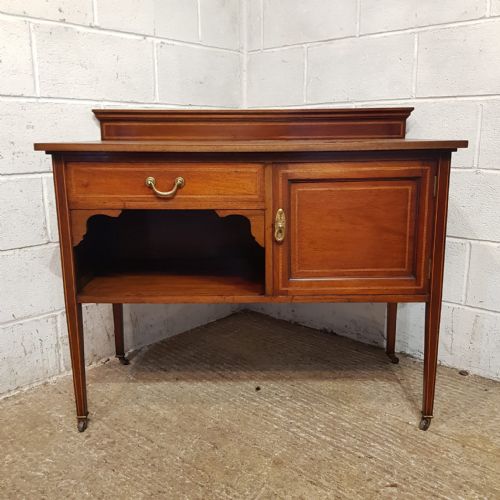
An antique washstand unit is a practical piece of bedroom furniture designed to hold a basin and jug before running indoor plumbing became common. These items surface frequently from the nineteenth century and the Edwardian period, often constructed in mahogany, pine, or walnut.
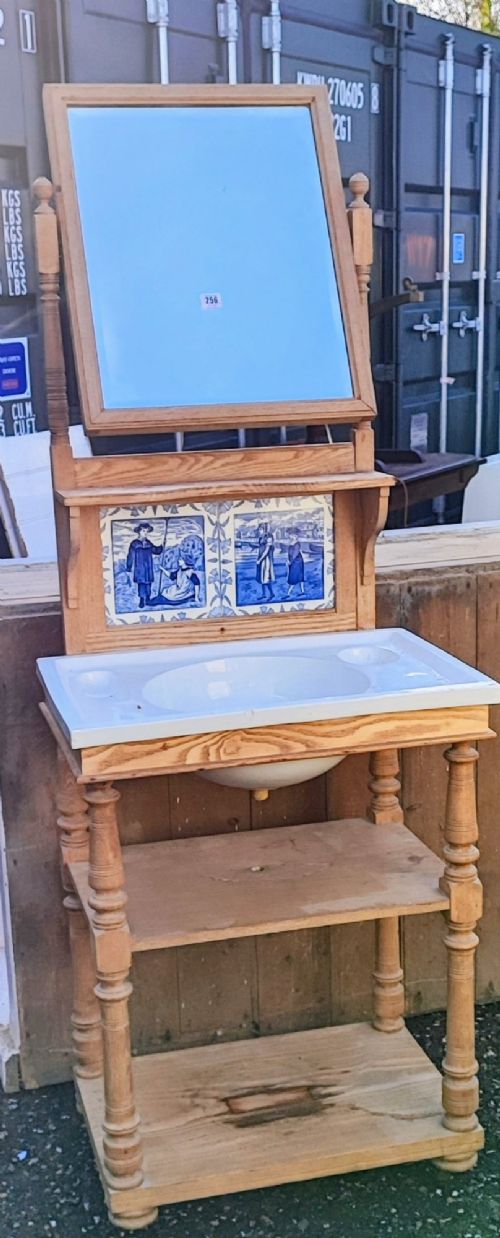
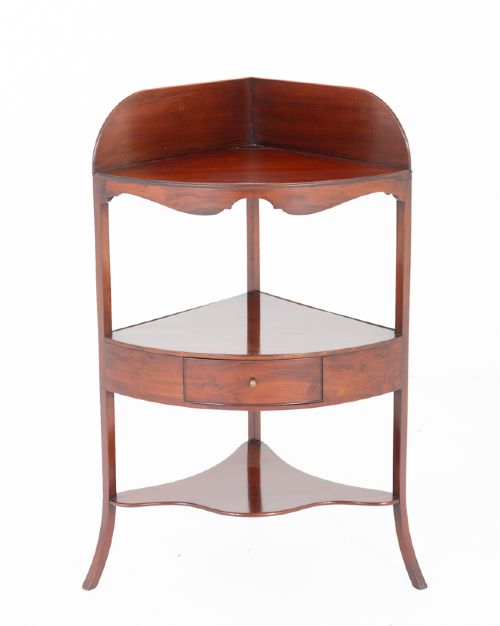
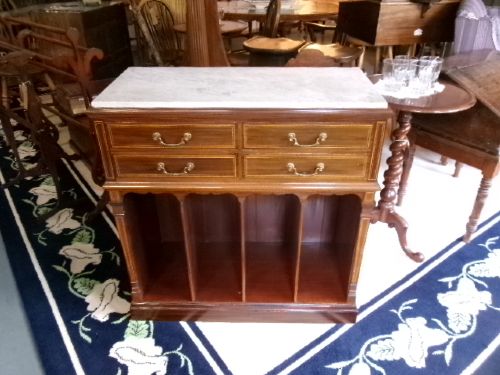
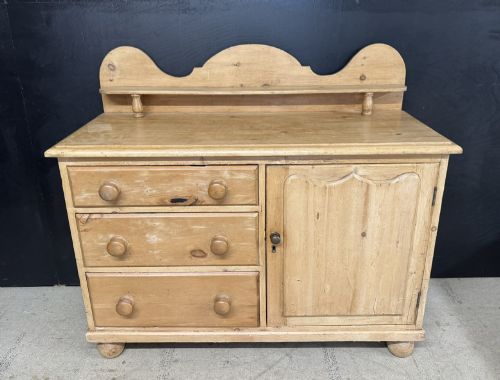
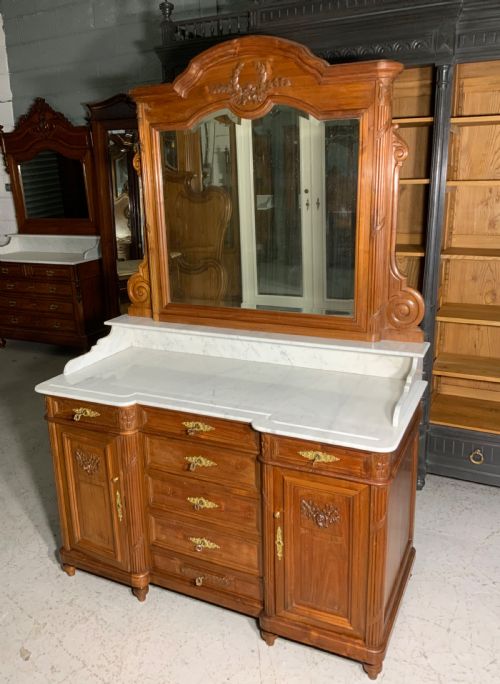
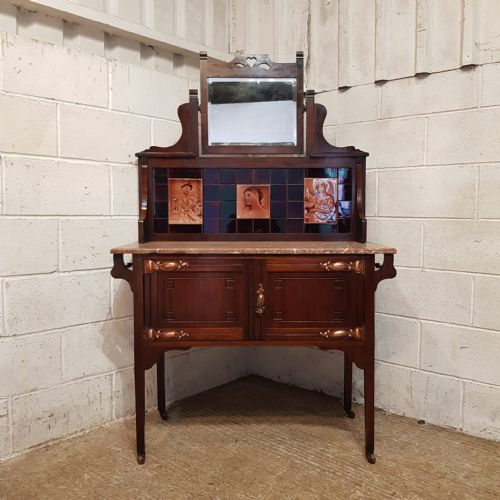
The versions met most often on this page range from modest nineteenth century pine pieces to grander Edwardian examples fitted with marble tops and tiled splashbacks. Corner units, campaign designs, and French styles also appear, reflecting the diverse domestic and marine settings where these cabinets once stood.
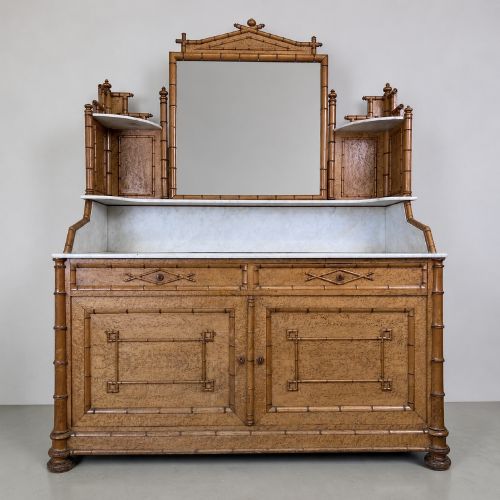
Makers such as Gillows and James Shoolbred produced notable iterations, combining functional storage with refined cabinetwork. Whether rendered in oak, satinwood, or faux-bamboo maple, each piece demonstrates the shift from utilitarian bathroom furniture to decorative bedroom appointments.
Materials and construction methods
Cabinetmakers relied on hardwoods like mahogany, walnut, and oak alongside softer utility timbers such as pine and satinbirch. These woods were turned, carved, or inlaid to suit prevailing tastes from the Georgian era through the Arts and Crafts and Aesthetic movements.
Marble slabs and ceramic inserts provided durable, waterproof surfaces for holding water basins and grooming items. Brass hardware, glass elements, and forged iron details completed the construction, ensuring the timber resisted daily moisture exposure.
Antique Washstand Unit Retail Price Guide 2026
Typical asking prices for washstand unit among the pieces listed under this phrase on Sellingantiques today, from the lower quarter to the upper quarter. They describe what is for sale here now, not the wider market.
Listings feature pieces spanning the Georgian era through the 1920s, constructed in mahogany, pine, marble, and brass.
Distinctions in craftsmanship
The grade of timber selection and the precision of the joinery mark the difference between standard utilitarian pieces and high-end commissions. Master workshops employed finely figured veneers, crisp carving, and integrated tile work that elevated a simple wash station into a statement of interior design.
James Shoolbred·Gillows
The Antique Washstand Unit Glossary
- Campaign washstand
- A portable piece designed for travel, often featuring folding frames and dismantling parts. These units allowed officers and travellers to maintain personal hygiene away from permanent residences.
- Marble top
- A stone slab fitted to the upper surface to prevent water damage during washing. This material provided a cool, impermeable workspace that endured daily splashes.
- Splashback
- A raised panel at the back of the washstand, sometimes incorporating decorative tiles. It protected bedroom walls from water spray.
- Etagere
- An open piece of furniture with multiple tiers for displaying small items. In bedroom settings, these structures offered accessible storage alongside washing facilities.
- Faux-bamboo
- A decorative wood-turning technique that mimics the segmented appearance of bamboo canes. This finish gained popularity during the nineteenth century under Asian design influences.
Antique Washstand Unit: Frequently Asked Questions
What is an antique washstand unit?
An antique washstand unit is a piece of nineteenth century or Edwardian bedroom furniture created to hold a water basin and washing accessories before modern plumbing arrived.
These pieces typically feature timber frames made from mahogany, pine, or walnut, often paired with marble tops or tiled splashbacks to protect surrounding walls.
How were washstands used originally?
In the days before fixed bathrooms, individuals used these stands for morning washing and shaving in the bedroom or dressing room.
Cabinets enclosed chamber pots or storage space for ewers, basins, and grooming tools, keeping personal care items neatly contained.
How do I style a washstand today?
These cabinets adapt well to modern bathrooms or hallways as distinctive console tables, plant stands, or sink surrounds.
The marble tops and wooden shelves provide functional surfaces for display while introducing period character into contemporary interiors.
How do I date a washstand?
Dating relies on identifying the prevailing style, timber choices, and construction methods associated with specific eras like the Georgian period or the Edwardian age.
Stamped signatures, campaign brasses, and specific movements such as Arts and Crafts further narrow down the exact period of manufacture.