





Antique Warship Art
These antique warship art pieces capture naval might and maritime history across centuries, offering collectors a direct link to historic fleets and seafaring battles.
Antique Warship Art
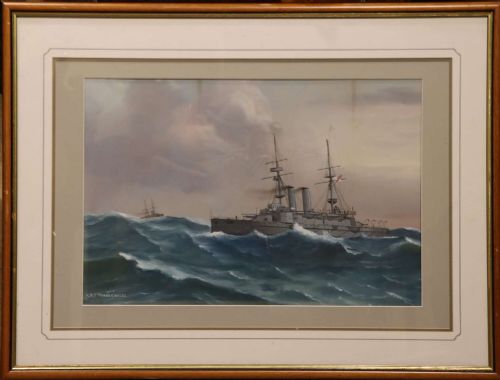
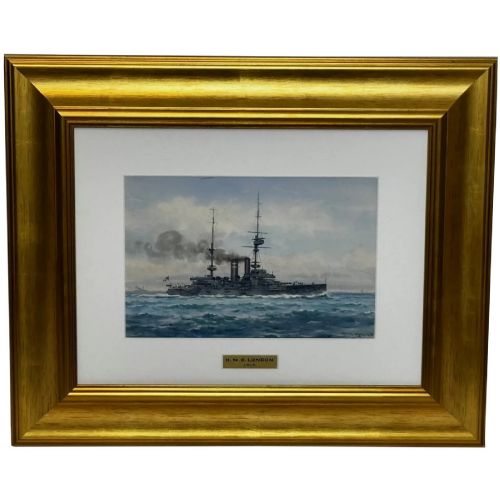
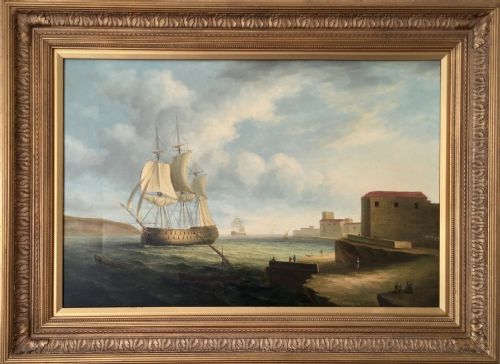
When you search for antique warship art, you encounter a focused record of naval history rendered through paintings, models, and framed prints. The selection spans centuries of maritime engagements and fleet reviews, depicting specific vessels like the HMS Prince of Wales and HMS London alongside anonymous galleons.
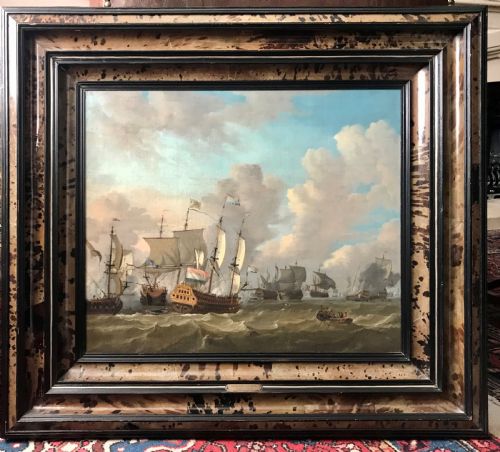
The pieces on this page lean heavily towards the Edwardian era and the nineteenth century, reflecting significant naval power through detailed oil paintings, watercolours, and gouache. You will find both intimate watercolours of individual destroyers and grand oil paintings on canvas or panel depicting sea battles.
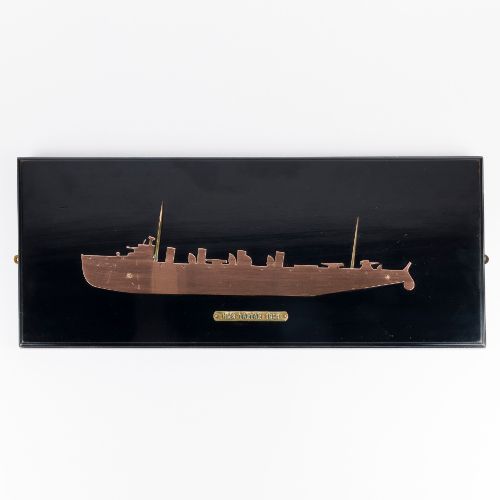
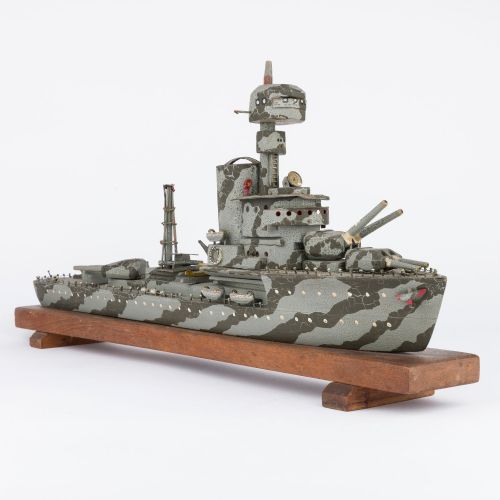
Beyond paintings, the category encompasses tangible items such as scale models of Royal Navy battleships and commemorative wall plaques dedicated to specific vessels. These diverse forms allow you to choose between flat visual art and three-dimensional representations of historic warships.
Materials and methods
Artists rendering these naval subjects utilised oil on canvas and panel, watercolour on paper, and gouache to capture the intricate rigging and hulls of warships. These liquid media allowed for precise control over the stormy seas and calm harbours often depicted behind the vessels.
Makers also constructed detailed scale models from wood and framed works with gilded wood surrounds to preserve paper lithographs and prints. Such framing protected delicate watercolours from atmospheric damage while enhancing their presentation on the wall.
Antique Warship Art Retail Price Guide 2026
Typical asking prices for warship art among the pieces listed under this phrase on Sellingantiques today, from the lower quarter to the upper quarter. They describe what is for sale here now, not the wider market.
One French Navy tribute includes a sailor's sentimental painted farewell to his shipmates, proving that even ironclad battleships carry deep personal romance.
Markers of quality
Quality in these depictions rests on the artist's accuracy in rendering naval architecture, ordnance, and rigging, separating careful studies from generic maritime scenes. Works that name specific vessels, such as the HMS Nairana or HMS Tartar, often carry stronger historical resonance.
The handling of light on water and the atmospheric tension of a sea battle or fleet review distinguish accomplished marine art from more rigid workshop production. Original media like oil and early gouache show greater depth than later mechanical prints.
James Hardy·Frank Watson·Vincenzo D Esposito·Abraham Storck
The Antique Warship Art Glossary
- Gouache
- An opaque watercolour paint that dries to a matte finish, frequently utilised in maritime works to render bright highlights on hulls and water.
- Panel
- A rigid support substrate, often wood, used by artists instead of canvas for oil paintings during the nineteenth century and earlier.
- Lithograph
- A print produced from a flat stone or metal plate, allowing for multiple impressions of a popular warship subject.
- Galleon
- A large sailing warship used by European nations from the sixteenth to the eighteenth centuries, commonly seen in older marine paintings.
- Ironclad
- A steam-propelled warship protected by iron or steel armour plates, appearing in works from the later nineteenth and early twentieth centuries.
Antique Warship Art: Frequently Asked Questions
How do I identify the ship in a painting?
Look for painted inscriptions on the canvas, labels on the reverse of the frame, or flags flying from the masts that denote specific naval signals or national ensigns. Many nineteenth and twentieth-century works explicitly name the vessel, such as HMS Blenheim, within the title or lower margin.
Researching the vessel's operational dates helps confirm the period of the artwork. Naval records often match the depicted class of ship to the artist's active working years.
Where should I hang these maritime paintings?
Keep these works away from direct sunlight and damp environments to protect paper supports, watercolours, and wooden frames from warping or fading. Wall placement should also account for the weight of larger oil paintings on canvas or heavy wood panels.
Select a room with stable temperature and humidity levels to preserve both the painted surface and any original gilded wood framing. Proper lighting using low-heat LED bulbs prevents thermal damage over time.
What is the difference between gouache and oil?
Gouache is a water-based medium that produces a flat, opaque surface, whereas oil paint utilises a drying oil binder that offers rich depth and texture. Oil paintings on canvas or panel typically display visible brushstrokes and a heavier impasto.
Works on paper using gouache or watercolour require protective glass framing to prevent surface abrasion. Oil paintings on canvas generally remain unglazed to let the texture of the weave breathe.