

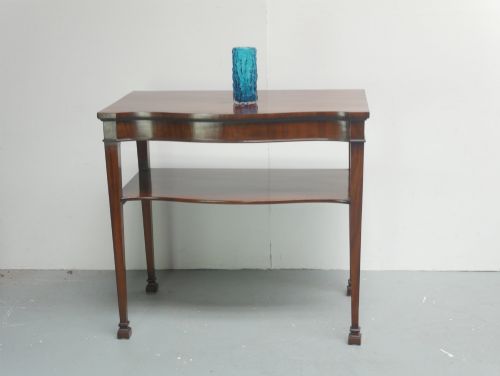
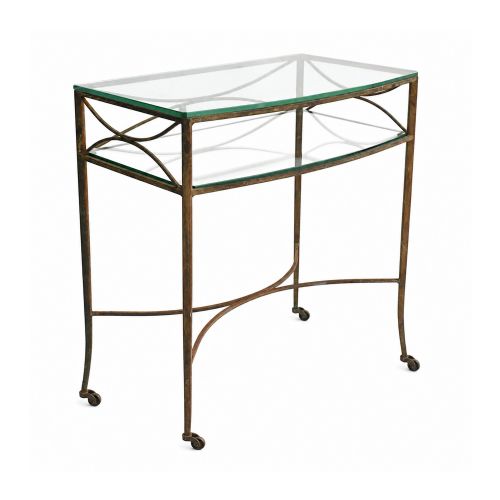


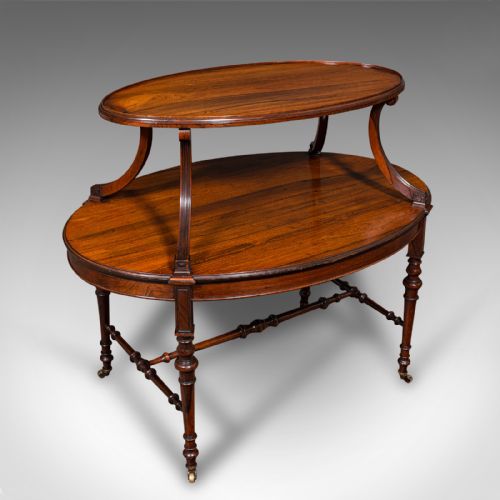
Antique Two Tier Console
An antique two tier console provides practical surface space across two distinct levels, bringing architectural depth and timeless utility to any hallway or reception room.
Antique Two Tier Console
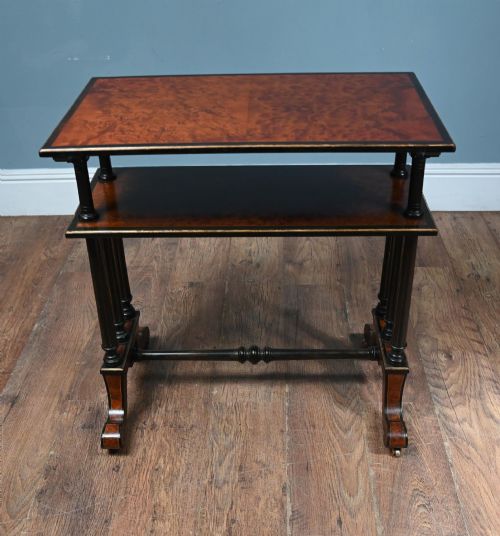
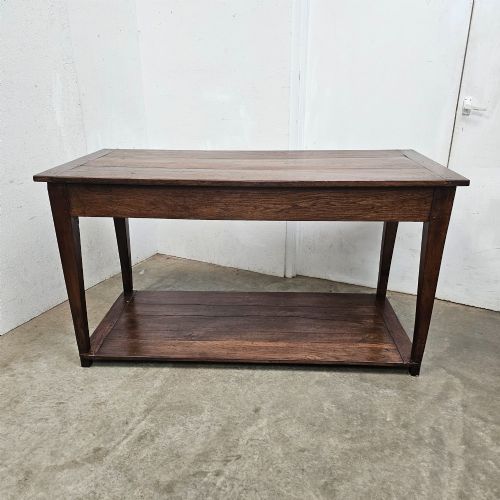
When searching for an antique two tier console, buyers encounter a diverse selection of multi-level side tables, serving tables, and work tables spanning the nineteenth and early twentieth centuries. These pieces emerge in various domestic and commercial forms, including French work tables, Aesthetic Movement rectangular tables, and Edwardian side tables.
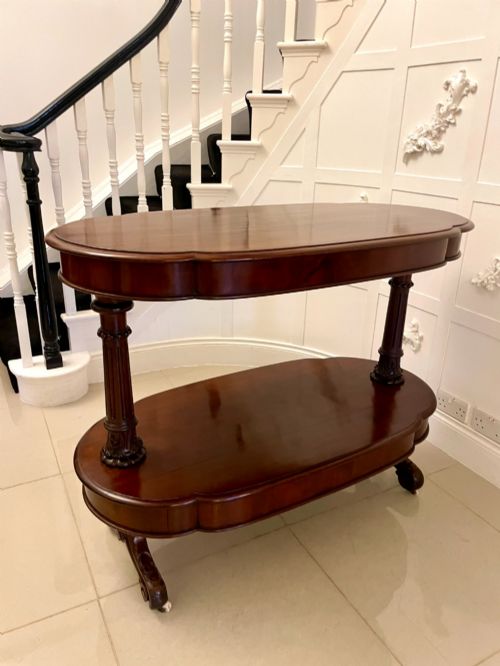
The inventory on this page draws heavily from Victorian and Edwardian periods, alongside Regency and earlier styles, constructed from robust timbers like mahogany and oak. Many examples serve specific historical functions, ranging from drapers' and tailors' display tables to dumb waiters and hall tables.
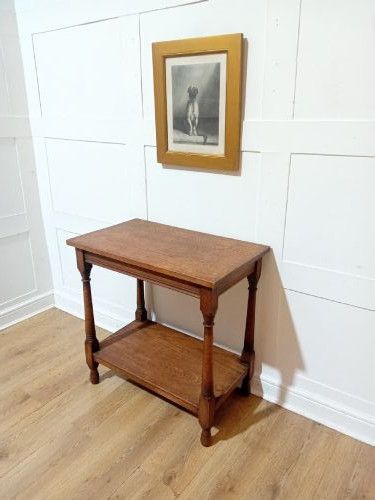
Buyers are most likely to meet mahogany and oak variations featuring a primary top surface complemented by a lower shelf or tier. These surfaces range from rectangular serving formats to occasional tables designed for compact spaces.
Materials and construction methods
Construction relies heavily on traditional cabinet timbers, predominantly mahogany, oak, and walnut, frequently accented with ebonised wood, satinwood, fruitwood, and alder. Cabinetmakers utilised solid woods and selected veneers to build sturdy frames capable of supporting dual display tiers.
Surface ornamentation and detailing involve specialised techniques such as carving, parcel gilt, marquetry, and inlay work, alongside structural elements in brass and cast-iron. These methods reflect the diverse stylistic influences of the periods, from French provincial workshops to English cabinet makers.
Antique Two Tier Console Retail Price Guide 2026
Typical asking prices for two tier console among the pieces listed under this phrase on Sellingantiques today, from the lower quarter to the upper quarter. They describe what is for sale here now, not the wider market.
Listings feature pieces spanning from the Regency period through to Edwardian times, constructed in mahogany, oak, walnut, and ebonised wood.
Assessing quality in multi-tier tables
Quality in these pieces is dictated by the selection of timber and the precision of the joinery connecting the upper and lower tiers. Superior examples display thoughtful grain matching and robust structural integrity across both levels.
Refinement in secondary details, such as carved mouldings, inlay work, and the integration of drawers or brass fittings, separates standard utility items from exceptionally finished console and serving tables.
The Antique Two Tier Console Glossary
- Console table
- A table designed to stand against a wall, frequently secured or supported by brackets, though many antique variants are freestanding.
- Etagere
- A piece of furniture consisting of a set of open shelves for displaying small objects, appearing in late Victorian and Edwardian interiors.
- Dumb waiter
- A tiered serving table or stand used for holding dishes and silverware without the need for immediate servant attendance.
- Marquetry
- Decorative veneer work formed by small pieces of wood or other materials fitted together to create pictorial or geometric surface patterns.
- Parcel gilt
- A finishing technique where portions of an object are partially gilded with gold leaf over the underlying timber or paint.
Antique Two Tier Console: Frequently Asked Questions
What is an antique two tier console used for?
These pieces function primarily as side tables, serving surfaces, or display stands in hallways and reception rooms. The secondary lower shelf provides additional storage or display capacity.
Historically, similar tiered tables served dining rooms as dumb waiters or supported work in nineteenth-century French shops.
How do I date an antique two tier console?
Dating relies on identifying stylistic markers, timber choices, and construction techniques associated with periods like the Regency, Victorian, or Edwardian eras. Aesthetic Movement pieces often display distinct geometric or ebonised details from the late nineteenth century.
Examining secondary woods and fixing methods helps confirm whether a piece originates from the nineteenth century or early twentieth century.
Where should I place a two tier console?
They suit entrance halls, living rooms, and dining spaces where a narrow footprint is required alongside functional surface area. Freestanding variations also work effectively away from walls.
The lower tier allows for books, decorative objects, or baskets while keeping the upper surface clear.
What woods are common in these tables?
Mahogany and oak appear most frequently across the listed periods, offering durability and rich grain patterns. Walnut, satinwood, and fruitwood are also utilised for finer decorative examples.
Some industrial or specialised pieces incorporate cast-iron or brass alongside timber.