

Antique Turned Candlesticks
These antique turned candlesticks bring warmth and height to a room through centuries of timber and metal craftsmanship.
Antique Turned Candlesticks
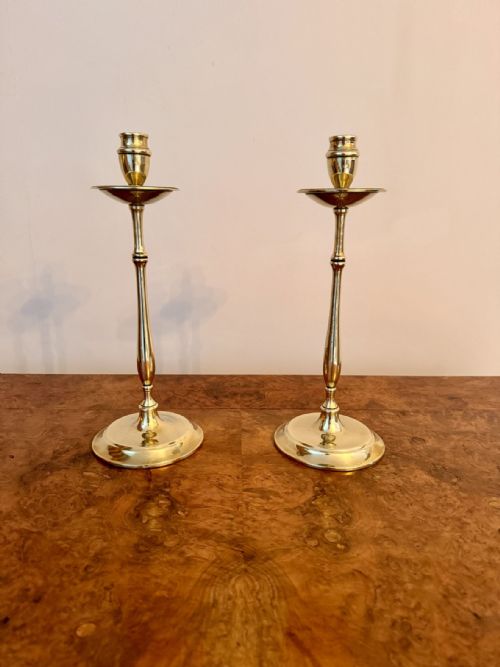
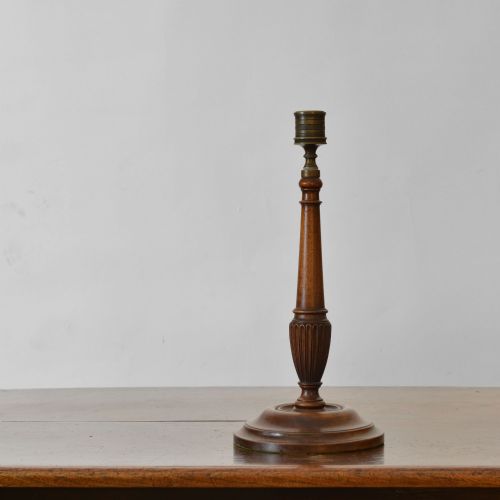
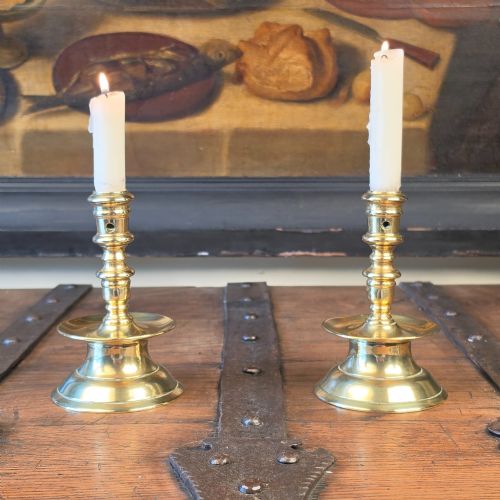
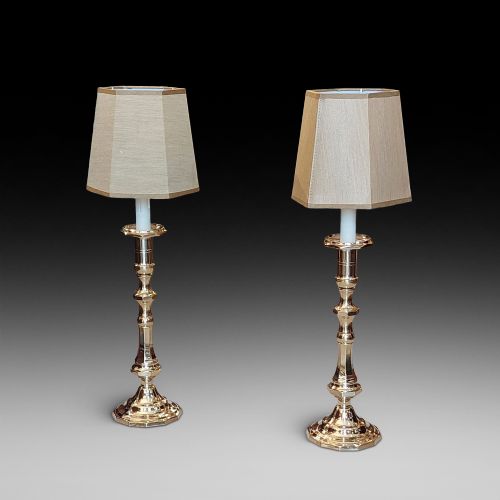
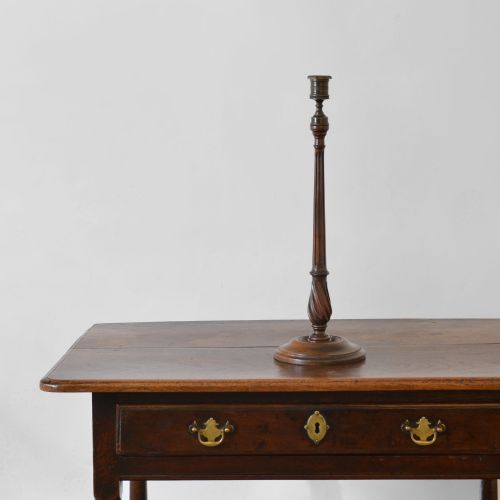
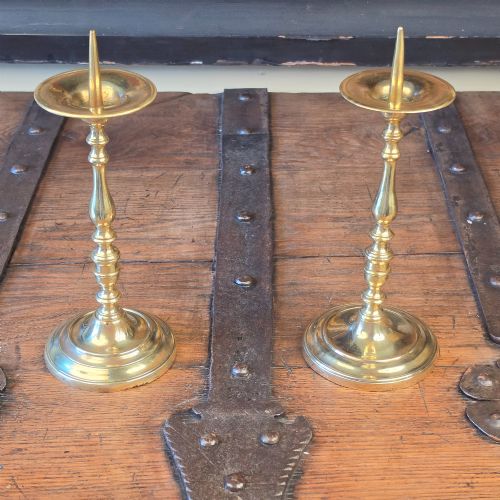
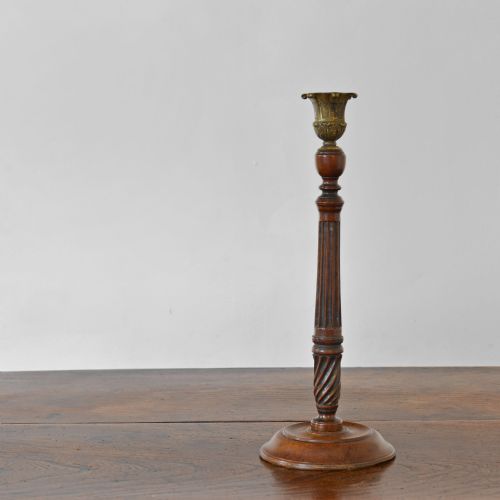
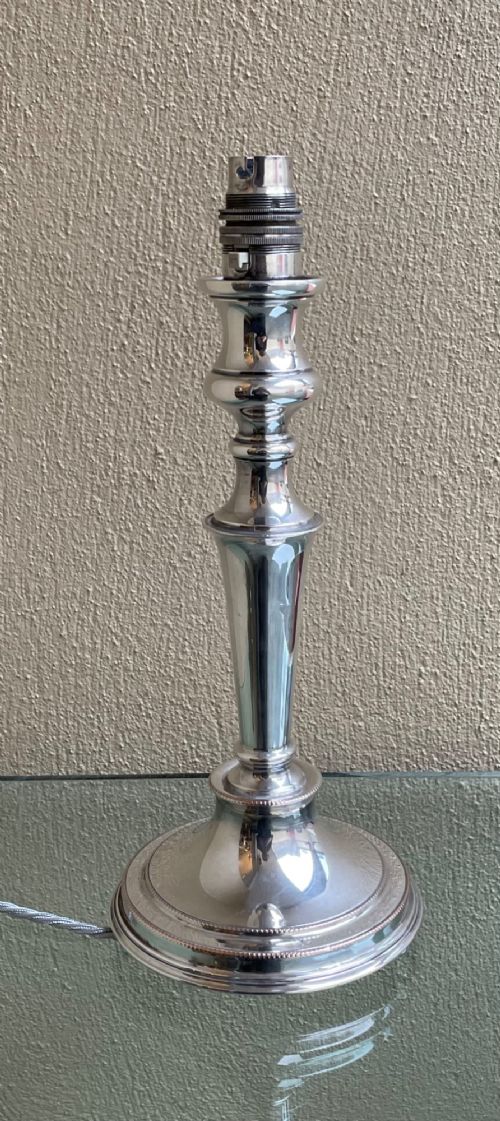
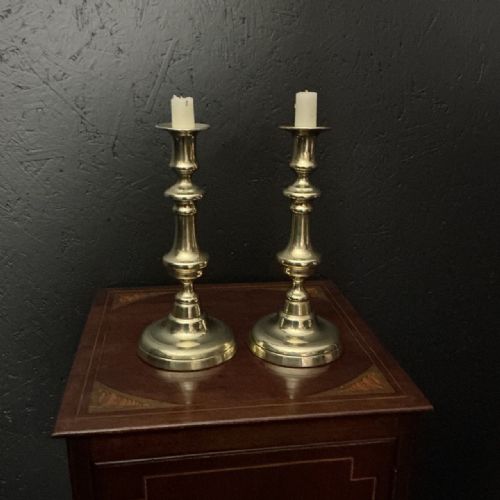
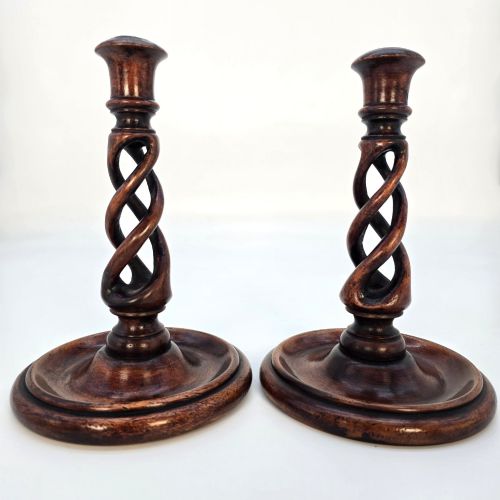
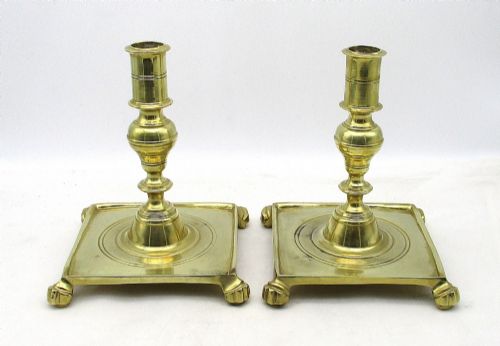
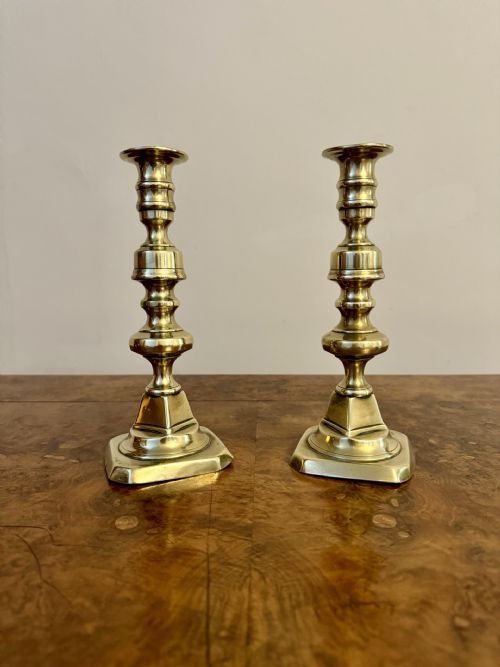
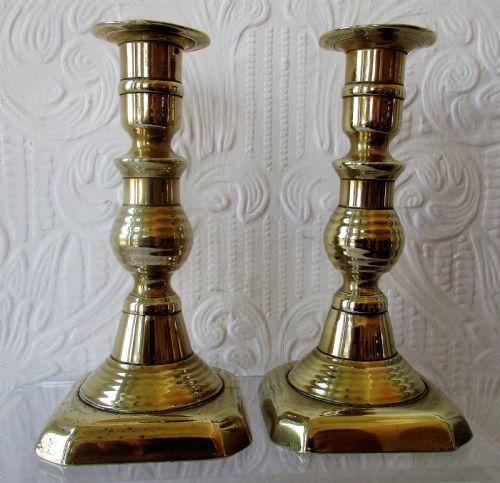
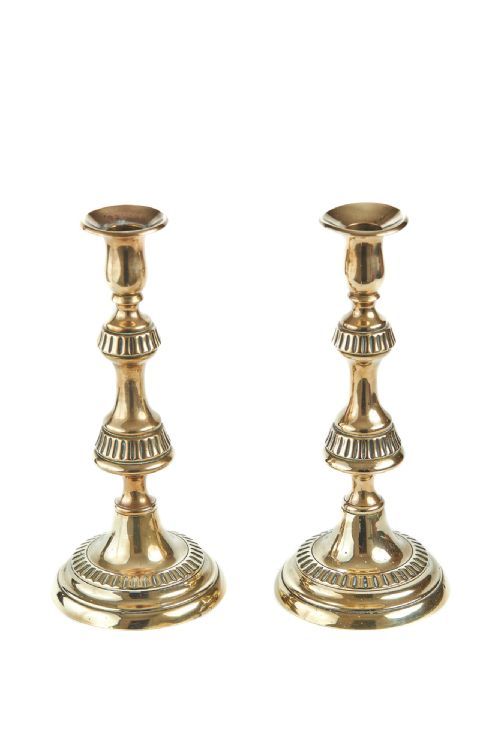
When you search for antique turned candlesticks, you encounter objects shaped on a lathe from wood, brass, and silver plate, spanning the Georgian, Victorian, and Edwardian eras. The selection on this page relies heavily on brass examples from the nineteenth century, alongside mahogany, oak, fruitwood, and walnut pieces.
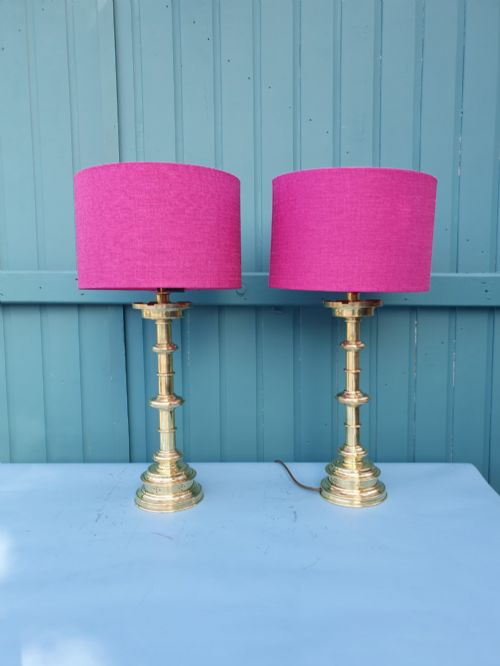
Forms range from standard table candlesticks and ejector models to larger torcheres, candlabra, and converted table lamps. Pairs dominate the listings, alongside occasional single pieces intended for desks or side tables.
What varies in quality
The standard of a turned candlestick rests on the crispness of its lathe work and the weight of the material in the hand. Substantial brass castings and tightly grained hardwoods maintain sharper mouldings and turnings than softer, worn alternatives.
Proportion and balance dictate the visual success of the piece, particularly in taller torcheres and slender candlesticks where the stem meets a weighted or stepped base.
Antique Turned Candlesticks Retail Price Guide 2026
Typical asking prices for turned candlesticks among the pieces listed under this phrase on Sellingantiques today, from the lower quarter to the upper quarter. They describe what is for sale here now, not the wider market.
Listings span multiple centuries from Georgian mahogany items to Edwardian brass table lamps.
Frederick J Smith & Co·Abel Landry
The Antique Turned Candlesticks Glossary
- Turned
- Shaped on a lathe by rotating timber or metal against a cutting tool to create circular profiles. This method produces the characteristic rings and flutes seen on stems and bases.
- Treen
- Small handmade wooden household objects collected for their patina and grain. Turned candlesticks and lamp bases often fall into this category.
- Ejector
- A concealed internal mechanism operated by a slide or lever to push a stubborn candle remnant out of the socket. This device appears frequently on nineteenth-century brass examples.
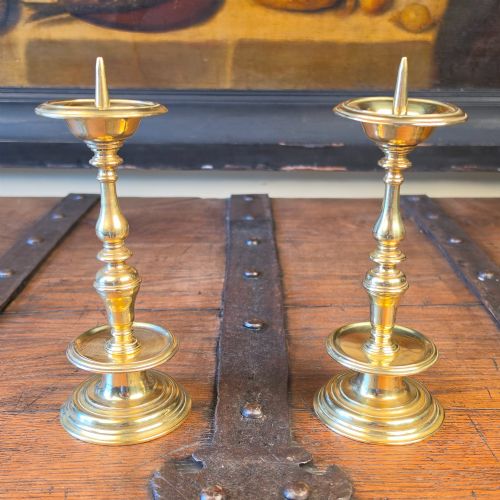
- Pricket
- A sharp metal spike set in the drip pan to impale a candle rather than dropping it into a socket. This medieval form is mirrored in later revival pieces.
- Torchere
- A tall freestanding wooden stand or candlestick designed to elevate a light source. Examples in this category often feature carved or turned pinewood shafts.
Antique Turned Candlesticks: Frequently Asked Questions
How do I date an antique brass candlestick?
Dating relies on construction methods, base weights, and style revivals recorded across the nineteenth and early twentieth centuries. Push-up ejector mechanisms and distinct casting seams often point toward specific decades in the Victorian era.
Material composition and patination also guide the timeline, as brass formulas and finishing techniques shifted between the Georgian period and the Edwardian age.
Were these candlesticks converted to lamps?
Many examples are adapted to electricity while retaining their original turned wooden or brass shafts. These converted table lamps blend period turned forms with modern wiring.
Original candlesticks often retain their hollow sockets or prickets, while lamp bases feature drilled channels or fitted collars for electrical cords.
What is an ejector candlestick?
An ejector candlestick incorporates a small sliding lever on the side or stem connected to an internal disk. Pushing this lever upward raises the remaining candle stub for easy removal.
This practical innovation became common in nineteenth-century brass production to prevent stuck wax.
How do I care for turned wood candlesticks?
Wooden and treen pieces require protection from direct sunlight and sudden humidity changes to prevent timber splitting. A light application of appropriate wax maintains the historic finish without building up residue.
Metal components like brass benefit from occasional dust removal using a soft cloth rather than aggressive chemical polishing.