




Antique Trumpet Work Box
An antique trumpet work box brings together clever Victorian engineering and elegant timber in a distinctive pedestal form designed for needlework.
Antique Trumpet Work Box
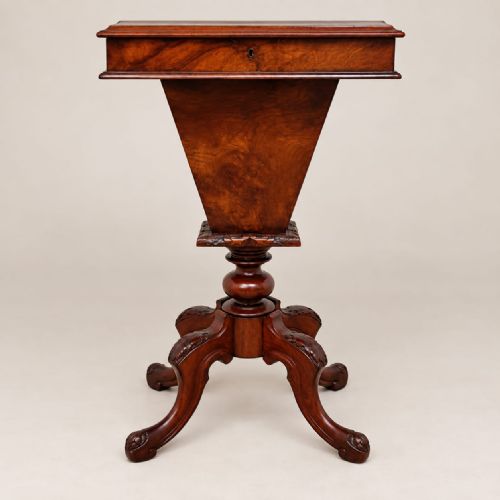
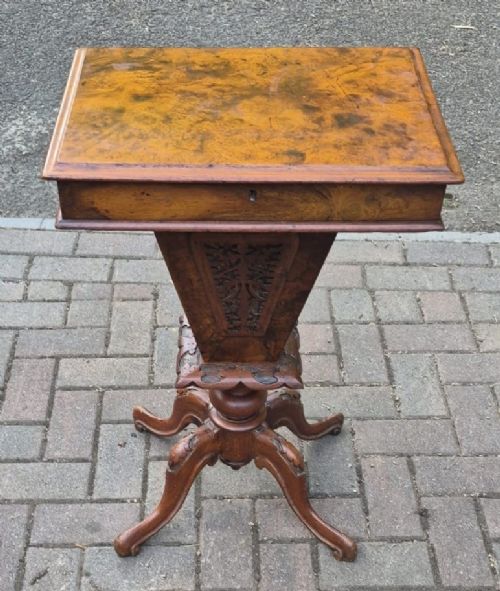
An antique trumpet work box is a specialised piece of sewing furniture, most commonly encountered from the Victorian period, featuring an octagonal or hexagonal body that flares outward toward the base like the bell of a musical instrument. These pieces rest upon a tripod support and typically incorporate a fitted interior beneath the lid to house threads, needles, and small tools.
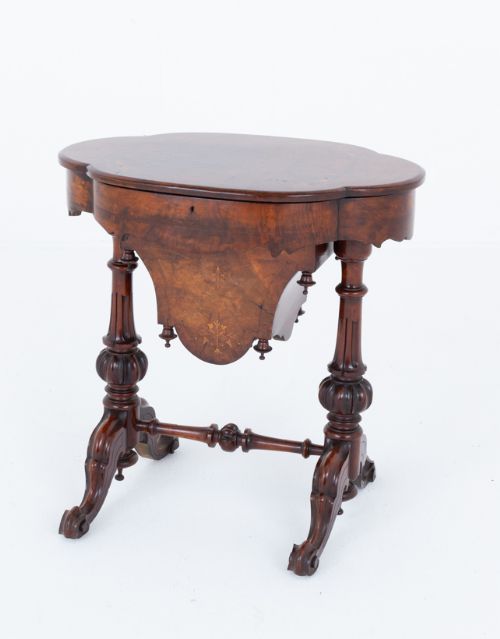
The selections span various forms including work tables, sewing tables, and games tables, predominantly constructed during the mid-to-late nineteenth century. Walnut, burr walnut, and rosewood dominate the material record, frequently enriched with marquetry or boxwood inlay upon the top surface.
Makers of the era utilised distinct regional timbers as well, with examples appearing in Irish yew wood alongside the standard walnut and mahogany variants. The internal compartments often feature divided trays and silk catch-bags suspended below to hold ongoing needlework projects.
Distinctions in quality
Quality in these pieces depends heavily on the choice of timber veneer and the crispness of the marquetry inlay on the lid. Superior examples display carefully matched burr walnut figures that wrap symmetrically across the octagonal panels.
Internal joinery and the preservation of the fitted compartments further separate standard production from finer workshop output. The complexity of the tripod carving and the integrity of the original pedestal structure also dictate the standing of an individual piece.
Recorded periods span from the William IV era through the height of the Victorian epoch, with notable focus on the eighteen-fifties and sixties.
The Antique Trumpet Work Box Glossary
- Burr walnut
- A prized timber harvested from the wart-like growths on walnut trees, yielding intricate, swirling grain patterns. Cabinet makers valued this wood for veneering the primary display surfaces of high-end furniture.
- Marquetry
- The art of applying decorative pieces of veneer to a structure to form intricate patterns or pictures. Craftsmen used contrasting woods such as boxwood to create detailed floral or geometric motifs.
- Tripod base
- A three-legged support system common to pedestal tables of the nineteenth century. This configuration provides steady balance on uneven floors while supporting the flared weight above.
- Fitted interior
- A compartmented tray or layout built beneath the main lid of a sewing box. These sections kept small sewing implements organised and accessible during handcraft tasks.
- Drop-leaf
- A table design featuring hinged flaps that fold down when not in use. This mechanism allowed compact sewing furniture to expand its surface area when required.
Antique Trumpet Work Box: Frequently Asked Questions
What is a trumpet work box?
A trumpet work box is a nineteenth-century sewing cabinet characterised by a wide, octagonal body that tapers down toward a slender stem and tripod base. The flared shape resembles the bell of a musical instrument.
Inside the hinged lid, these pieces contain fitted compartments for sewing tools and wool. Below the main body, a fabric bag often hangs to collect scraps and ongoing textile projects.
How were these boxes used?
Victorian households utilised these pieces primarily for needlework, embroidery, and darning tasks. The upper tray kept needles, threads, and pins neatly organised while the owner sat nearby.
Some variants incorporated chessboard tops or served as occasional tables alongside seating. Their portable nature allowed them to move easily around the principal rooms of a house.
What woods were commonly used?
Walnut and burr walnut represent the most frequently encountered timbers in these designs, accompanied by rich rosewood and occasional mahogany. Cabinet makers enhanced these surfaces with boxwood inlay and marquetry.
Regional variations also introduced materials such as Irish yew wood. The contrasting light and dark grains emphasised the geometric form of the octagonal lids.