



Antique Town Scene
An antique town scene brings home the daily bustle of Georgian lanes, Victorian harbours and continental markets through oil and watercolour.
Antique Town Scene
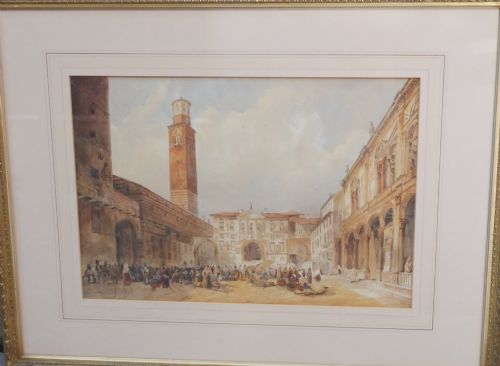
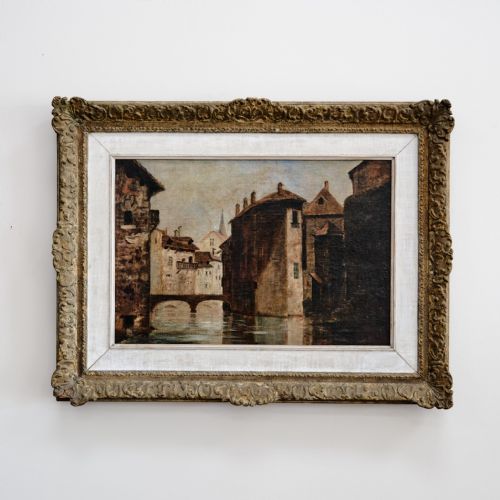
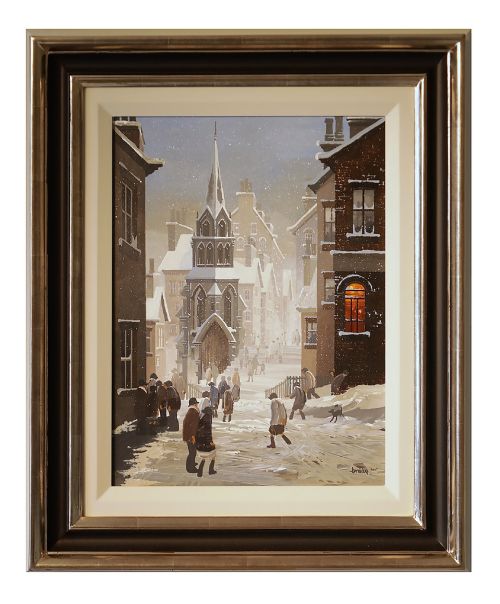
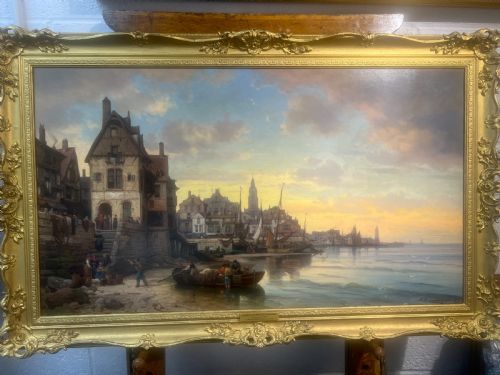
An antique town scene records the architecture, markets and streets of past centuries through oil paintings and watercolours. When you search for an antique town scene, you encounter depictions ranging from late Georgian urban landscapes to Post-Impressionist cathedral views and quiet French village squares.
The pieces on this page span the nineteenth and twentieth centuries, including works by named British and European artists. You will find coastal towns like Whitby alongside continental harbours, captured in media that preserve the atmosphere of earlier eras.
How they were made
Artists painted these scenes using oil on canvas, oil on board, and watercolour pigment on paper. Support materials such as wood and paper provide the foundation for these works, often framed behind glass or highlighted with gold leaf and gesso mouldings.
Techniques range from precise late Georgian topographical rendering to loose Post-Impressionist brushwork and nineteenth-century French school detailing. The application of pigment captures both the architectural precision of townscapes and the play of morning or moonlight light upon stone and water.
Antique Town Scene Retail Price Guide 2026
Typical asking prices for town scene among the pieces listed under this phrase on Sellingantiques today, from the lower quarter to the upper quarter. They describe what is for sale here now, not the wider market.
Listings feature works spanning the Georgian era through the 1960s, executed in oil and watercolour on paper, wood, and canvas.
What varies in quality
Quality rests upon the artist's command of perspective, light and atmosphere within the urban topography. Stronger works convey the genuine bustle and architectural character of a specific street or harbour rather than relying on generic formulas.
The preservation of the medium, whether oil on canvas or watercolour on paper, influences the visual impact of the piece. Contemporary framing using gold leaf and gesso also contributes to the overall presence of the artwork.
Charles Euphraisie Kuasseg·William George Meadows·James Thomas Watts·William Manners·Rowland Henry Hill·V. Zirakian·Walter Emsley·Ludwig Hermann·Fred Lawson·Maurice Asselin·Donald Wood·J. Mitan
The Antique Town Scene Glossary
- Oil on canvas
- Pigment suspended in drying oil applied to a stretched woven fabric support. This traditional medium allows for rich colour blending and textured brushwork.
- Watercolour
- Water-soluble pigment applied to paper to create translucent washes of colour. It requires a high degree of precision as corrections are difficult to make.
- Post-Impressionism
- An art movement extending beyond Impressionism that focuses on symbolic content and expressive use of paint. Artists working in this style often use bold colours and distinct brushstrokes.
- Gesso
- A plaster-like mixture used as a base for paint or moulded into decorative frames. It provides a smooth surface for gilding with gold leaf.
- Topographical art
- Accurate representation of specific physical locations and buildings. These works serve as visual historical records of town layouts and architecture.
Antique Town Scene: Frequently Asked Questions
What subjects appear in antique town scenes?
These artworks depict busy market places, quiet village streets, cathedrals and bustling continental harbours. Artists recorded specific locations ranging from Yorkshire coastal towns to French squares.
Views extend from Georgian urban landscapes to early twentieth-century impressions of morning bustle and moonlight scenes near Lancaster.
How do I date an antique town scene?
Dating relies on architectural styles, clothing of figures in the streets, and the artist's documented working period. Frame styles and medium characteristics also offer chronological clues.
Inscriptions on the reverse or paper labels often record the specific town and the year the artwork was painted.
Where should I hang a town scene painting?
Town scenes suit living rooms, studies and hallways where viewers can examine the architectural details closely. Natural light helps illuminate the brushwork in oil paintings and watercolours.
Keep watercolours away from direct sunlight to prevent the pigments from fading over time.
What is the difference between oil and watercolour town scenes?
Oil paintings use heavy pigments on canvas or board, offering rich textures and deep colour saturation. They often present a heavier, more substantial presence on a wall.
Watercolours on paper provide a lighter, luminous quality, frequently protected beneath glass within a traditional mount and frame.