

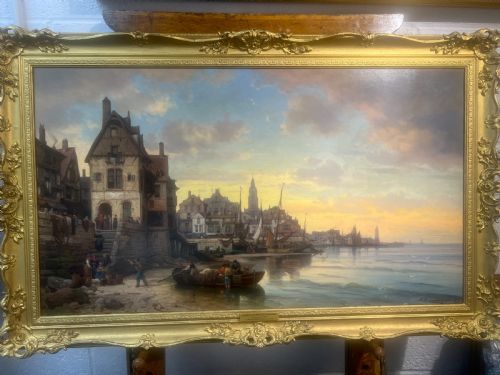


Antique Town Landscape
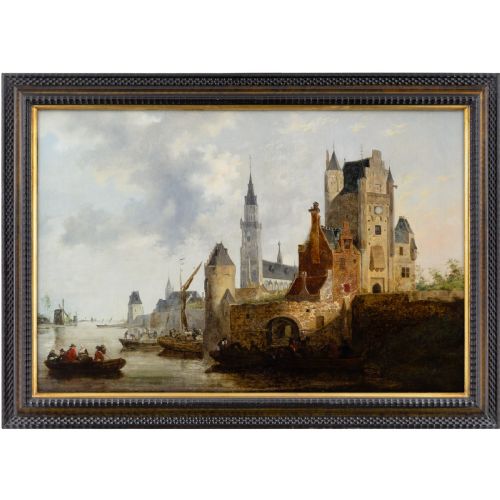
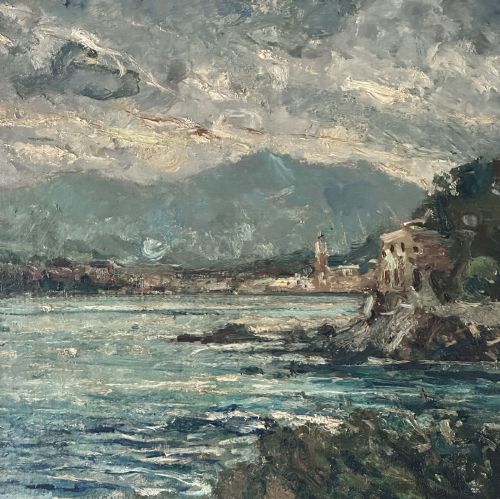
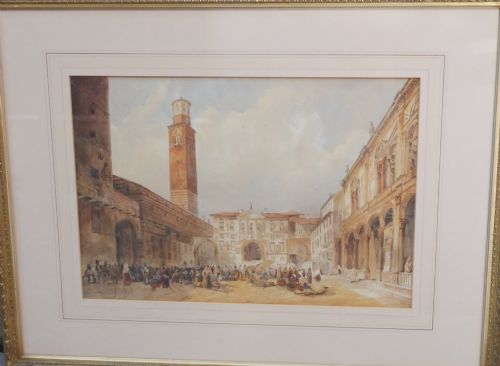
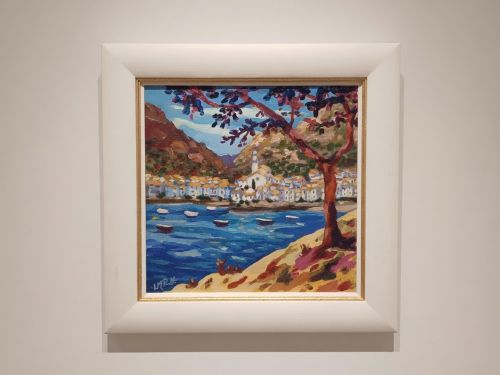
An antique town landscape captures human habitation and civic life on canvas or paper, offering a window into past architectural streetscapes.
Antique Town Landscape
An antique town landscape depicts urban views, streets, harbours, and architectural settings across various historical periods. Buyers seeking this phrase encounter framed artworks that document the physical evolution of towns and cities over past centuries.
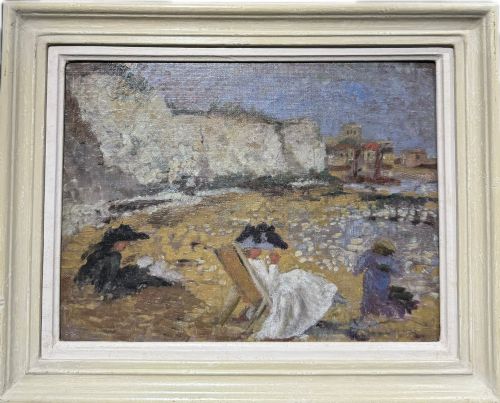
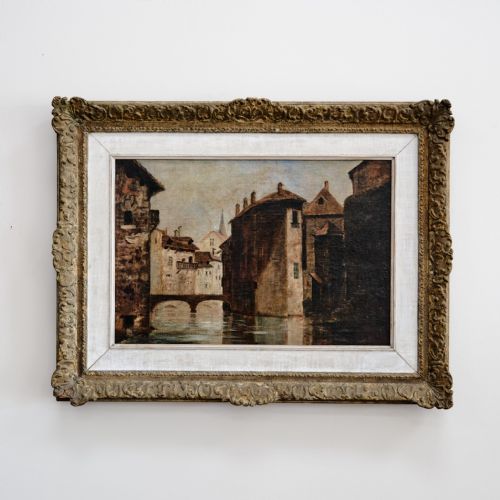
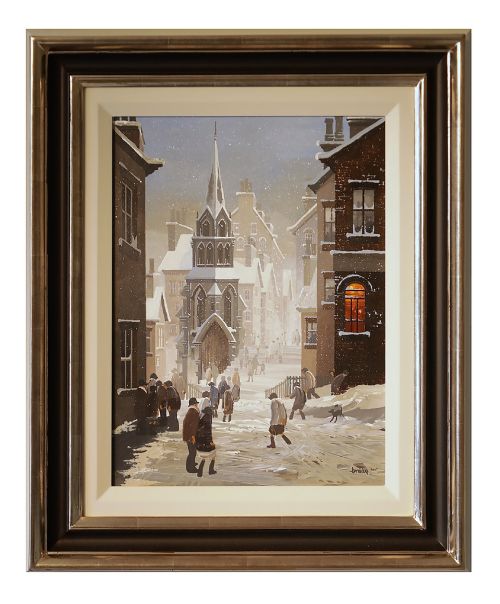
The pieces appearing here span from the Georgian and Victorian eras through to the Edwardian period and early twentieth century. Common subjects include continental European ports, British market places, and coastal harbours recorded in paint or print.
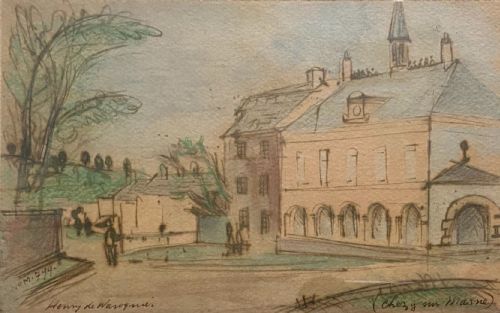
Works range from detailed watercolours on paper to large oil paintings on canvas. Artists capture both bustling morning scenes and quiet rural tracks with towns beyond, reflecting diverse regional styles.
Materials and methods
Makers utilised oil on canvas and oil on board to build rich textures and deep colour fields for urban scenes. Watercolour pigment on paper allowed artists to achieve lighter, more translucent effects when recording architectural details outdoors.
Support materials include prepared canvas stretched over wooden frames, heavy paper sheets, and glass panes used for framing protection. Gold leaf frames often complement the oil paintings from the nineteenth century.
Antique Town Landscape Retail Price Guide 2026
Typical asking prices for town landscape among the pieces listed under this phrase on Sellingantiques today, from the lower quarter to the upper quarter. They describe what is for sale here now, not the wider market.
Several watercolours meticulously record bustling fish markets and quiet town meadows where children once caught minnows.
Evaluating standard and execution
Quality rests upon the artist's handling of perspective, light, and civic atmosphere rather than the mere age of the canvas. Stronger works demonstrate a confident command of proportion in buildings and natural integration of human figures.
The finesse of brushwork in oil or the precise application of watercolour pigment distinguishes finer examples from simpler topographical records. Preservation of the original paper or canvas surface also dictates the standing of a piece.
Charles Euphraisie Kuasseg·Johannes Philippus Galjaard·William George Meadows·Gustave de Breanski·James Thomas Watts·H.E. Tidmarsh·Albert Robert Quinton·William Manners·Rowland Henry Hill·V. Zirakian·Walter Emsley·Ludwig Hermann·Fred Lawson·Harry Wanless·Maurice Asselin·Donald Wood·Allan Douglass Mainds·John Pedder·H.P.Parker·J. Mitan
The Antique Town Landscape Glossary
- Oil on canvas
- Pigment suspended in drying oil applied to a woven fabric stretched across a wooden frame. This medium permits heavy impasto and deep colour saturation.
- Watercolour
- A painting method where water-soluble pigments are suspended in a water-based solution, typically applied to paper. It creates transparent washes ideal for delicate atmospheric effects.
- Post-Impressionism
- An art movement following impressionism that extends its parameters while rejecting its limitations, often employing vivid colours and distinct brushstrokes. Works in this style focus on structural forms and expressive content.
- Lithograph
- A printmaking process based on the chemical repulsion of oil and water, allowing multiple flat images to be reproduced from a prepared stone or metal plate.
- Grand Tour
- A traditional trip of Europe undertaken by upper-class European young men of sufficient status, frequently resulting in the acquisition of local landscape art.
Antique Town Landscape: Frequently Asked Questions
What is an antique town landscape?
An antique town landscape is a work of art depicting city streets, buildings, harbours, or civic architecture produced in past centuries. These pieces serve as historical records of urban development.
They utilise media such as oil paints, watercolours, and engravings to capture the daily life and appearance of historical communities.
How were these paintings displayed?
Historical paintings and watercolours were typically housed within wooden frames, often accented with gold leaf, to protect the edges and complement the interior decor of period homes.
Framing protected fragile paper supports and canvas structures from environmental damage while hanging on domestic walls.
How do I date a town landscape?
Dating relies on architectural styles, clothing of figures within the scene, framing techniques, and signatures or documentation associated with the artist.
Clothing and building methods shift detectably between the Georgian, Victorian, and Edwardian eras, offering reliable chronological markers.
What subjects are most common?
Common subjects include British coastal towns, French ports, market places, and continental European city scenes featuring cathedrals and harbours.
Artists frequently travelled to record specific architectural landmarks and bustling maritime activities.