

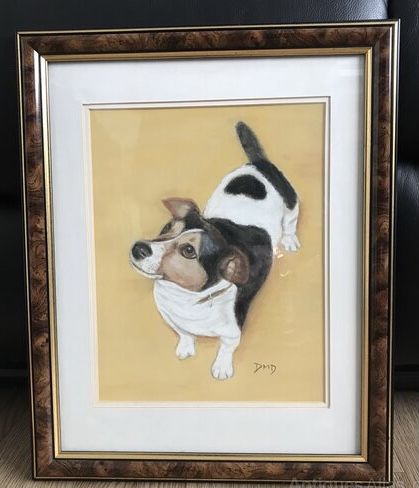
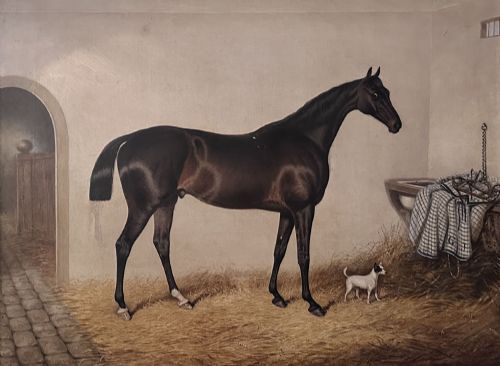


Antique Terrier Portrait
An antique terrier portrait captures the sharp intelligence and tenacity of the breed through the skilled hands of artists working from the Regency period into the twentieth century.
Antique Terrier Portrait
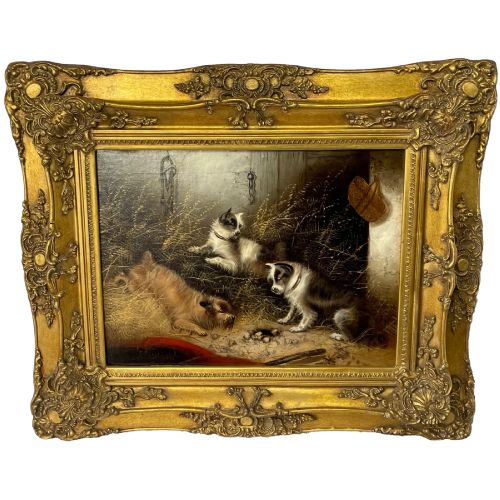
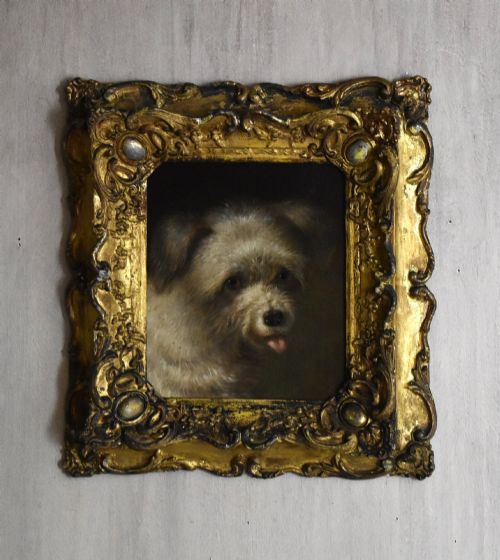
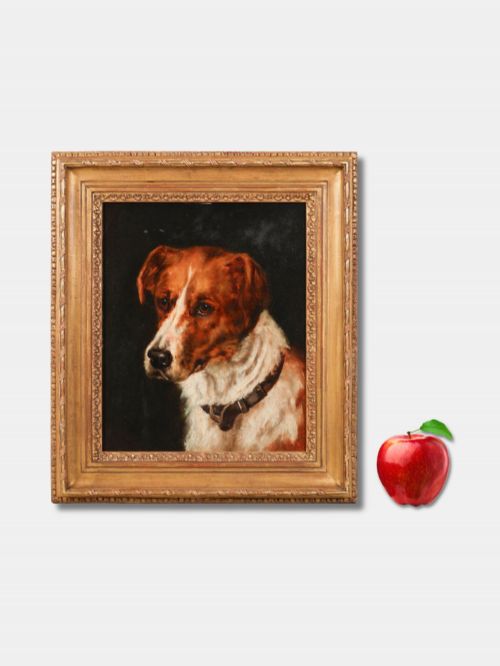
When you search for an antique terrier portrait, you encounter works that celebrate working dogs, ratters, and beloved companions in oil paint, watercolour, canvas, and etching. These pieces range from intimate nineteenth-century studies to larger Victorian canvases depicting terriers guarding barns or posing alongside hunters and horses.
The material record on this page shows a strong prevalence of oil on canvas alongside original etchings, watercolours, and even a silver enamel vesta case. You will most frequently meet nineteenth-century and Victorian examples, often framed in wood or giltwood, reflecting the era's deep fascination with sporting art and realism.
How they were made
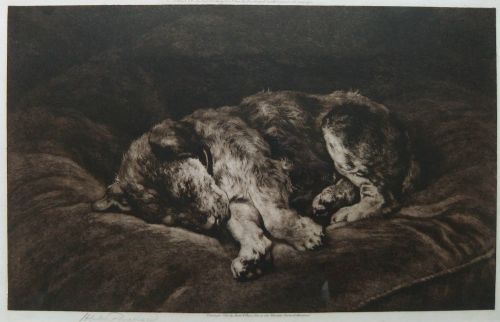
Artists built these canine likenesses primarily using oil paint on stretched canvas or wood panels, layering pigments to capture the distinct wiry coats and bright expressions of Jack Russells, Cairns, and Scottish terriers. Engravers and etchers utilised copper plates and paper to produce fine prints such as original works by Herbert Dicksee.
Framing materials such as giltwood complemented the oil paintings, while specialist metalworkers shaped items like silver enamel vesta cases to incorporate miniature dog head sculptures. The techniques span traditional brushwork on canvas to precision etching and metal smithing.
Listings feature works in oil paint, canvas, paper, and wood, spanning periods from Regency to the 1940s.
What varies in quality
Quality rests upon the artist's command of anatomy and expression, distinguishing a generic rendering from a spirited study that captures the terrier's characteristic alertness. Works by recorded painters display superior handling of light on fur and texture compared to anonymous follower pieces.
The integration of the subject within its setting, whether a walled garden or a barn interior with ratting details, elevates the composition. Medium also plays a part, as hand-painted oil on canvas works differ fundamentally in execution from mass-produced or later decorative copies.
Herbert Dicksee·Valentine T. Garland·Martin Theodore Ward·Sir Edwin Landseer·Edwin Frederic Holt·Mabel Gear·John Emms·George Armfield·Edward Armfield·Samuel Fulton·James Coutts Michie
The Antique Terrier Portrait Glossary
- Regency
- A British historical period spanning the early nineteenth century, known in art for refined sporting and animal portraiture.
- Victorian Sporting Art
- A genre dedicated to depicting dogs, horses, and field sports, prevalent during the nineteenth century.
- Etching
- A printmaking technique where lines are bitten into a metal plate with acid before being inked and pressed onto paper.
- Giltwood
- Wood that has been coated with gold leaf or a gold-coloured gilt finish, commonly used for traditional picture frames.
- Vesta Case
- A small pocket container used historically for holding matches, sometimes adorned with detailed animal reliefs or enamelling.
Antique Terrier Portrait: Frequently Asked Questions
What periods do these portraits come from?
The works span from the Regency era through the Victorian period and into the early twentieth century, including pieces from the 1920s and 1940s.
This broad timeline demonstrates how the popularity of canine portraiture endured across generations of British and European artists.
Which terrier breeds appear most often?
Jack Russells, Scottish terriers, Cairn terriers, and fox terriers dominate the artwork, alongside Airedales and West Highland terriers.
Artists frequently painted them either as solitary subjects or engaged in working scenarios such as ratting in barns.
How should I display a canvas painting?
Oil paintings on canvas benefit from placement away from direct sunlight and excessive humidity to protect the paint layers and wood stretchers.
Original giltwood frames often accompany these works, providing a period-appropriate housing that requires gentle dusting without chemical cleaners.
Are these works signed by the artists?
Many pieces feature artist signatures, attribution to known painters, or documented links to prominent nineteenth-century sporting art traditions.
Others remain anonymous or represent period copies after celebrated masters like Sir Edwin Landseer.