

Antique Tent Light
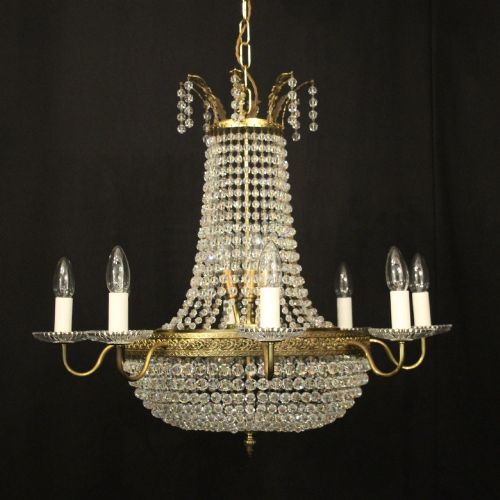
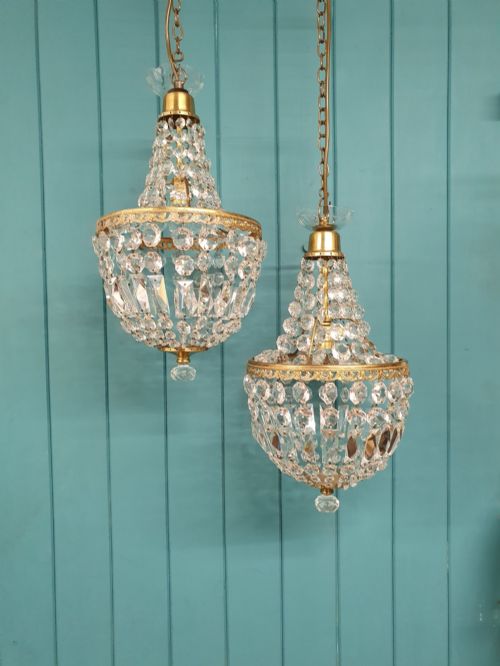
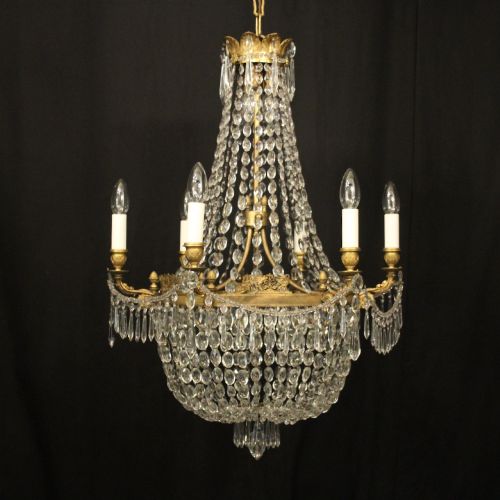
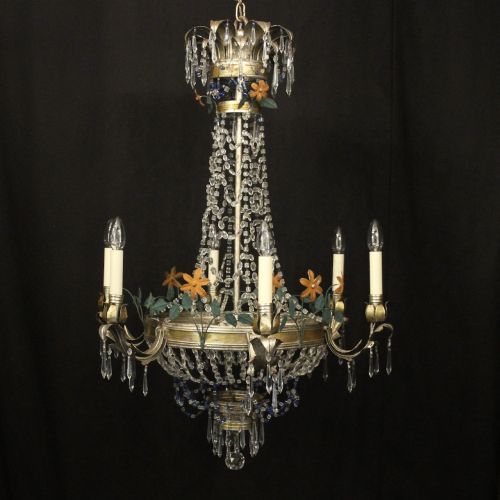
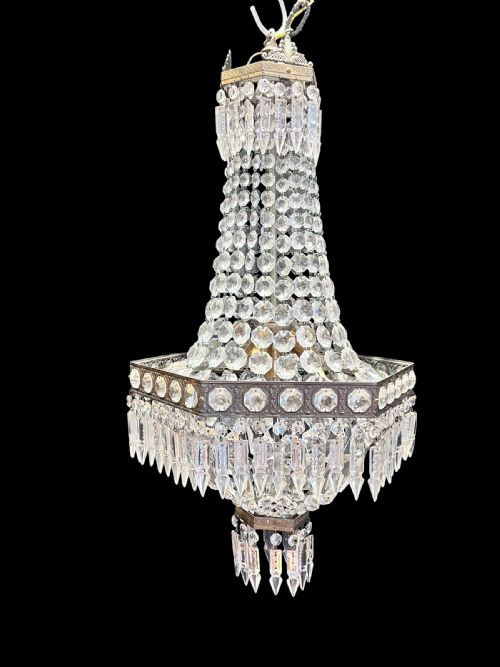
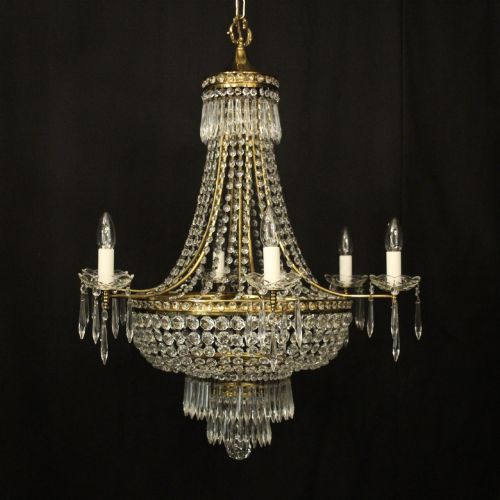
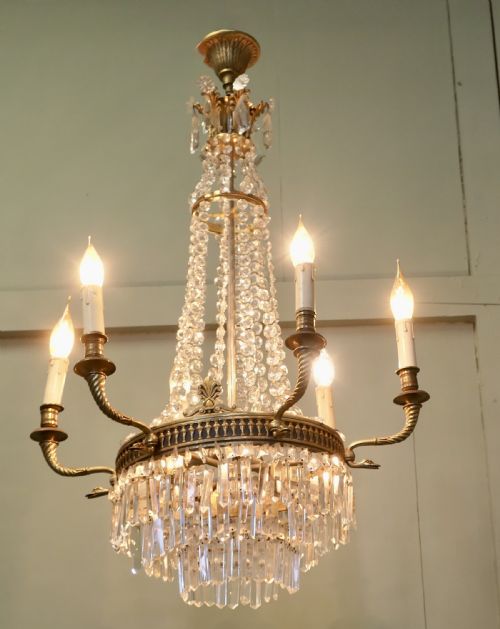
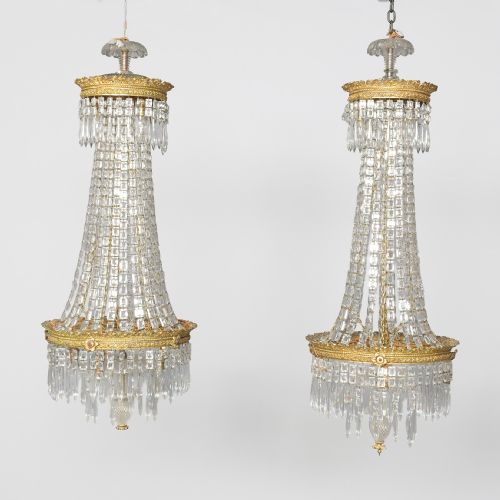
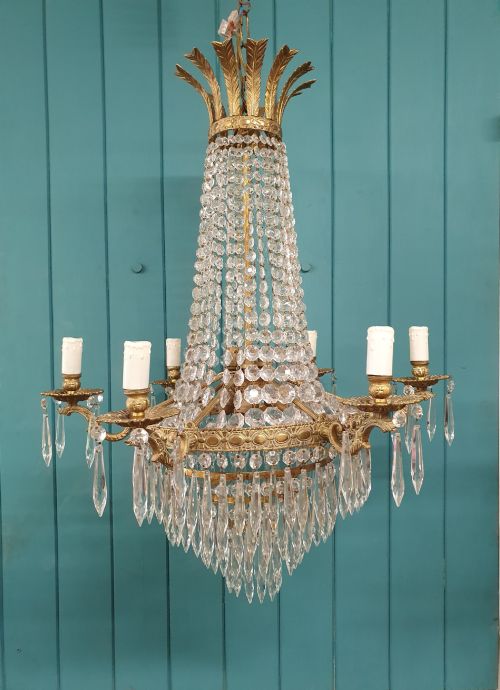
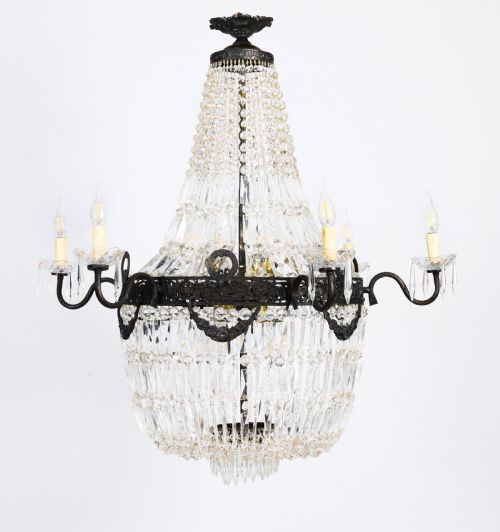
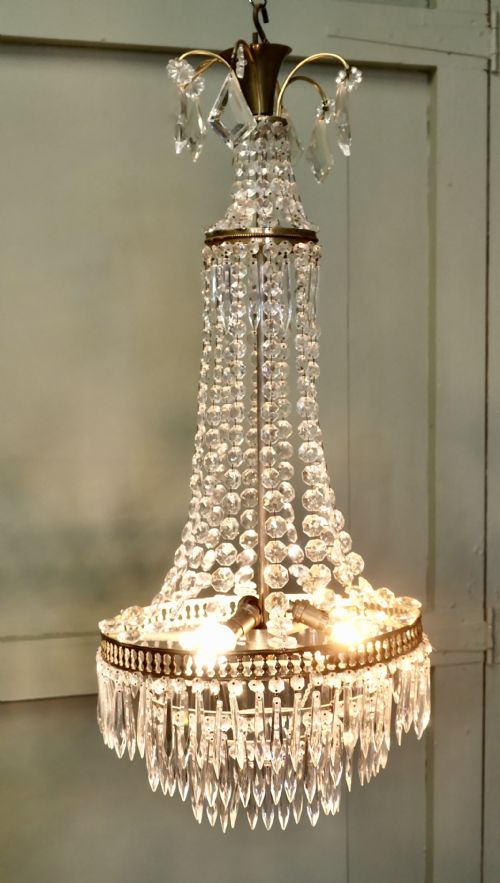
An antique tent light brings dramatic ceiling illumination, formed from cascading crystal drops suspended beneath a distinctive upper canopy.
Antique Tent Light
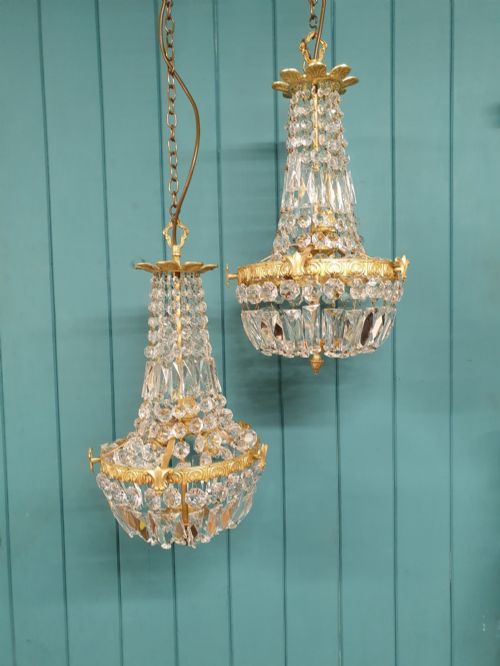
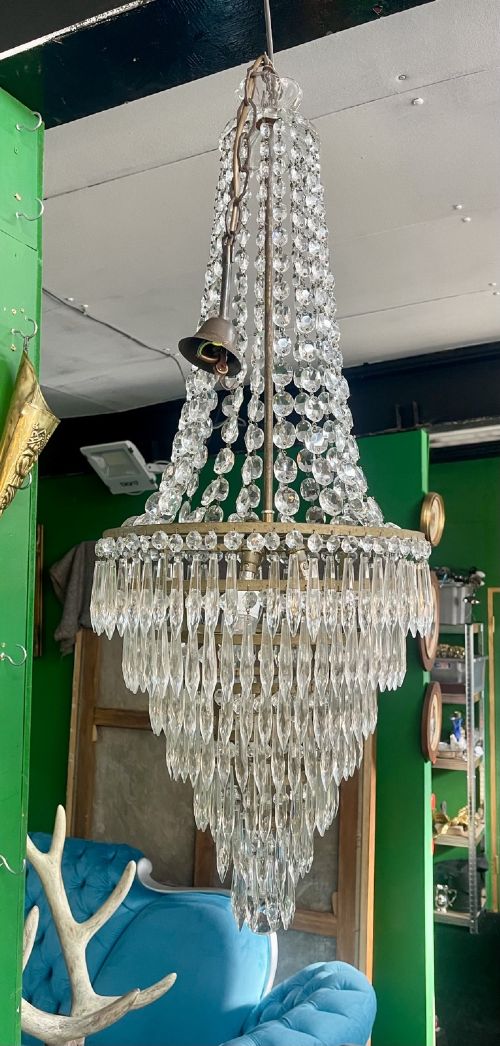
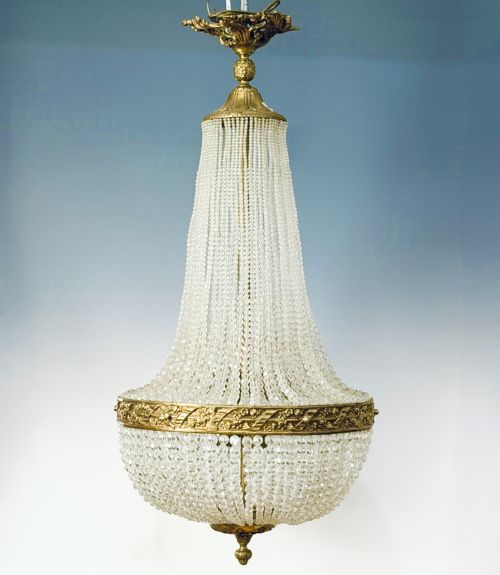
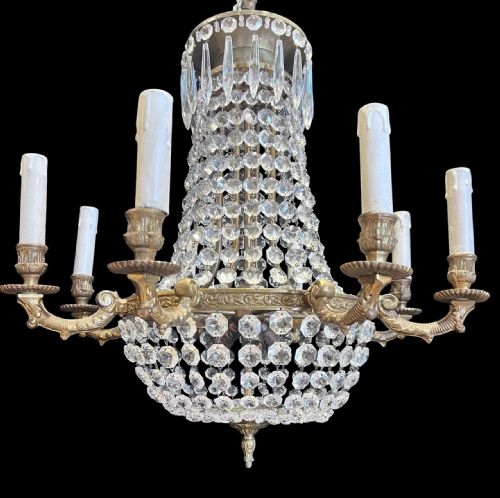
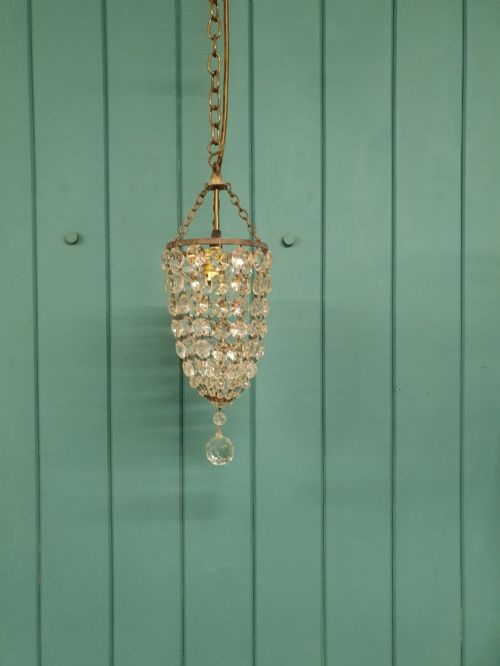
When searching for an antique tent light, buyers encounter luminous hanging fixtures dominated by an upper canopy of gathered glass beads or crystal swags that taper upward toward the ceiling. These pieces primarily manifest as chandeliers, pendant lights, and ceiling lights, alongside smaller wall lights designed to project illumination across a room.
The selections span distinct historical periods from the eighteenth century through the Edwardian era and the 1930s, reflecting classical continental design traditions. French Empire, Louis Revival, and Regency styles recur frequently, incorporating formal arrangements of drops, bag sections, and waterfalls beneath the primary canopy.
Buyers are most likely to meet twentieth-century interpretations from the 1910s, 1920s, and 1930s on this page, often featuring symmetrical branch layouts and structured tiers of cut glass. These domestic and ballroom fixtures utilise brass frames and gilded mounts to support dense clusters of refractive crystal prisms.
Materials and construction
Metals form the structural skeleton of these fixtures, employing brass, bronze, and gilt bronze to build arms, rings, and decorative mounts. Silver and gold gilding frequently coat the bronze frameworks, adding a reflective metallic sheen that complements the hanging crystal components.
Glass and crystal comprise the optical elements, shaped into cut glass drops, crystal beads, prisms, and lower bag sections. Artisans pinned these individual components together with wire or metal pins to form the sweeping swags of the upper tent and the cascading tiers of the waterfall sections.
Antique Tent Light Retail Price Guide 2026
Typical asking prices for tent light among the pieces listed under this phrase on Sellingantiques today, from the lower quarter to the upper quarter. They describe what is for sale here now, not the wider market.
Listings span periods from the eighteenth century through the Edwardian era up to the 1930s, uniting brass, bronze, and cut crystal.
Assessing quality and execution
The refinement of the metalwork separates standard examples from exceptional pieces, particularly in the precision of cast bronze mounts and the presence of fine leaf decoration or figural details like cherubs. Heavier gauge brass and solid bronze frames maintain structural integrity better over time than lighter stamped alternatives.
The clarity and cutting of the glass dictate visual brilliance, with deep hand-cut facets on crystals creating sharper refractive patterns than pressed glass drops. A cohesive arrangement of matching prisms and complete, uniform bead swags indicate higher original craftsmanship and better-preserved assemblies.
Wedgwood
The Antique Tent Light Glossary
- Tent
- The upper conical section of a chandelier formed by rows of glass beads or crystal swags stretching from a central ring up to the crown. This creates a fabric-like canopy appearance above the main body of the fixture.
- Waterfall
- A cascading tier of hanging crystals arranged below the main arms or central band, resembling falling water. These drops catch and disperse light across multiple descending levels.
- Bag section
- A gathered pouch or basket shape composed of dense crystal netting positioned at the base of the chandelier. It often terminates in a bottom spike or decorative pendant.
- Gilt bronze
- Bronze metal coated with a thin layer of gold or gold-coloured alloy to impart a rich metallic finish. It resists tarnishing and provides an ornate backdrop for crystal prisms.
- Prism
- A cut glass or crystal pendant designed to refract light into spectral colours. These elements hang from the arms and tiers of the fixture to enhance illumination.
Antique Tent Light: Frequently Asked Questions
How do I hang a tent chandelier?
These fixtures require secure ceiling anchor points capable of supporting the combined weight of metal frames and dense crystal drops. Professional electrical installation ensures proper load-bearing capacity and correct height adjustment for living spaces.
Position the fixture so the lowest point clears household traffic while remaining visually anchored to the room proportions. High-ceilinged rooms accommodate larger multi-tier examples comfortably.
What rooms suit these lights?
Dining rooms, entrance halls, and drawing rooms provide traditional settings where downward illumination and decorative presence function effectively. The reflective crystal elements brighten darker corners and add architectural interest to formal spaces.
Smaller wall lights and compact pendant variations fit corridors or bedrooms, offering subdued illumination without dominating restricted square footage.
How do I clean crystal drops?
Regular dusting with a soft cloth maintains the reflective quality of the glass without requiring complete disassembly. For deeper cleaning, apply a specialist glass spray directly to the crystals while protecting the metal components beneath.
Avoid immersing entire vintage metal frames in water, as moisture can damage historical gilding and weaken internal pin connections.
How are periods identified?
Stylistic indicators such as heavy neoclassical bronze mounts point toward nineteenth-century origins, while lighter brass and glass combinations often align with Edwardian or 1930s production. Detail work like leaf motifs and cherub accents reflect specific revival movements.
Examining the construction pins and metal casting techniques helps differentiate older hand-finished components from later standardised manufacturing methods.