




Antique Swivel Charm
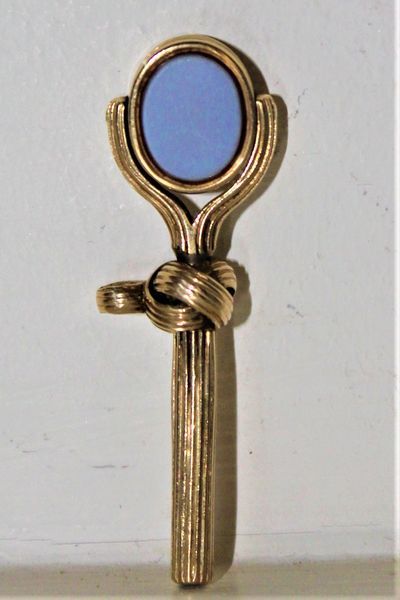
These antique swivel charm pieces are pivoting desk seals and pocket watch pendants that let a wearer display two different stones or faces.
Antique Swivel Charm
When you search for an antique swivel charm, you are looking at small pivoting seals and fobs designed to rotate within a fixed loop. These pieces hang from watch chains or bracelets, offering a dual-sided display that users flipped depending on the day or seal requirement.
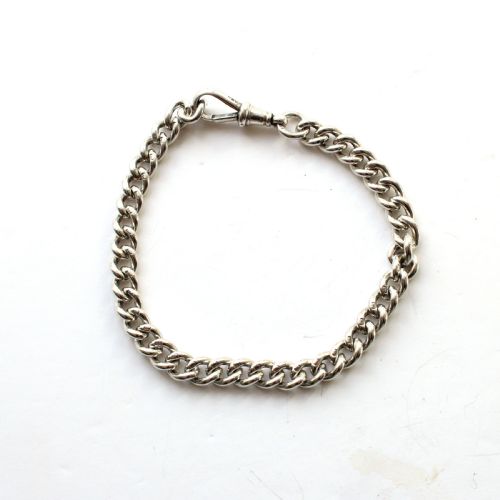
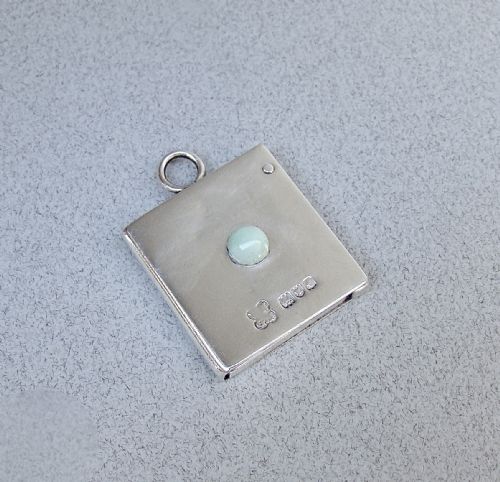
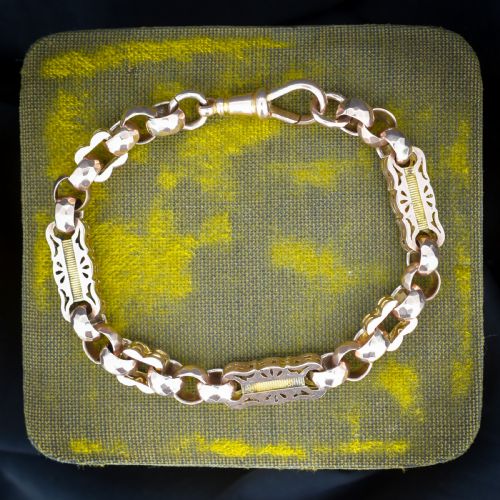
The versions you are most likely to meet on this page hail from the Victorian and Edwardian eras, alongside later pieces from nineteen thirty and nineteen sixty. They appear as spinning fobs, stamp cases, and pendants attached to heavy link bracelets or pocket watch chains.
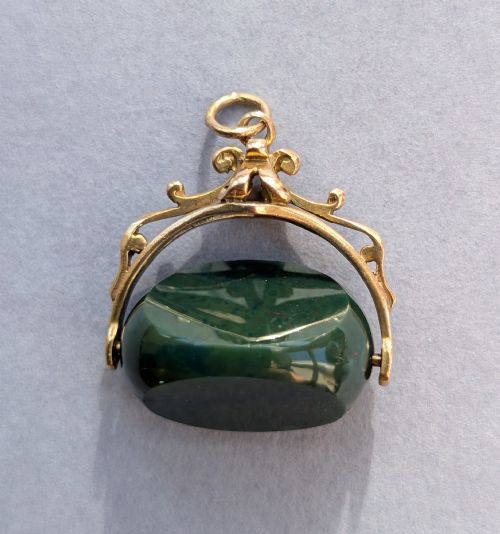
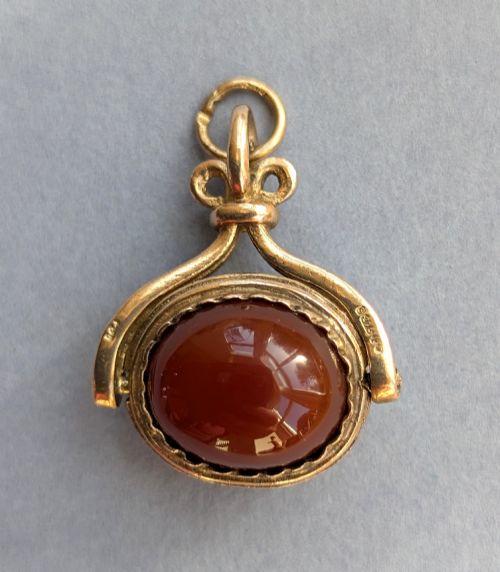
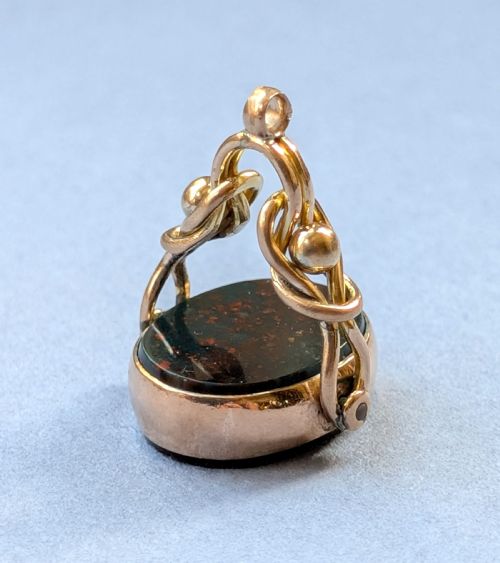
Makers fashioned these objects from 9ct gold, 9ct rose gold, yellow gold, sterling silver, and gilt metals. They frequently house hardstones such as bloodstone, cornelian, agate, and citrine within their rotating bezels.
How they were made
Goldsmiths and silversmiths constructed these items using solid precious metals like 9ct gold and sterling silver, shaping links, bezels, and swivel mounts by hand. Metalsmiths soldered suspension loops and hinges to allow smooth rotation of the central stone or seal box without wearing the holding wire.
Lapidaries cut and polished hardstones including bloodstone, carnelian, agate, and citrine to fit snugly inside the rotating metal frames. Artisans engraved matrices onto the stone faces or metal bases to function as personal wax seals for correspondence.
Materials recorded across these items include 9ct gold, sterling silver, bloodstone, carnelian, rose gold, and faceted citrine.
What varies in quality
The distinction between standard pieces and superior examples lies in the weight of the metal and the precision of the rotating mechanism. Finer pieces feature solid 9ct gold construction with tight tolerances in the swivel hinge, ensuring the pendant stays aligned without wobbling.
Stone selection and depth of lapidary work also define the grade of an item. High-grade items utilise deeply saturated bloodstone or finely faceted citrine rather than thin mineral slices or discoloured glass.
W And G Neal
The Antique Swivel Charm Glossary
- Swivel fob
- A pivoting pendant designed to rotate on a central axis, usually holding two different stones or seal faces. This mechanism allowed the wearer to alternate between two distinct displays.
- Bloodstone
- A dark green jasper flecked with red spots of hematite, frequently used in Victorian and Edwardian seals. Lapidaries carved this durable mineral for use as a stamp matrix.
- Cornelian
- A brownish-red variety of chalcedony quartz valued for its translucent warmth and smooth polish. It appears commonly as the rotating panel in Georgian and Edwardian fobs.
- Belcher link
- A chain pattern formed of broad, uniform links that are slightly wider than they are thick. This robust construction supported heavy charms and pocket watch attachments.
- T bar
- A short transverse metal bar attached to a pocket watch chain, designed to button through a waistcoat or anchor the chain to a garment loop. It frequently accompanied fob pendants on Victorian chains.
Antique Swivel Charm: Frequently Asked Questions
What is an antique swivel charm?
An antique swivel charm is a pivoting pendant or fob that rotates within a metal frame. These pieces typically feature two different gemstone faces or a seal matrix.
Wearers attached them to pocket watch chains and charm bracelets during the Georgian, Victorian, and Edwardian periods. They served both a decorative purpose and a practical one as wax seals.
How were swivel charms used?
Original owners wore these items suspended from watch chains, chatelaines, or heavy link bracelets. The pivoting mechanism allowed the user to flip the charm to show a preferred stone colour.
Many of these pieces doubled as signet seals for stamping hot wax on letters. The wearer would rotate the bezel to select the desired monogram or stone.
What materials are swivel charms made from?
Makers constructed these items using precious metals such as sterling silver, 9ct gold, and 9ct rose gold. Some earlier examples incorporate gilt base metals.
The rotating centres hold hardstones including bloodstone, carnelian, agate, and faceted citrine. Artisans sometimes incorporated stamp cases alongside the stone spinners.
How do I date an antique swivel charm?
Dating relies on the stylistic cues of the metalwork, the choice of stones, and any accompanying chains or hallmarks. Victorian pieces often display rich yellow or rose gold work and heavy hardstone bezels.
Edwardian items lean towards lighter filigree frames or specific maker stamps like those from nineteen hundred and one. Later examples extend into the nineteen thirties and nineteen sixties with different link styles.