


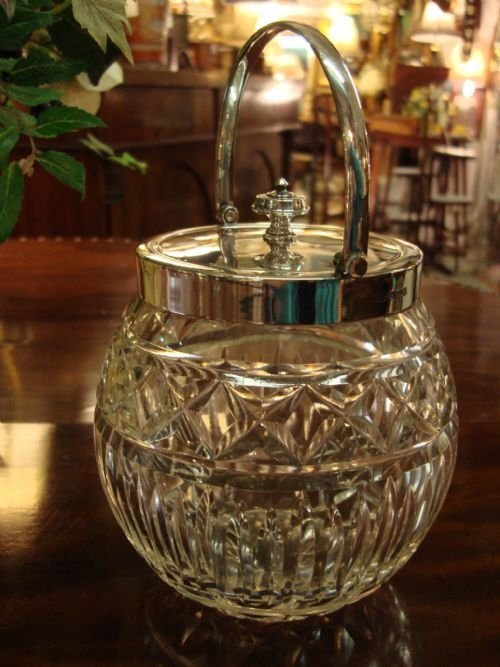


Antique Sweet Glass
Antique sweet glass encompasses Victorian and Edwardian vessels, display cabinets, and jars designed to hold confectionery with decorative flair.
Antique Sweet Glass
Antique sweet glass covers functional containers and serving pieces produced across the nineteenth and early twentieth centuries. These items range from domestic biscuit barrels and preserve dishes to large commercial confectionary display cabinets.
The domestic pieces most frequently encountered include cranberry glass jars and cut crystal bowls fitted with silver-plated mounts. Commercial shop displays associated with chocolate makers also appear alongside domestic tableware.
Production spans the Victorian and Edwardian eras into the Art Deco period, incorporating styles such as the Aesthetic Movement and Art Nouveau.
How they were made
Manufacturing methods rely upon heavy lead crystal and blown glass, frequently decorated through brilliant cutting or enamel work. Cranberry glass achieves its distinct pink-red hue through the addition of gold chloride to the molten batch.
Metal components utilise silver plate and hallmarked sterling silver mounts, often paired with mahogany or oak in cabinetwork. Reverse cutting and applied enamelling provide additional surface pattern on display panels and jars.
Antique Sweet Glass Retail Price Guide 2026
Typical asking prices for sweet glass among the pieces listed under this phrase on Sellingantiques today, from the lower quarter to the upper quarter. They describe what is for sale here now, not the wider market.
Materials documented across the inventory include cranberry glass, lead crystal, oak, mahogany, and silver plate.
What varies in quality
Quality separates through the depth and crispness of glass cutting, along with the weight and purity of the metal mounts. Thick lead crystal with sharp facets indicates superior production compared to lighter, pressed alternatives.
The integration between glass bodies and silver-plated or silver gilt hardware demonstrates workshop competence. Intricate enamel decoration and intact maker provenance elevate specific examples above standard domestic ware.
James Dixon and Sons·Daum Nancy·Cadbury·Rowntree
The Antique Sweet Glass Glossary
- Cranberry glass
- A type of transparent pinkish-red glass produced by adding gold to the molten mixture. It became popular for Victorian tableware and decorative jars.
- Biscuit barrel
- A covered ceramic or glass container used for storing biscuits in the Victorian and Edwardian home. They are frequently fitted with silver-plated rims and hinged lids.
- Lead crystal
- Glass containing a high proportion of lead oxide, increasing weight, brilliance, and clarity. This material allows for deep and sharp decorative cutting.
- Sweetmeat jar
- A covered glass vessel traditionally used for holding small sweetmeats, comfits, or preserves. Examples date from the nineteenth century onwards.
- Silver plate
- A base metal coated with a thin layer of silver, commonly utilised for the mounts, handles, and swing lids of glass barrels.
Antique Sweet Glass: Frequently Asked Questions
What is antique sweet glass?
Antique sweet glass encompasses domestic serving dishes, biscuit barrels, and commercial shop cabinets dating from the Victorian period to the Art Deco era. These items combine blown or cut glass with silver-plated mounts and enamelled decoration.
They served both practical functions in the home and promotional roles in confectionary retail. The category includes everything from small preserve dishes to large countertop display cases.
How were biscuit barrels used?
Biscuit barrels were placed on dining and drawing room tables during the Victorian and Edwardian periods to hold dry biscuits and confections. Their tight-fitting lids kept contents fresh.
Servants would bring them out during afternoon tea or evening gatherings. The hinged silver-plated mounts made accessing the contents straightforward.
How do I clean antique glass?
Antique glass requires gentle hand washing in lukewarm water with mild soap. Harsh chemicals and modern dishwashers can damage delicate enamel and silver plating.
Metal mounts should be dried immediately to prevent tarnishing. Avoid submersing items with fitted wooden bases or fragile glued components.