






Antique Surveying Tool
An antique surveying tool brings precise measurement and mechanical heritage into a modern study, offering brass wheels and polished timbers from past centuries.
Antique Surveying Tool
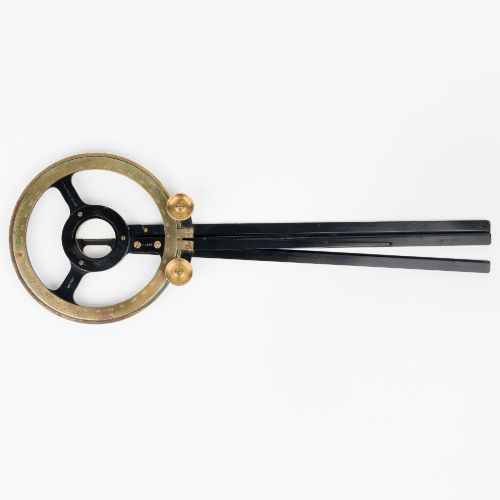
An antique surveying tool encompasses scientific, drafting, and nautical instruments designed for measurement and cartography on land and sea. When searching for this phrase, buyers encounter instruments ranging from early architects levels to station pointers and beam compasses.
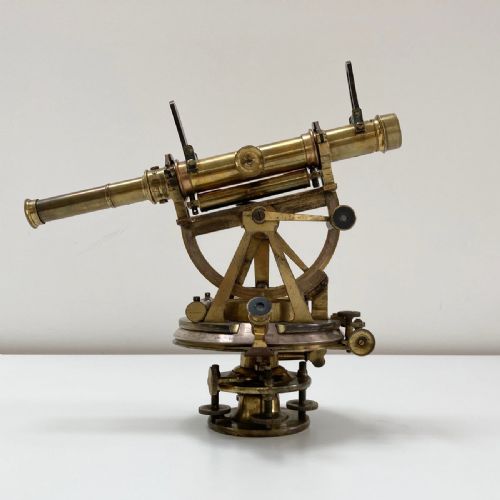
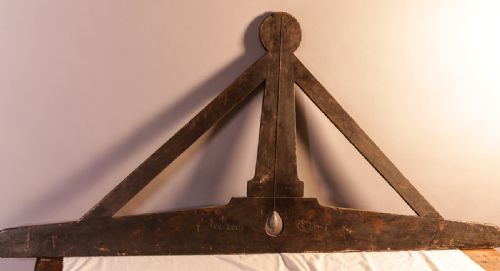
The selections available here lean heavily toward nineteenth century and Edwardian pieces, alongside Georgian examples and an eighteenth century architects level. Forms include boxed drainage levels, altazimuth theodolites, and pantographs housed in fitted wooden boxes.
Makers and retailers recorded across these instruments include firms such as Hughes & Son, L Casella & Co, Thomas Dunn, W. H. Harling, John Lilley & Son, Cox of Devonport, and W.F. Stanley. These objects reflect professional maritime, military, and architectural work across British history.
How they were made
Makers constructed these instruments using solid brass and lacquered metal for moving parts, dials, and sighting arms, ensuring durability in the field. Glass components protect sensitive artificial horizons and magnetic needles.
Antique Surveying Tool Retail Price Guide 2026
Typical asking prices for surveying tool among the pieces listed under this phrase on Sellingantiques today, from the lower quarter to the upper quarter. They describe what is for sale here now, not the wider market.
Listings span the eighteenth, nineteenth, and twentieth centuries, incorporating materials like brass, mahogany, black glass, and felt.
What varies in quality
Quality in an antique surveying tool rests upon the precision of its original graduation, the crispness of maker signatures, and the integrity of the surviving finish. Finer pieces demonstrate superior mechanical smoothness in gears and clamps.
The presence of an original fitted timber case, complete with interior lining and maker labels from retailers like L Casella or John Lilley & Son, elevates an instrument. Simpler utility pieces show heavier industrial wear while masterworks display refined craftsmanship.
Hughes & Son·L Casella & Co·Thomas Dunn·W. H. Harling·John Lilley & Son·Cox of Devonport
The Antique Surveying Tool Glossary
- Station pointer
- A marine surveying instrument used for fixing a ship position by measuring angles between visible landmarks. This navigational tool employs a central arm and two adjustable outer arms.
- Clinometer
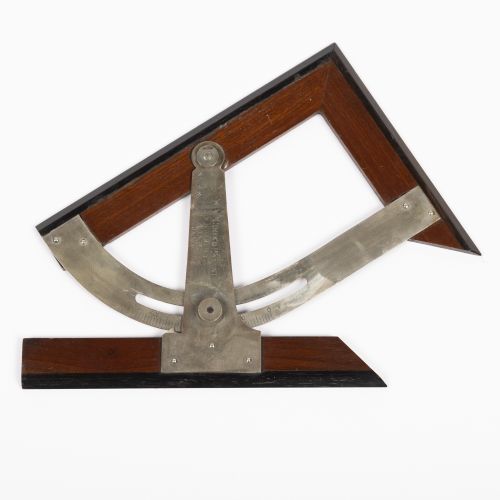
- An instrument used for measuring angles of slope, elevation, or depression of an object with respect to gravity. Examples include patent designs by makers such as W. H. Harling.
- Altazimuth theodolite
- A precision instrument designed for measuring both horizontal and vertical angles in surveying and astronomy. Miniature versions were cased for portable field use.
- Beam compass
- A drafting instrument consisting of a bar with two adjustable heads, utilised by cartographers and engineers for drawing large circles. Edwardian military patterns include the Woolwich design.
- Pantograph
- A linkage mechanism connected in a parallelogram shape based on parallel geometry, used for scaling drawings up or down. Edinburgh maker Thomas Dunn produced notable examples.
Antique Surveying Tool: Frequently Asked Questions
What is an antique surveying tool used for?
These instruments served surveyors, architects, cartographers, and mariners in measuring land boundaries, plotting maps, and calculating navigation angles.
Today, they are collected and displayed as decorative objects that celebrate historical engineering and precision metalwork.
How do I identify the period of an instrument?
Dating relies on maker signatures, stylistic details associated with Victorian or Edwardian design, and accompanying retailer labels.
Materials such as black glass settings or specific brass casting methods also point toward particular nineteenth and eighteenth century decades.
Are wooden cases usually original?
Fitted cases in mahogany or pine were standard housing for delicate scientific instruments, designed to protect them during transport in the field.
Original boxes often feature custom compartments and interior retailer plaques that match the era of the instrument inside.
How should I clean brass and timber instruments?
Maintenance requires minimal intervention, preserving the patinated surface of the brass and the aged finish of the timber.
Dusting with a dry cloth and avoiding harsh metal polishes protects the original lacquer and engraved markings.