
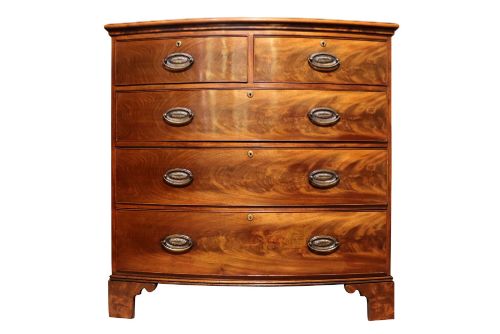
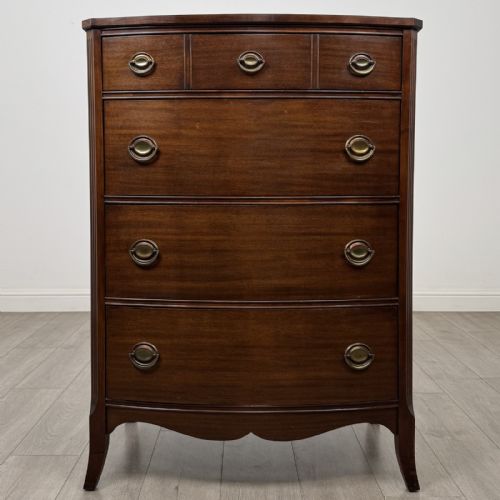
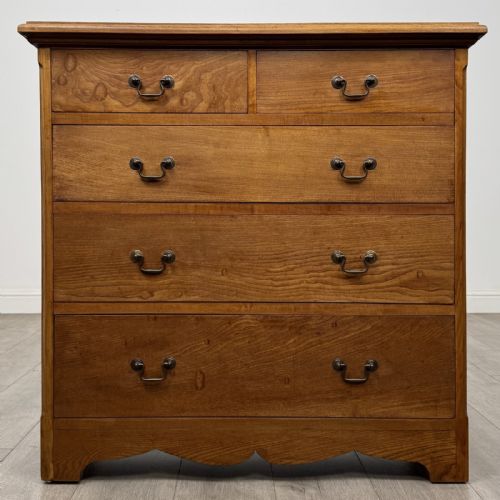
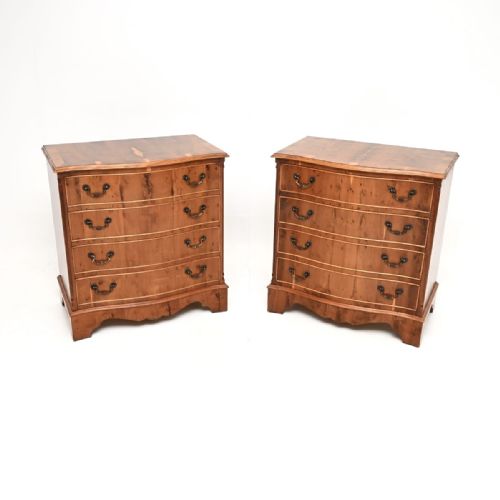
Antique Style Commode
An antique style commode brings architectural presence and concealed storage to a room through serpentine forms and rich timber veneers.
Antique Style Commode
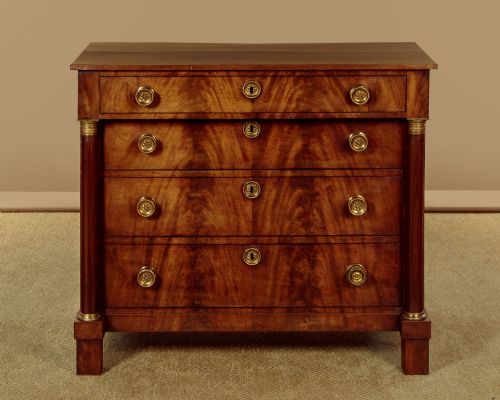
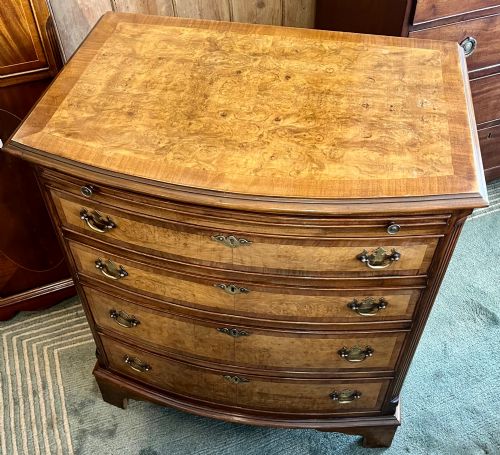
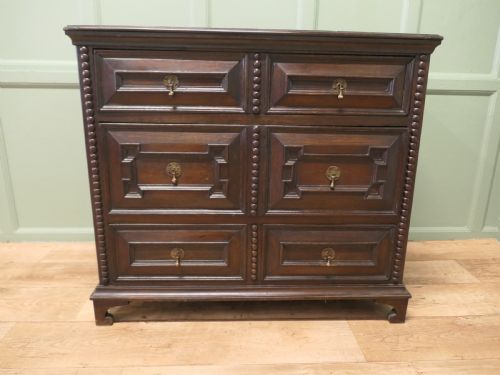
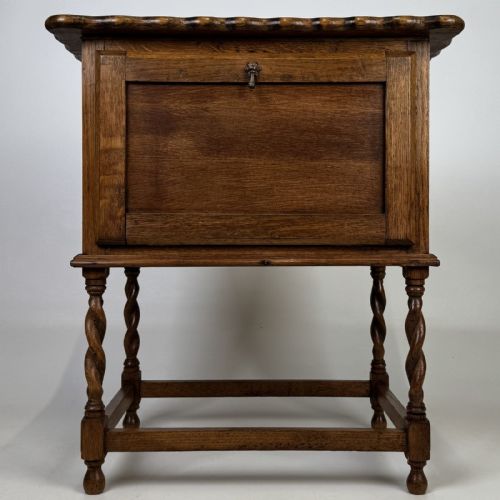
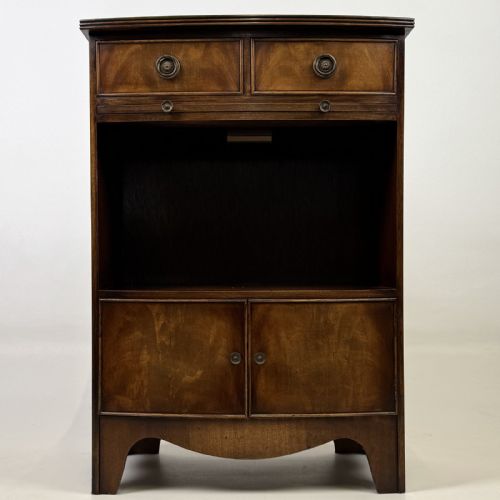
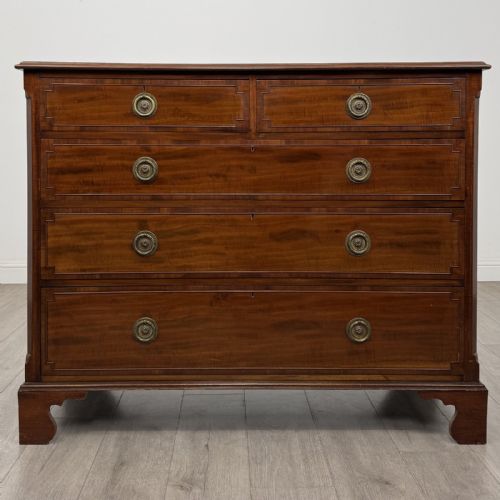
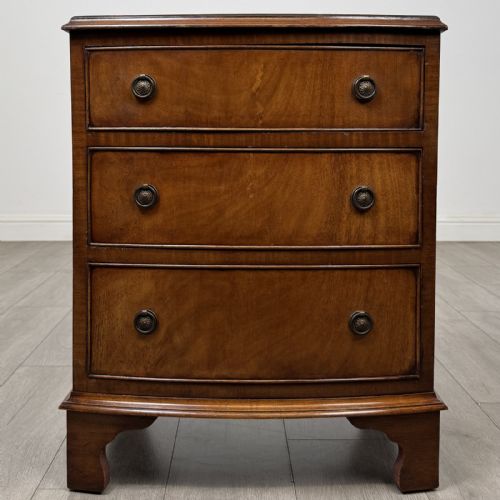
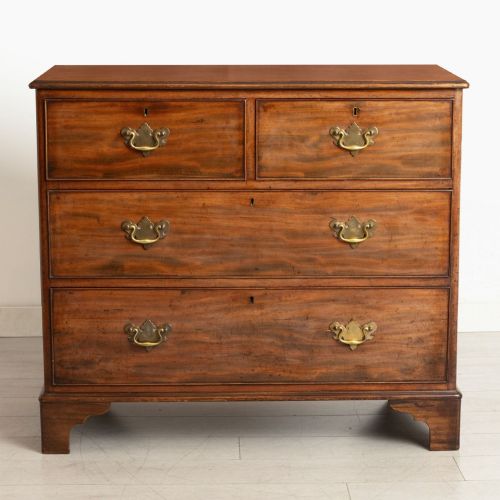
When searching for an antique style commode, buyers encounter a diverse selection of continental and British storage pieces that span from the seventeenth century to the twentieth century. These furnishings often take the form of serpentine or bombe chests of drawers, side cabinets, and bedside cupboards.
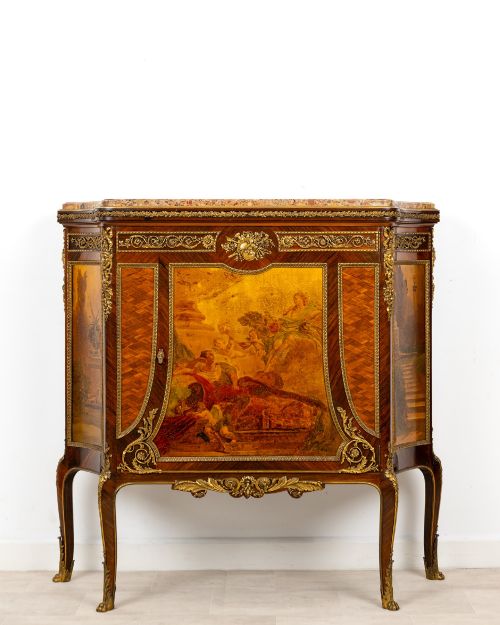
The selection ranges from robust oak pieces of the seventeenth and eighteenth centuries to ornate French Louis XV revival models finished with marquetry and marble. Alongside these, buyers find Georgian mahogany designs and Edwardian interpretations that continue historical cabinetry traditions.
Materials and Construction
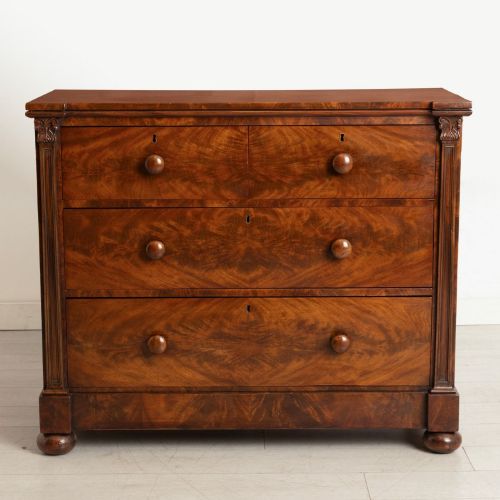
Cabinetmakers utilised dense hardwoods such as mahogany, walnut, and oak for the primary carcases, providing structural stability for drawers and cupboard doors. These foundational timbers were frequently enhanced with decorative veneers like kingwood, tulipwood, and burr walnut arranged in geometric or floral patterns.
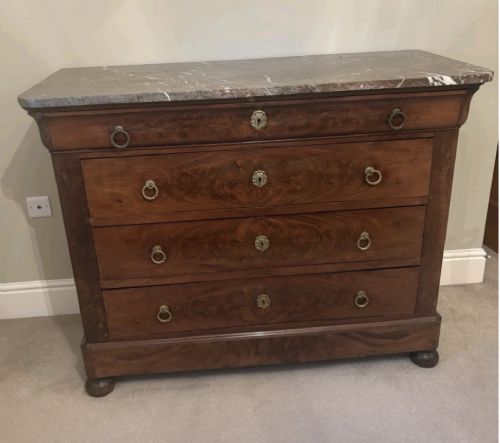
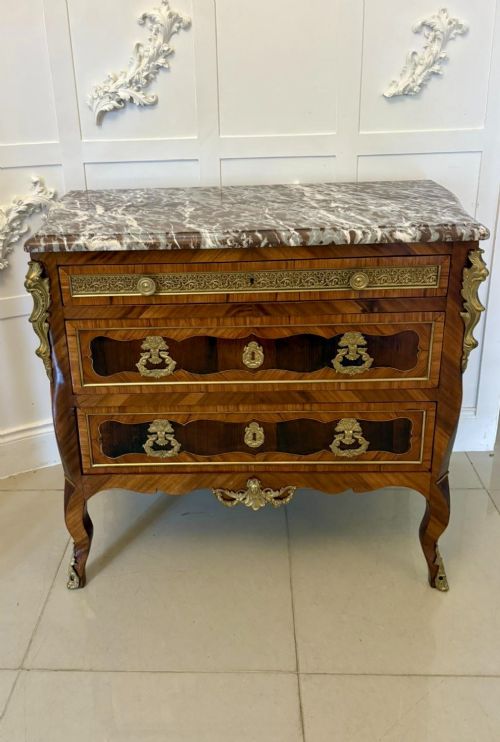
Surface ornamentation involved cast brass, ormolu, and gilt-bronze mounts fixed to corners and handles, alongside inset tops of rouge or variegated marble. Marquetry and parquetry techniques introduced contrasting wood tones across curved serpentine and bombe fronts.
Some Edwardian cabinetmakers clearly enjoyed a playful challenge, curving timber into shapes that surely tested the patience of their apprentices.
Judging Quality
The standard of a commode rests upon the precision of its timber selection and the fluency of its curved lines. Master craftsmen matched wood grains symmetrically across drawer fronts, whereas simpler workshop output relied on uniform timber without regard for grain direction.
Structural integrity reveals itself in the joinery of the drawers, the weight and detail of the cast brass or ormolu mounts, and the integration of marble tops. Pieces executed with hand-cut dovetails and substantial bronze hardware represent the upper tier of period production.
Whytock and Reid
The Antique Style Commode Glossary
- Serpentine
- A furniture front curved in a wave pattern, convex in the centre and concave at the sides. This shape demands high skill from the cabinetmaker.
- Bombe
- A bulging, outward-curved commode profile characteristic of continental furniture, particularly French styles. It requires shaped framing and specialised veneer work.
- Marquetry
- Decorative veneer work forming pictures or patterns using various coloured woods. Craftsmen cut thin slices of timber to fit exact jigsaw-like recesses.
- Ormolu
- Gilded bronze mounts applied to furniture edges and feet. The technique involves mercury amalgamation or electroplating on cast brass or bronze.
- Parquetry
- Geometric wood patterns created by fitting small veneer blocks together. It commonly appears on table tops and drawer faces of eighteenth and nineteenth-century pieces.
Antique Style Commode: Frequently Asked Questions
What is an antique style commode?
An antique style commode is a low storage cabinet or chest of drawers, often featuring decorative wood veneers, serpentine fronts, and marble tops. These pieces originated primarily in France and Britain as functional furniture for bedrooms and reception rooms.
Today, they serve as focal points in hallways and living spaces, offering surface display area alongside deep drawer storage.
How do I distinguish French and British styles?
French commodes frequently display bombe profiles, extensive ormolu mounts, and intricate marquetry inspired by Louis XV and Louis XVI reigns. Marble tops are also a common feature on continental examples.
British pieces, by contrast, tend to focus on architectural timber grain, particularly in mahogany, walnut, or oak, following Georgian or Victorian proportions.
Where should I place a commode?
Commodes work effectively in hallways, dining rooms, and bedrooms where surface space and concealed storage are both required. Their decorative fronts make them suitable for placing against prominent feature walls.
Care should be taken to keep wooden pieces away from direct heat sources and strong sunlight to protect the veneers and finishes.
How do I care for a marble top?
Marble tops require gentle cleaning with a damp cloth and mild, neutral soap to avoid scratching or staining the polished stone. Acidic substances like citrus juice or wine should be wiped away immediately.
Applying a specialist stone wax periodically helps maintain the sheen and protects the porous surface from moisture rings.