
Antique Style Brass Chandelier
An antique style brass chandelier brings warmth and illumination to a room, offering historic character through cast metal and glass.
Antique Style Brass Chandelier
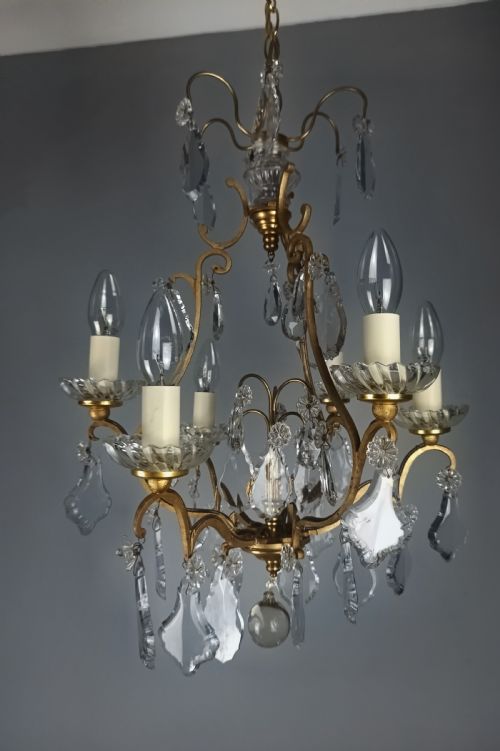
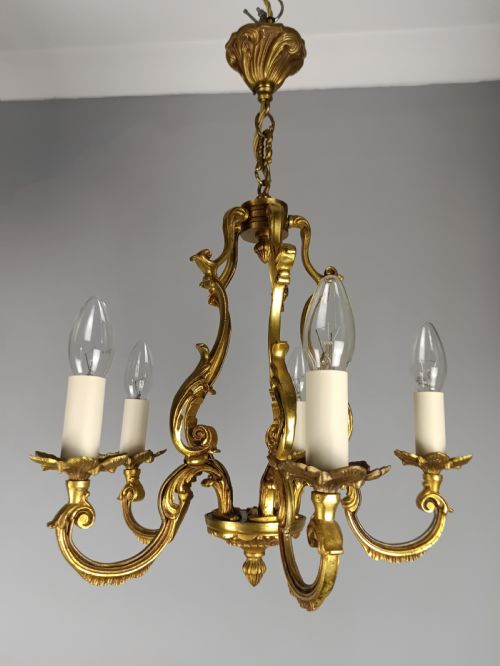
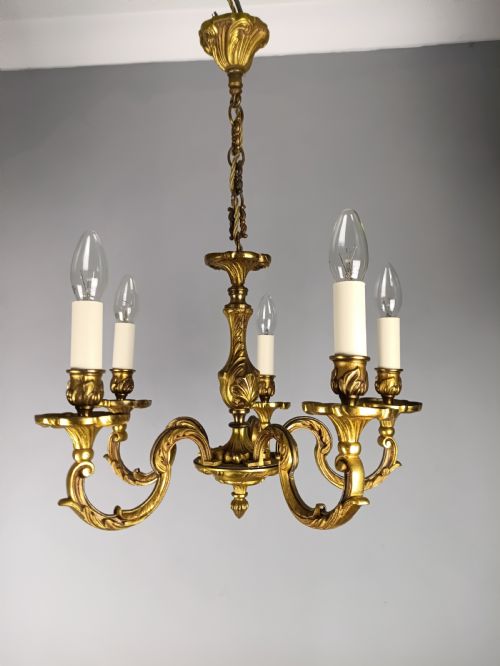
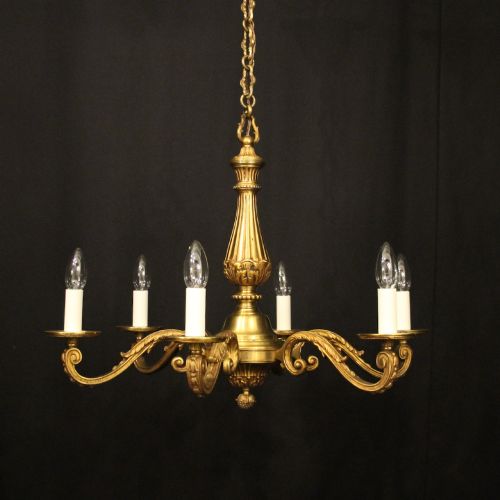
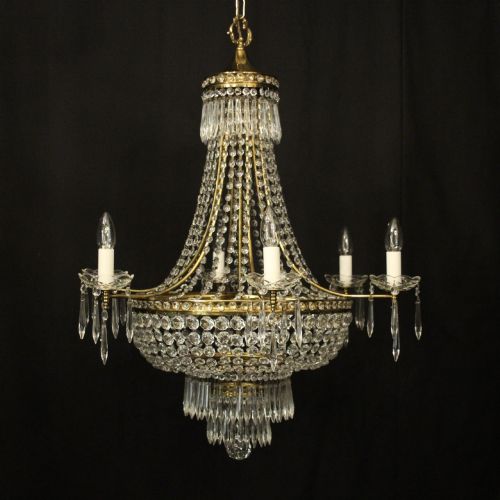
When searching for an antique style brass chandelier, buyers encounter hanging ceiling fixtures that draw on historical European designs from the nineteenth and early twentieth centuries. These pieces incorporate cast and spun brass frames combined with glass drops, crystal lustres, or exposed bulbs to project light across a space.
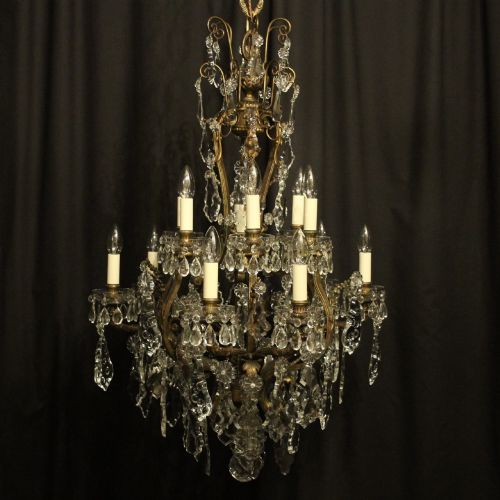
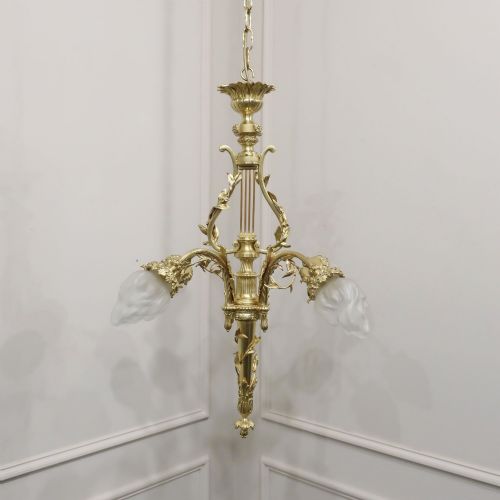
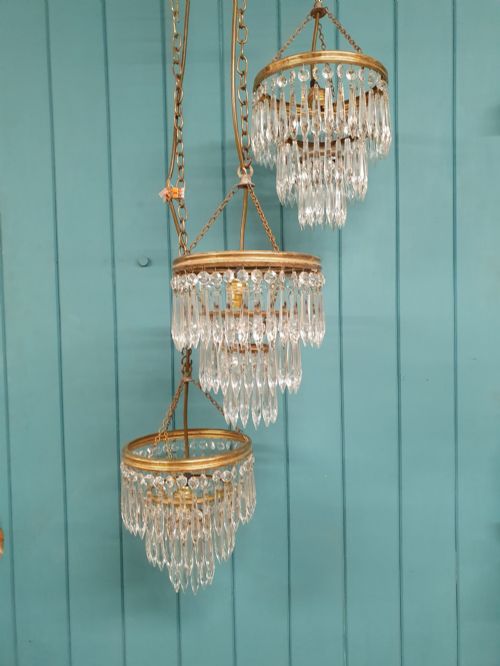
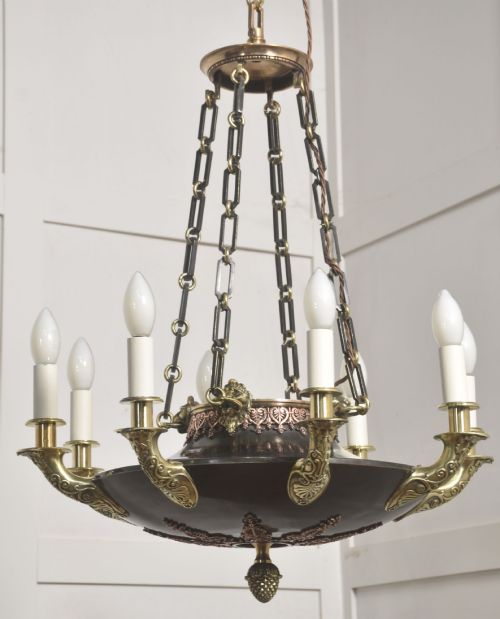
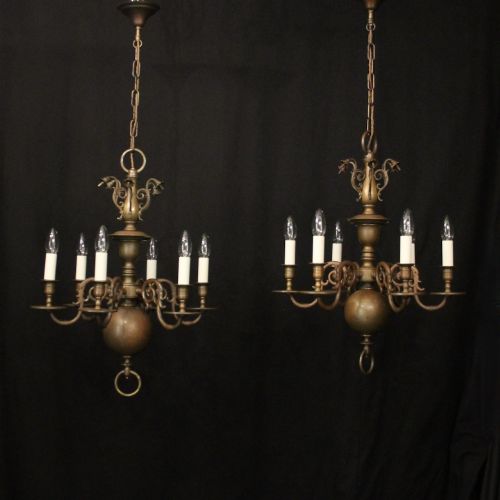
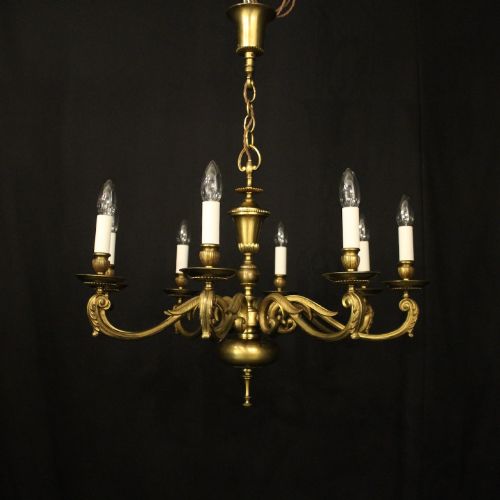
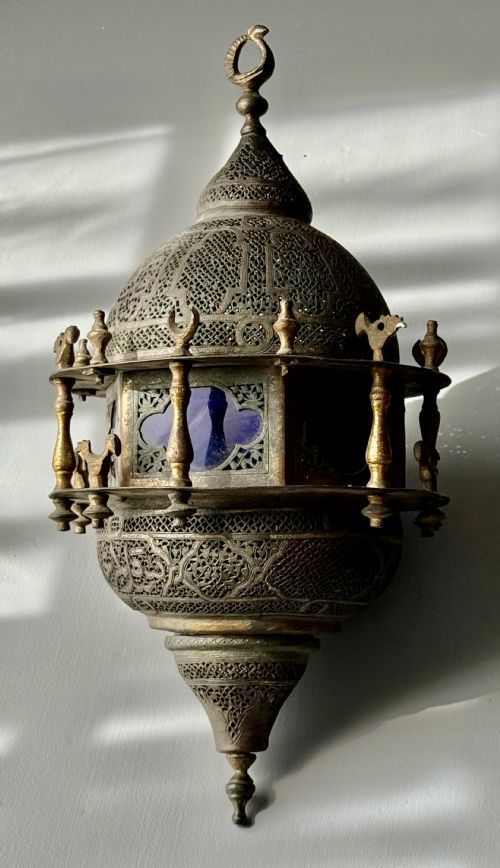
The selections on this page lean heavily towards French aesthetic movements, including French Rococo, Empire, and Neoclassical styles, alongside English and Dutch interpretations. Most examples date from the Victorian era up to the nineteen-thirties, manifesting as multi-arm chandeliers, tent and waterfall configurations, and brass lanterns.
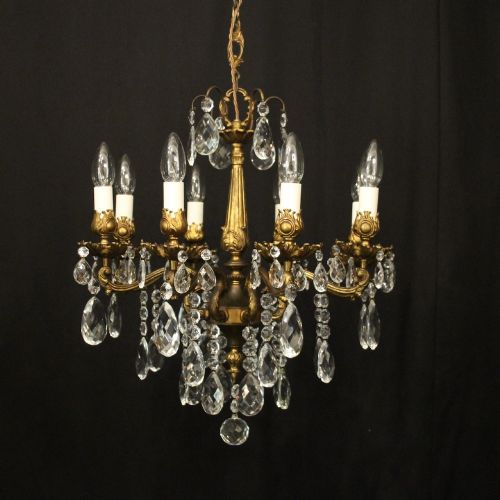
Buyers frequently find fittings equipped for multiple candle-style lights, ranging from intimate three-branch lamps up to grand twenty-five light formats. The configuration often dictates the scale of the room it suits, with smaller spike chandeliers serving hallways while larger multi-tier arrangements anchor principal reception rooms.
How they were made
The structural framework of these chandeliers relies upon cast or spun brass, sometimes enhanced with gilt bronze, gilded bronze, or dark bronze patination. Metalfounders shaped these components using traditional foundry techniques, creating ornate scrolling arms, pierced brass galleries, and decorative figures like winged cherubs.
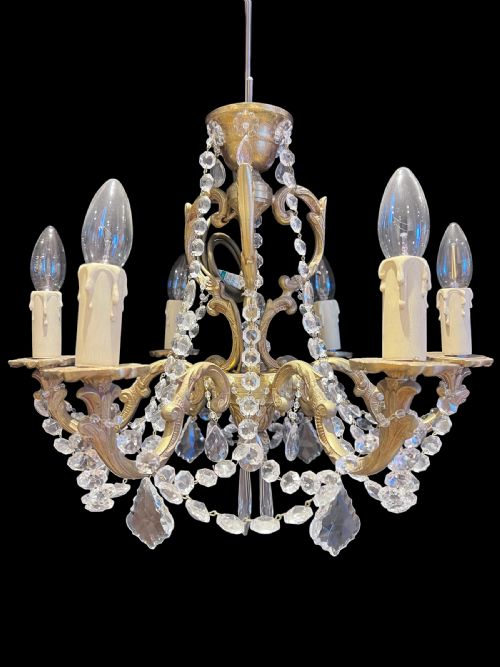
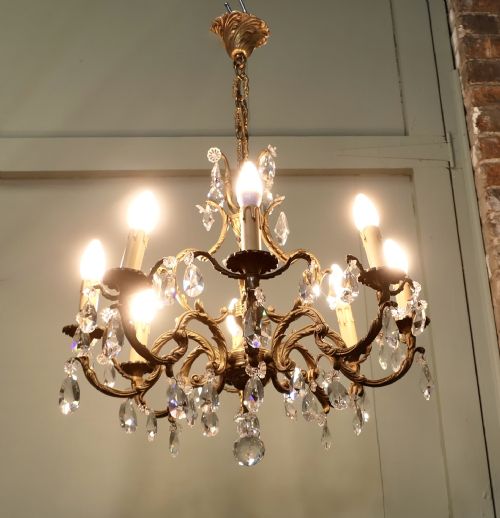
Glass and crystal elements are integrated extensively throughout the designs, featuring cut glass domes, crystal lustres, and cascading bead strands. These transparent components were hand-cut and wired to the brass frames to refract light from the internal candles or early electric bulbs.
Materials documented across the inventory include brass, glass, crystal, gilt bronze, metal, bronze, gilded bronze, and cut glass.
What varies in quality
The refinement of the casting and chassering separates standard production from exceptional work, visible in the crispness of foliage, scrolls, and figural details on the brass components. Finer pieces demonstrate meticulous hand-finishing after the casting process, whereas lesser examples retain softer edges and simplified surface enrichment.
The quality of the hanging components similarly distinguishes the range, particularly the purity and cutting depth of the crystal lustres and glass drops. Assemblies retaining their original matching cut glass elements and substantial gauge brass frames hold greater visual cohesion than those pieced together from mixed components over time.
The Antique Style Brass Chandelier Glossary
- Lustre
- A cut glass pendant or droplet hung from the arms or crown of a chandelier to refract light. These pieces catch and disperse illumination throughout the room.
- Gilt bronze
- Bronze metal that has been coated with a thin layer of gold or gold-coloured alloy. This finish provides a durable, lustrous golden appearance that resists tarnishing.
- Tent and waterfall
- A specific chandelier configuration where strings of crystal beads form an upper triangular tent shape above a cascading lower shower of drops. It creates a dense, shimmering pyramid of glass.
- Spike chandelier
- A narrow, vertical style of ceiling light characterised by a central stem decorated with stacked glass platters or crystal plates. They suit spaces with restricted vertical clearance.
- Sconce
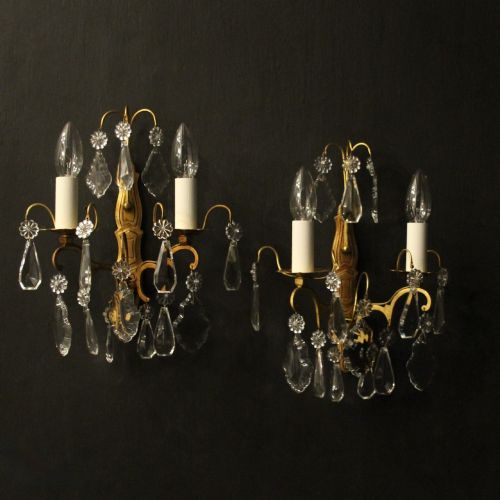
- A wall-mounted lighting fixture designed to match the stylistic vocabulary of the central chandelier. They extend outward on bracket arms to provide supplementary illumination.
Antique Style Brass Chandelier: Frequently Asked Questions
How do I clean a crystal brass chandelier?
Maintenance involves wiping the brass frame with a dry or lightly dampened cloth to preserve the metal patina. Glass and crystal components can be washed individually using a mild soapy solution while supported carefully.
Avoid harsh chemical cleaners that strip historical finishes from the metal or damage antique lacquers. Regular dusting prevents grime accumulation in the detailed crevices of the castings.
Can these antique chandeliers be rewired safely?
Most antique electrical fittings require rewiring to meet modern safety standards and building regulations. Professional electricians can adapt the internal channels to house contemporary wiring without altering the exterior appearance.
It remains important to check the weight capacity of the ceiling joists before hanging heavy bronze and crystal assemblies. Proper mounting ensures the fixture is supported securely from an independent electrical box.
How do I determine the correct chandelier size?
Scale depends upon the dimensions of the room and the height of the ceiling. Measuring the length and width of the space in feet and adding those figures together provides a guideline for the ideal fixture diameter in inches.
Ceiling height dictates whether a flush mount, a lantern, or a drop chandelier with a chain is most appropriate. Walkways and dining tables require specific clearance heights underneath the lowest hanging crystal drop.
What is the difference between French Empire and Rococo styles?
French Empire style chandeliers draw inspiration from neoclassical antiquity, featuring symmetrical lines, laurel wreaths, winged figures, and militaristic motifs. They project a formal, architectural presence within a room.
French Rococo style embraces asymmetrical curves, organic shell motifs, C-scrolls, and naturalistic leaf forms. This aesthetic creates a more fluid and exuberant visual movement across the brass arms.