





Antique Stripe Upholstery
These antique stripe upholstery pieces bring period seating alive with woven linear patterns across chairs and sofas.
Antique Stripe Upholstery
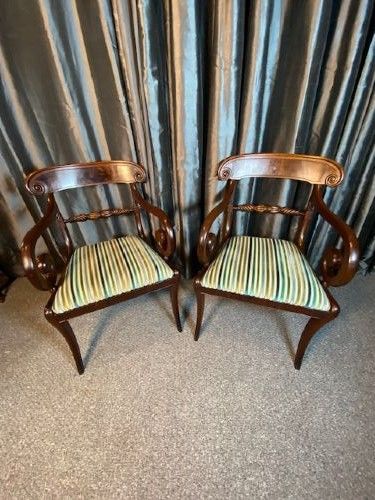
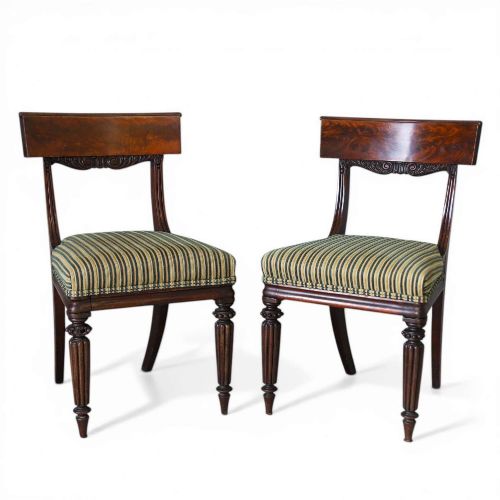
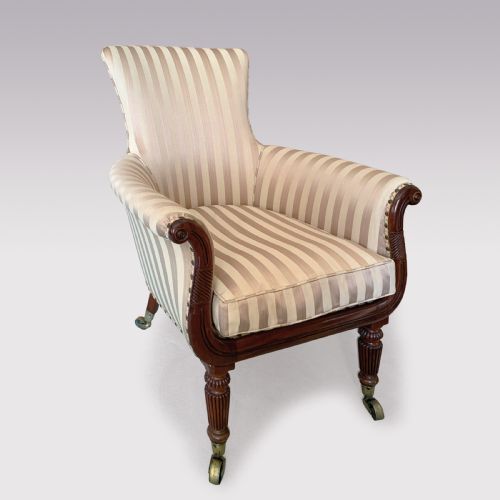
Buyers seeking antique stripe upholstery encounter seating forms spanning the Georgian, Regency, William IV, Victorian and early twentieth-century periods. The selection encompasses dining chairs, armchairs, side chairs, carver chairs, library chairs, and larger settees or sofas.
Most examples combine wooden frames in mahogany, birch, rosewood, or painted finishes with distinct linear fabric patterns. Forms range from formal Regency designs to country house scroll arm sofas and French Louis XV style seating.
The aesthetic centres on the interplay between traditional timber frames and linear textile designs, whether presented in original ticking or period-appropriate fabric.
How they were made
Frames are constructed from hardwoods such as mahogany, rosewood, and birch, alongside painted wood and giltwood applications. Joinery techniques reflect the cabinet-making standards of the eighteenth, nineteenth, and early twentieth centuries.
Upholstery involves traditional fabric applications, incorporating original ticking or period textile coverings secured to sprung or stuffed frames.
Antique Stripe Upholstery Retail Price Guide 2026
Typical asking prices for stripe upholstery among the pieces listed under this phrase on Sellingantiques today, from the lower quarter to the upper quarter. They describe what is for sale here now, not the wider market.
Some sofas arrive wearing their original heavy ticking, ready to whisper secrets of past drawing rooms.
What varies in quality
Quality differences emerge in the execution of the timber frame, from simple country house constructions to sophisticated cabinet work associated with known makers. The integrity of the original wood and the retention of authentic upholstery details dictate the standing of each piece.
The refinement of carved details on mahogany, rosewood, and painted surfaces establishes the distinction between standard utilitarian seating and high-status salon or library pieces.
Howard & Sons·Gillows
The Antique Stripe Upholstery Glossary
- Carver chair
- An armchair designed to sit at the head of a dining table, typically featuring open arms and matching the surrounding dining chairs.
- Settee
- A medium-length upholstered wooden bench with a back and arms, designed to seat multiple people.
- Giltwood
- Wood that has been coated with gold leaf or a gold-coloured gilt preparation for decorative effect.
- Ticking
- A heavy, tightly woven cotton or linen fabric traditionally used to cover mattress fillings and early upholstered furniture.
Antique Stripe Upholstery: Frequently Asked Questions
What periods do these chairs come from?
The available seating spans the Georgian, Regency, William IV, and Victorian eras, extending into early twentieth-century interpretations.
These periods show distinct shifts in timber choice, frame carving, and upholstery style.
How do I care for antique wood?
Maintain timber frames by dusting regularly with a dry cloth and avoiding direct sunlight or excessive moisture.
Apply traditional wax sparingly to nourish mahogany, rosewood, and hardwood surfaces without building up residue.
Are the fabric patterns original?
Certain pieces retain their original ticking or period upholstery, while others feature later fabric coverings suited to domestic use.
Checking the listing details confirms whether the textile layer is historic or a subsequent replacement.
Where should I place a settee?
Settees and small sofas suit reception rooms, libraries, and bedrooms where compact period seating is required.
Their linear fabric designs complement both traditional interiors and mixed contemporary spaces.