





Antique Stationary Organiser
These antique stationary organiser pieces are desk accessories that keep correspondence tidy, offering practical desktop compartmentalisation for the traditional study.
Antique Stationary Organiser
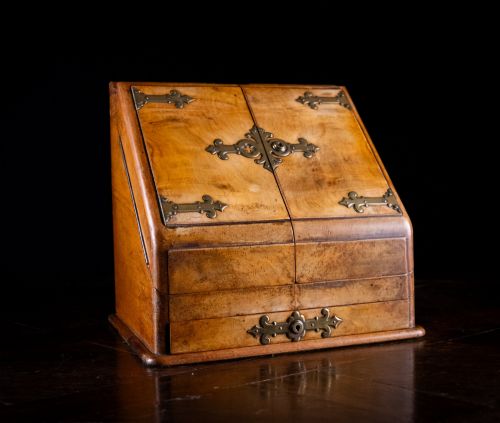
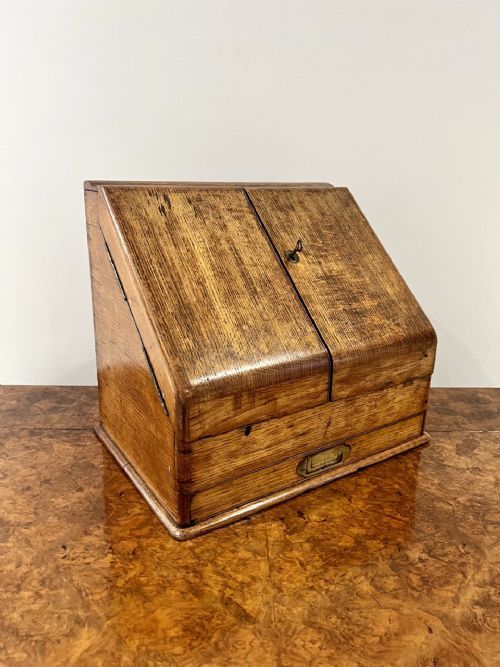
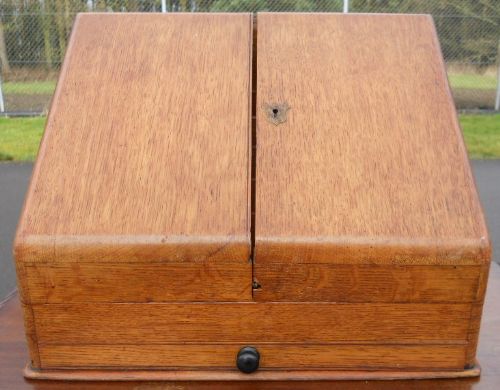
An antique stationary organiser comprises desktop stationery boxes, cabinets, and writing boxes designed to hold paper, envelopes, and ink. These desktop containers organise correspondence for the Victorian or Edwardian writer.
You will most commonly encounter Victorian oak and walnut stationery cabinets on this page. These pieces date predominantly from the nineteenth century, ranging from the eighteen sixties to the eighteen nineties.
Desk accessories span various stylistic interpretations from this era. Examples include Sheraton period satinwood boxes, Victorian Gothic Revival walnut pieces, Chinoiserie desk tidies, and American oak desktop cabinets.
How they were made
Cabinet makers utilised solid timbers such as oak, mahogany, walnut, and satinwood to construct these desktop organisers. Figured walnut and quarter-sawn oak provide strong natural grain patterns across the exterior surfaces.
Metal mounts and decorative elements appear frequently in brass and silver. These materials reinforce corners, frame doors, and provide secure handle fastenings for internal compartments and lids.
Antique Stationary Organiser Retail Price Guide 2026
Typical asking prices for stationary organiser among the pieces listed under this phrase on Sellingantiques today, from the lower quarter to the upper quarter. They describe what is for sale here now, not the wider market.
What varies in quality
The selection of timber veneer and solid wood grain establishes the visual appeal of an organiser. Finely figured walnut or finely grained satinwood elevates the cabinet above plain utility pieces.
Detailing in metalwork and surface decoration separates standard boxes from finer examples. Gilt coverage, painted motifs, and substantial brass mounts demonstrate superior craftsmanship.
The Antique Stationary Organiser Glossary
- Stationery cabinet
- A desktop housing designed with internal dividers for paper and envelopes. These upright storage units typically feature sloping fall fronts or hinged doors.
- Writing box
- A portable desk accessory equipped to hold writing materials. Many historical examples were later adapted or converted specifically to function as stationery organisers.
- Gothic Revival
- An architectural and decorative style popular during the Victorian era. Pieces incorporating this aesthetic display pointed arches, heavy moulding, and ecclesiastical motifs.
- Chinoiserie
- A decorative style reflecting European interpretations of Chinese artistic traditions. Items in this style feature painted lacquer or oriental-inspired surface ornamentation.
Antique Stationary Organiser: Frequently Asked Questions
What is an antique stationery box?
An antique stationery box is a desktop receptacle built to store writing paper, envelopes, and correspondence neatly. These containers keep the desktop orderly.
Most examples open via hinged lids or fall-front doors to reveal tiered internal partitions designed for standard nineteenth-century paper sizes.
How were stationery cabinets used?
Stationery cabinets sat upon library tables, partners' desks, and writing bureaus in private homes and offices. They provided immediate access to daily correspondence supplies.
Users sorted envelopes and letter paper into the dedicated vertical slots, keeping inkstands and pens nearby on the writing surface.
How do I date an antique organiser?
Dating relies on identifying timber choices, construction techniques, and decorative styles. Victorian pieces often use heavy oak or figured walnut with brass mounts.
Earlier examples from the eighteenth century utilise satinwood and silver, while later pieces from the early twentieth century show simpler American oak construction.
Can writing boxes hold stationery?
Writing boxes provide sloped surfaces and internal compartments suited for holding paper. Some historical boxes were converted specifically for this purpose.
These versatile containers protect writing materials within lidded compartments while offering a portable storage solution for the desk.