



Antique Snake Jewellery
Antique snake jewellery brings together coiled serpent rings, gem-set necklaces and articulated bangles from the Victorian and Edwardian periods.
Antique Snake Jewellery
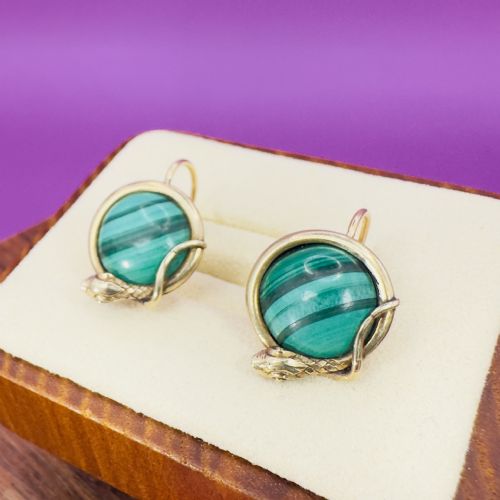
When you search for antique snake jewellery, you encounter a distinct category of ornament that spans the Victorian, Edwardian, and Art Nouveau eras. These pieces take the form of rings, bangles, necklaces, earrings, and brooches modelled after serpents, often symbolising eternity and wisdom.
Materials and construction methods
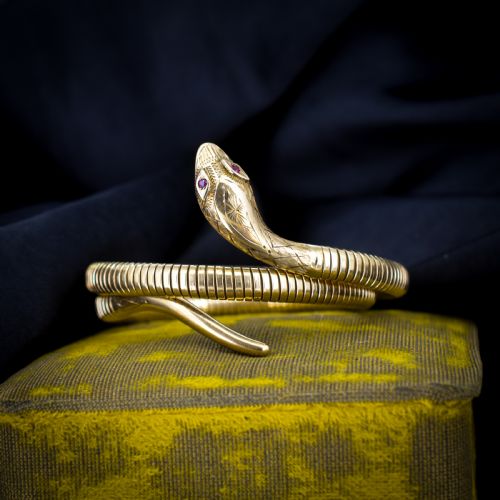
These items are predominantly fashioned from varying grades of gold, including nine-carat, fifteen-carat, and eighteen-carat alloys, alongside silver and platinum. Artisans often utilised cast or stamped gold bodies, shaping the flexible coils to wrap naturally around the wearer.
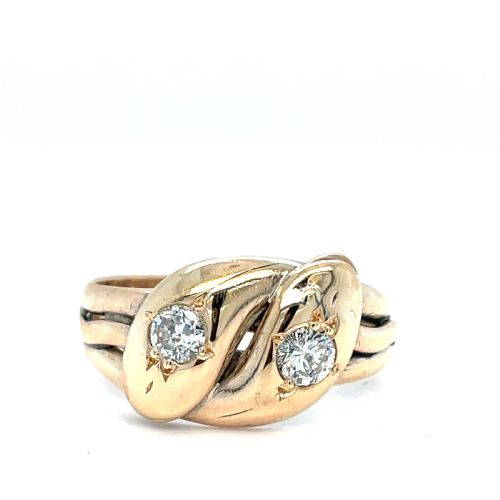
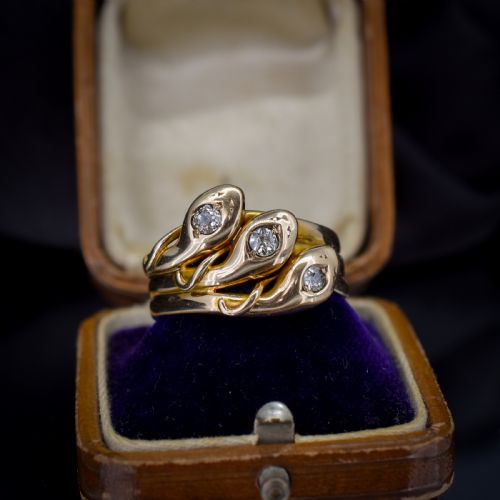
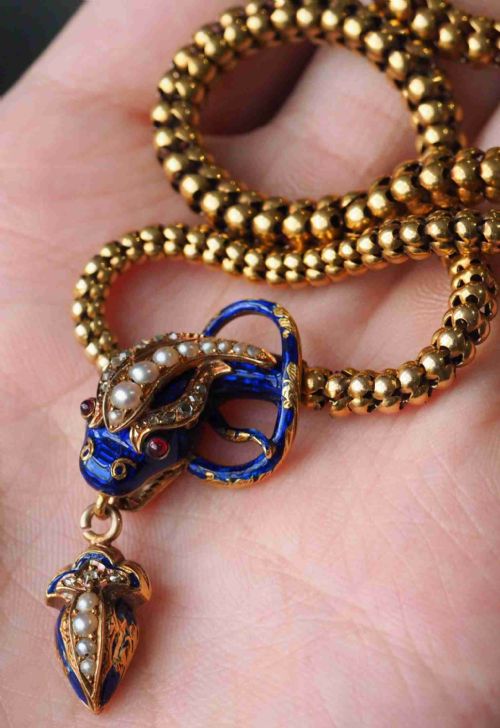
Gemstones like old-cut diamonds, garnets, turquoise, and sapphires serve as eyes or embellishments along the spine, held in place with traditional claw or flush settings. Enamel work and engraved details frequently add texture and colour to the scales of the serpent.
Some Victorian serpents gaze out with tiny rose-cut diamond eyes, watching over the wearer from collars and cuffs.
Distinctions in grade and execution
Quality in these ornaments rests upon the crispness of the chasing and engraving along the body, which defines the individual scales. Finer examples display meticulous articulation in the joints of flexible bracelets and secure, well-integrated box clasps.
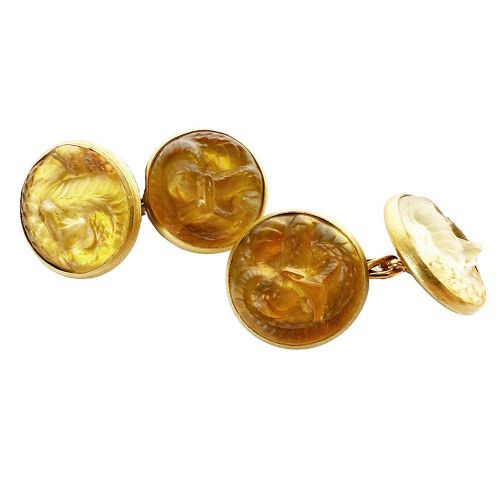
R Lalique·Levinger & Bissinger
The Antique Snake Jewellery Glossary
- Ouroboros
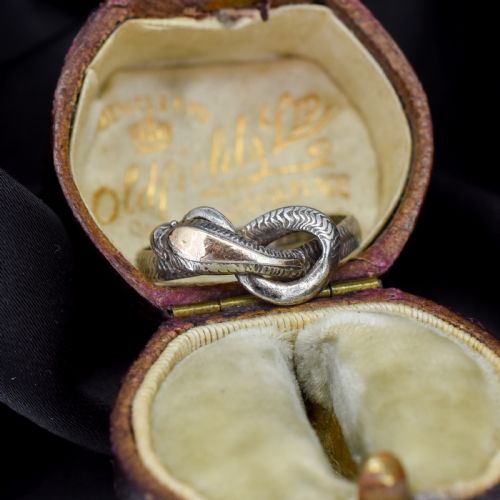
- A symbolic motif depicting a serpent swallowing its own tail, representing eternity and cyclical renewal. This design frequently appears on antique rings and split rings.
- Old-cut diamond
- A hand-faceted diamond cut before the standardisation of the modern brilliant cut, typically featuring a small table and a high crown.
- Rose-cut diamond
- A gemstone cut with a flat base and a domed crown comprising triangular facets, resembling an unopened rosebud.
- Longuard chain
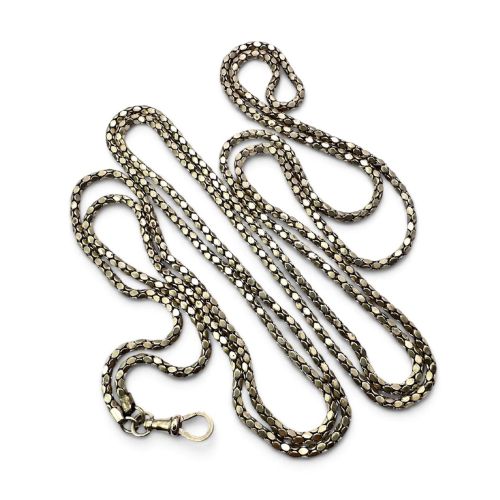
- A very long chain designed to be doubled around the neck, often equipped with an Albert clip for suspending pocket watches or pendants.
- Bangle bracelet
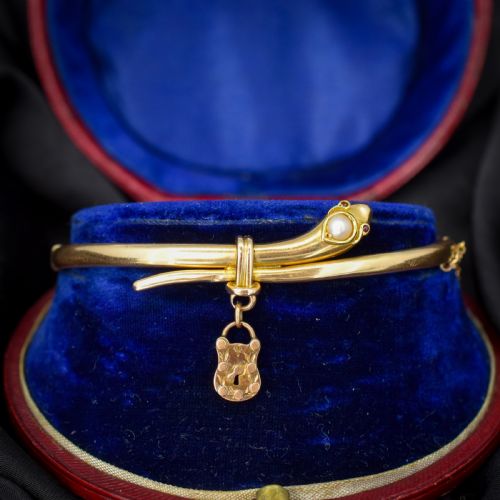
- A rigid circular ornament for the wrist, which in serpent designs often wraps around in a spiral or fastens with a hidden hinge.
Antique Snake Jewellery: Frequently Asked Questions
How can I date an antique snake ring?
Dating relies heavily on hallmarks stamped inside the band, which indicate the assay office, metal purity, and year of manufacture. Stylistic clues also help, such as the flowing organic lines typical of Art Nouveau or the geometric restraint of Art Deco.
Victorian pieces often display heavier gold weights and naturalistic engraving, whereas Edwardian examples frequently combine platinum with diamonds. Examining the cut of any stones provides further chronological context.
Are these pieces suitable for daily wear?
Many of these items, particularly solid gold bands and sturdy bangles, were built to withstand regular use. However, hollow constructions and flexible antique chains require gentle handling to avoid bending or snapping.
Pieces set with softer organic materials like pearls, turquoise, or coral demand extra care. Removing jewellery before swimming or heavy manual tasks preserves both the setting and the stones.
How do I care for gem-set serpent jewellery?
Maintenance involves gentle cleaning with a soft cloth and warm soapy water, avoiding harsh chemical dips that might damage vulnerable gemstones or enamel. Regular inspection by a professional jeweller ensures that old-cut diamonds and rubies remain secure in their original settings.
Storage should be separate from other items to prevent scratching. Keeping necklaces and bracelets flat or in dedicated compartments prevents the delicate coils from tangling.