


Antique Silver Table Rests
Antique silver table rests keep the tablecloth clean between courses, and these solid sterling and plated pieces bring practical elegance to the dining room.
Antique Silver Table Rests
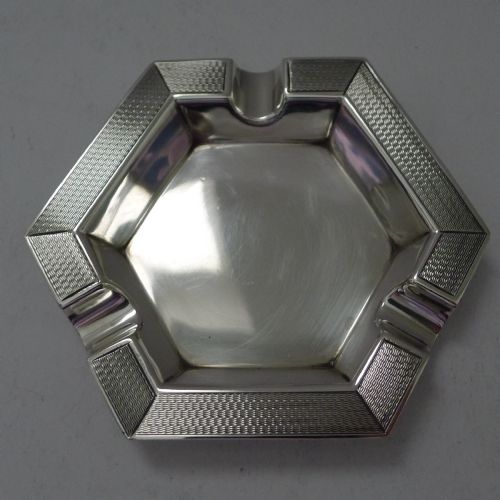
Antique silver table rests encompass small domestic supports designed to keep carving knives, spoons, and other tableware elevated off the linen during a meal. The selection on this page centres heavily on knife rests, alongside related table accessories such as ashtrays, spoon rests, and wine coasters.
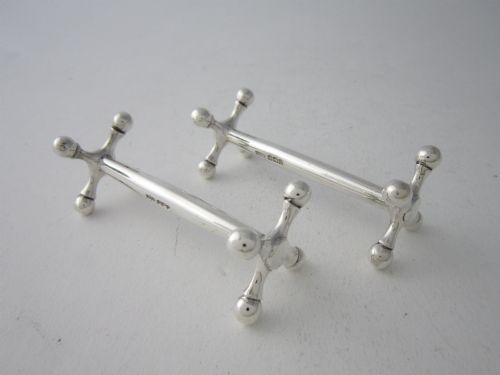
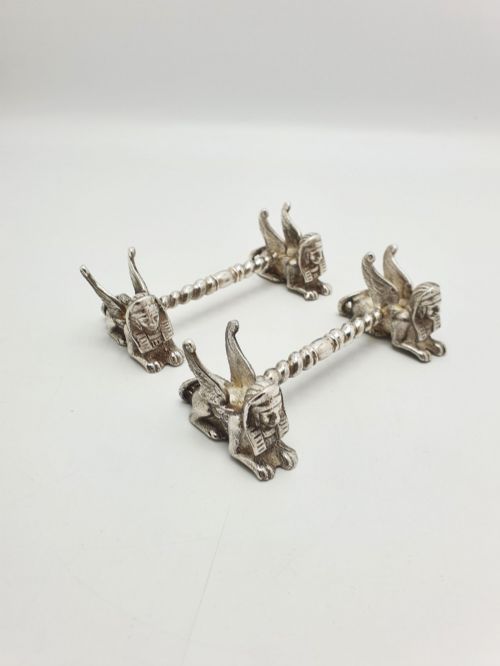
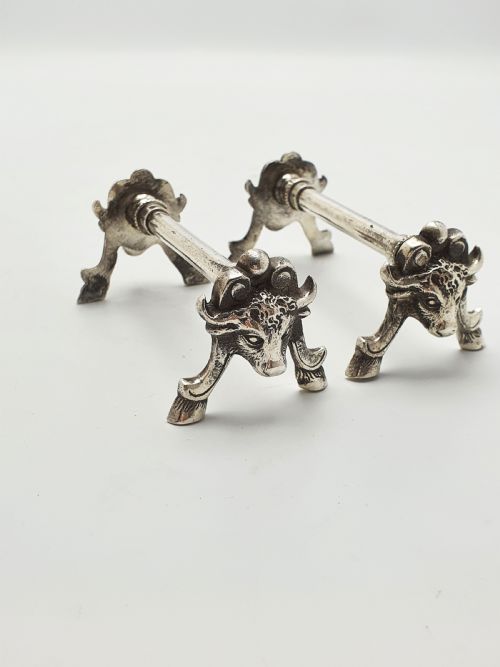
You will most frequently encounter pairs of knife rests dating from the Victorian and Edwardian eras, alongside George VI examples. These span straightforward utilitarian forms as well as decorative designs shaped as sphinxes, bull heads, and rampant lions.
The forms originate from the late nineteenth and early twentieth centuries, capturing periods from the 1880s through to the 1930s. Materials vary from sterling silver to silver plate, occasionally incorporating mother-of-pearl, wood, metal, and cut glass.
Making the rests
Many of these pieces utilise solid sterling silver or silver plate over a base metal, fashioned through casting and smithing techniques. Cast figural rests, such as those depicting lions or sphinxes, rely on detailed moulds to achieve their sculptural form.
Other variants incorporate mixed media, combining silver or silver plate with organic elements like mother-of-pearl shafts, wooden components, or heavy cut glass bases. These materials are assembled mechanically to secure the metal mounts firmly to the glass or pearl bodies.
Some rests are topped with miniature brass sphinxes, ready to guard your dinner table against rogue gravy drops.
Judging quality
Quality rests upon the crispness of the casting and the weight of the metal gauge used in construction. Heavy gauge silver plate or solid sterling silver yields a substantial feel in the hand, whereas lighter items lack that satisfying heft.
William Neale
The Antique Silver Table Rests Glossary
- Sterling silver
- A silver alloy containing 92.5 percent pure silver by mass, with the remainder usually copper. This standard guarantees the purity of the metal used in British hallmarks.
- Silver plate
- A layer of silver applied to a base metal core, such as copper or nickel silver. This technique offered a bright finish at a lower cost than solid silver.
- Knife rest
- A small horizontal support placed beside a plate to keep the blade and handle elevated from the tablecloth. They typically feature raised ends to prevent the cutlery from rolling off.
- Spoon rest
- A dedicated tabletop accessory designed to hold a serving spoon or ladle between uses. They prevent sticky or liquid residue from soiling the dining linen.
- Bottle coaster
- A circular tray, often featuring a wooden base and a silver or silver-plated rim, used to slide wine bottles across the table and protect the surface. These items share the dining table with rests and tableware accessories.
Antique Silver Table Rests: Frequently Asked Questions
How were table rests used historically?
Diners placed their carving knives, ordinary cutlery, or serving spoons onto these rests between courses to keep the table tidy and hygienic. They formed a standard part of formal table settings during the Victorian and Edwardian periods.
As dining habits evolved through the twentieth century, the need for dedicated rests diminished, leaving them as collectible tableware accessories today.
Are these pieces made of solid silver?
The inventory includes both solid sterling silver and silver-plated items, alongside pieces incorporating cut glass, wood, and mother-of-pearl.
Sterling silver examples bear hallmarks indicating their metal purity and origin, while plated versions feature a silver coating over a base metal.
How do I identify Victorian pieces?
Victorian examples often display the ornate, decorative styles popular during the nineteenth century, including figural designs like sphinxes, bull heads, and rampant lions. Their construction relies on heavy gauge silver plate or solid silver.
Comparing the stylistic motifs and any accompanying hallmarks helps differentiate these nineteenth-century items from later Edwardian or 1930s productions.