

Antique Silver T Bar
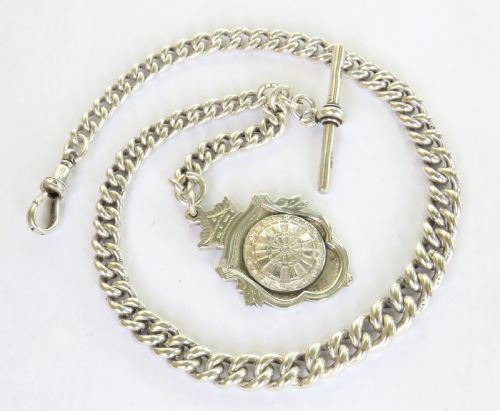
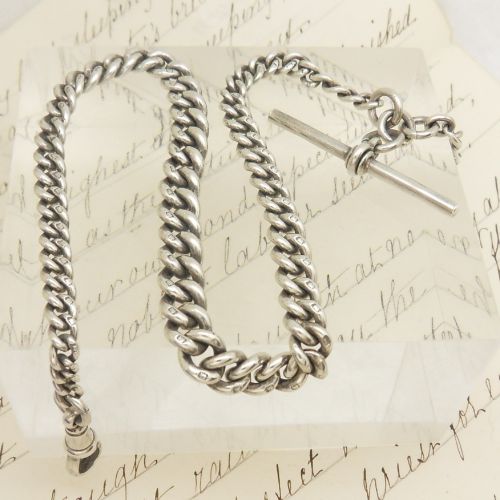
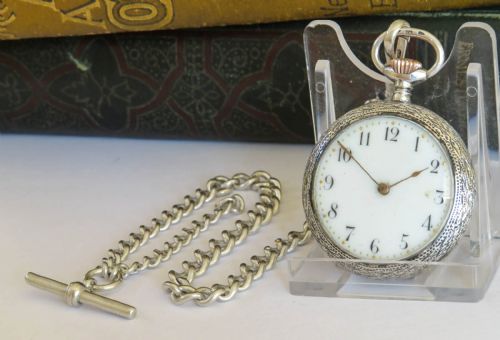
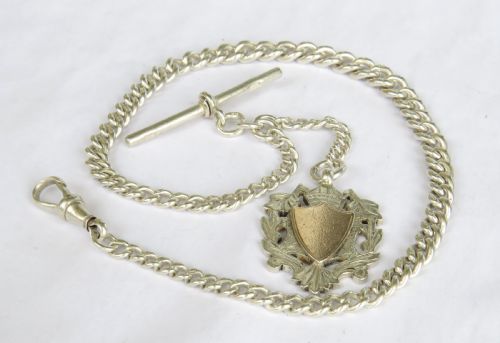
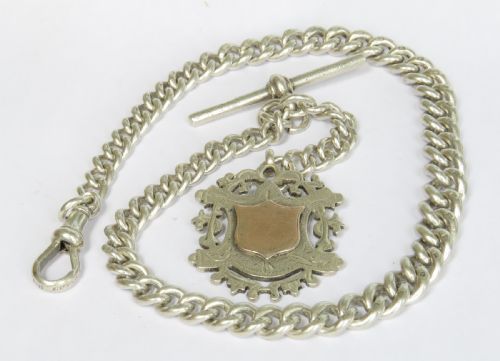
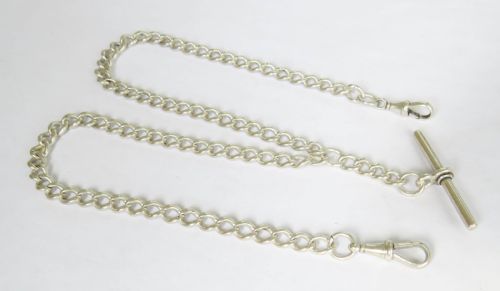
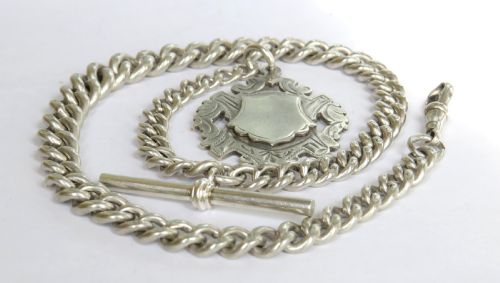
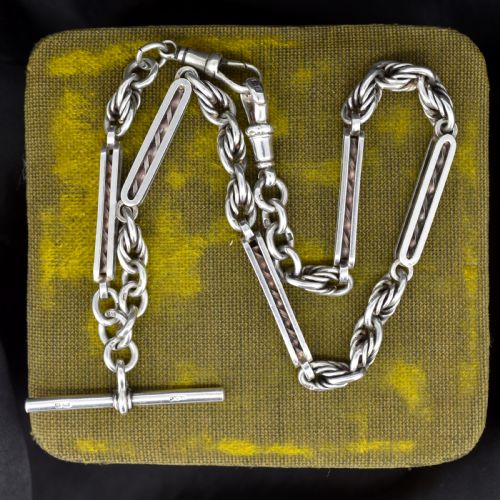
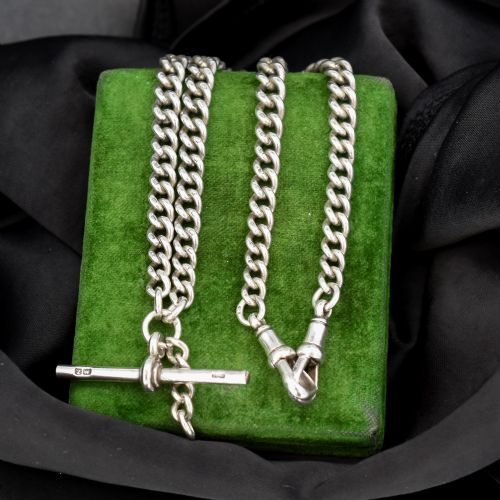
Discover an antique silver t bar, the essential cross-piece designed to secure pocket watch albert chains through a waistcoat buttonhole.
Antique Silver T Bar
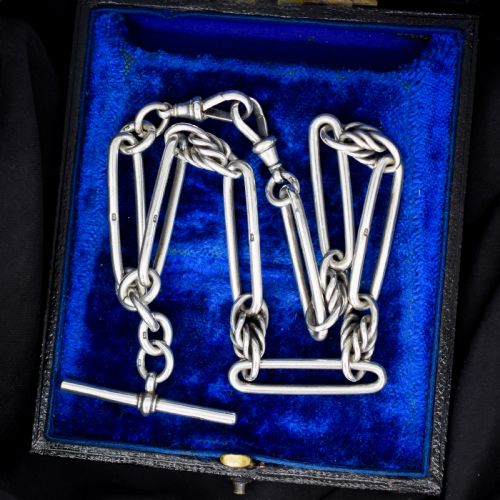
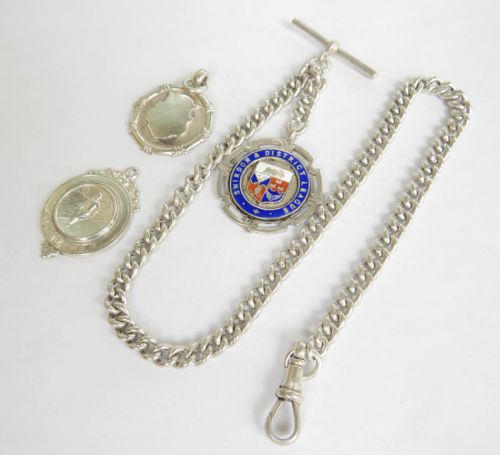
The pieces grouped under the search for an antique silver t bar are primarily pocket watch chains, albert chains, and related fob assemblies from the Victorian, Edwardian, and Art Deco periods.
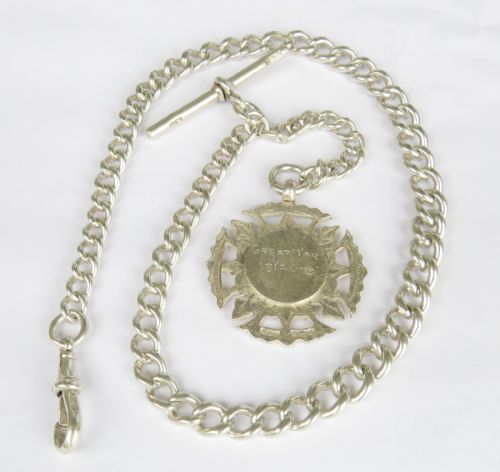
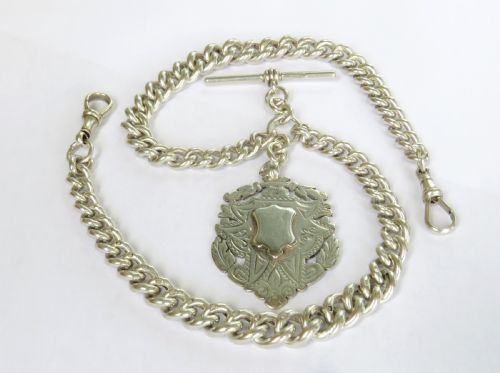
Most items on this page comprise sterling silver curb, trombone, or figaro link chains featuring a swinging bar at the centre, originally used by gentlemen to anchor pocket watches.
Beyond complete watch chains, buyers frequently encounter individual chains adapted as necklaces or paired with dog clips, vests, and sliding charms.
Silver Working and Link Construction
Makers utilised solid sterling silver, shaping wire into uniform, curb, trombone, or fancy links that were individually soldered and assembled by hand.
Components like the t bar, dog clips, and decorative sliding fobs were cast or stamped separately, then joined using jump rings to ensure flexibility and strength.
Some chains arrive accompanied by tiny silver dog clips that still snap firmly shut after more than a century of pocket duty.
Weight, Hallmarks and Link Integrity
The distinction between ordinary chains and superior examples rests on the heaviness of the silver gauge, the crispness of the individual link stamping, and the completeness of matching hallmarks on every component.
Substantial weight in the curb links and secure, sprung action within the dog clips indicate higher workshop standards from the nineteenth and early twentieth centuries.
PH Vogel·Sudre·Richard Comyns·Hukin & Heath·Barker Bros·Barnard & Sons·John Barrett
The Antique Silver T Bar Glossary
- Albert Chain
- A watch chain named after Prince Albert, designed to secure a pocket watch to a waistcoat via a t bar.
- T Bar
- The small transverse metal bar attached to a watch chain that slips through a buttonhole to anchor the chain securely.
- Dog Clip
- A small spring-loaded snap hook fastened to the end of a watch chain for attaching a pocket watch or charm.
- Vesta
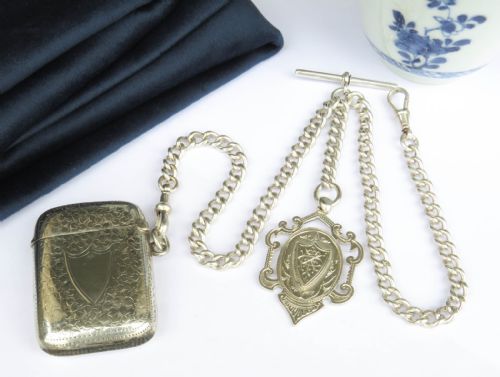
- A small pocket container used to hold matches, frequently found accompanying Victorian watch chains.
- Curb Link
- A chain design composed of interlocking links that have been twisted to lie flat.
Antique Silver T Bar: Frequently Asked Questions
How was an antique silver t bar worn?
The bar was slotted horizontally through a waistcoat buttonhole, allowing the attached albert chain to drape across the front of the garment.
One end connected to a pocket watch secured in the waistcoat pocket, while the other end often displayed a pendant fob or seal.
Can I wear these watch chains as a necklace?
Many buyers adapt these antique silver chains to be worn around the neck, utilising the existing length and dog clip fasteners.
The t bar serves as a decorative drop feature at the front or back of the necklace.
How do I date a silver watch chain?
Dating relies heavily upon the hallmarked letters and sterling standard stamps struck directly onto the individual links and the t bar itself.
Assay office marks and date letters provide the exact year of manufacture during the Victorian and Edwardian eras.
What is the difference between a single and double albert chain?
A single albert chain runs from a single pocket watch to the central buttonhole t bar, often featuring a drop pendant.
A double albert chain includes two distinct strands hanging from the t bar, allowing a watch on one side and a vesta or fob on the other.