



Antique Silver Oil Vinegar
Antique silver oil vinegar sets combine functional condiment vessels with polished frames, offering a glimpse into formal dining rituals of past centuries.
Antique Silver Oil Vinegar
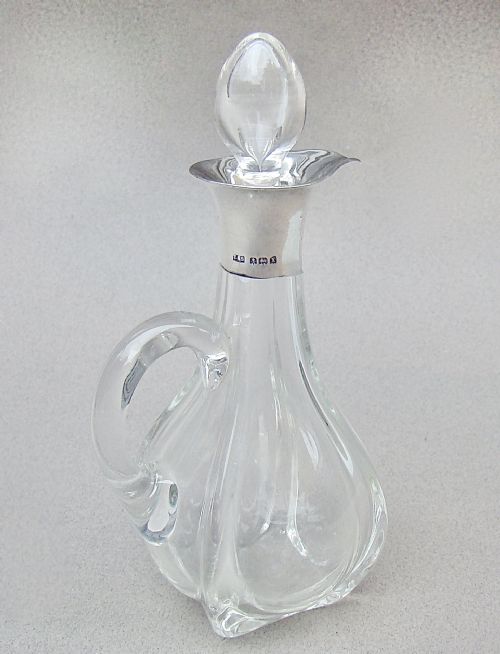
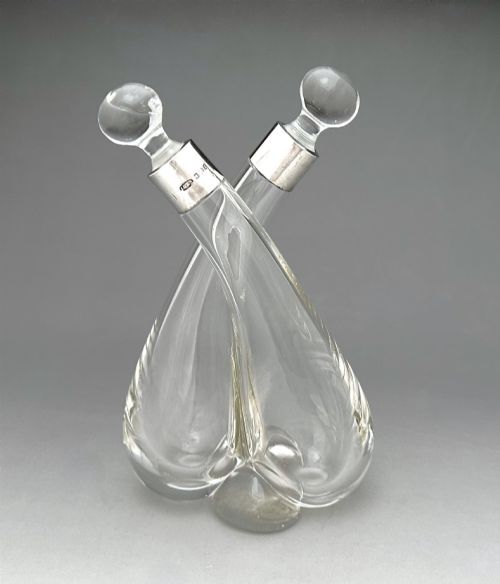
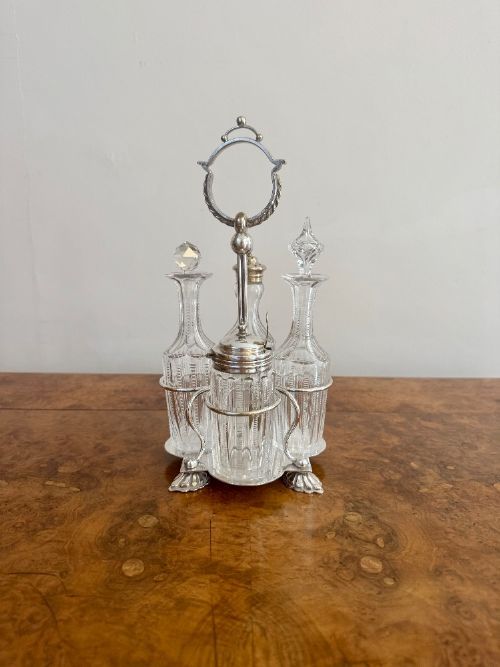
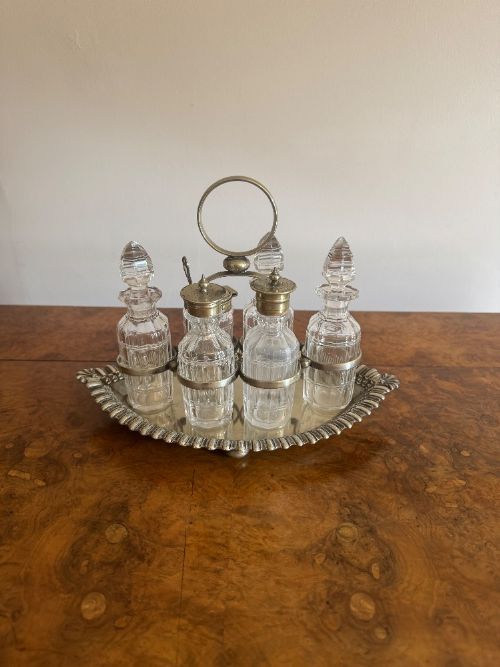
When you search for antique silver oil vinegar, you encounter a range of dining table accessories spanning from the Georgian period through to the Art Deco era. The most common forms on this page are cruet sets and stands holding cut glass bottles framed in silver or silver plate.
These pieces originated as essential table service items for holding condiments, with specific vessels dedicated to oil and vinegar. Examples vary from simple bachelor sets with two bottles to large frames accommodating up to seven or eight condiment pieces.
Makers produced these stands in styles reflecting prevailing tastes, including Grand Regency, Victorian Gothic, and Edwardian designs. The materials combine reflective metalwork with clear or cut glass bottles, sometimes featuring silver mounts or stoppers.
Materials and Construction Techniques
The construction of these sets relies heavily on sterling silver or silver plate combined with blown and cut glass. Metal frames are cast, stamped, or soldered to create secure rings and handles that support individual bottles.
Glass bottles and jugs feature hand-cut geometric patterns or plain surfaces, frequently fitted with silver collars and hinged or ground glass stoppers. Some stands incorporate ebonised wood bases to contrast against the polished metal framework.
Silversmiths employed techniques such as piercing, chasing, and engraving to decorate the metal stands, often adding decorative feet and central carrying rings.
Antique Silver Oil Vinegar Retail Price Guide 2026
Typical asking prices for silver oil vinegar among the pieces listed under this phrase on Sellingantiques today, from the lower quarter to the upper quarter. They describe what is for sale here now, not the wider market.
Listings feature pieces spanning the eighteenth, nineteenth, and twentieth centuries, incorporating sterling silver, silver plate, and cut glass.
Distinctions in Quality and Craftsmanship
Quality in these pieces is determined by the weight and purity of the silver or the thickness of the silver plating over the base metal. Heavier gauge metalwork and crisper hand-chased detailing distinguish superior examples from standard production items.
The integrity of the glass elements significantly influences the overall standard of a set. Matching cut glass bottles with original stoppers and minimal wear to the facets indicate higher original manufacture and careful preservation.
Maker attribution also plays a role, with documented workshops demonstrating finer precision in the assembly of the frame and the fit of the bottles within their designated rings.
Mappin Brothers·Walker & Hall·Charles Thomas Fox·Elkington & Co·Hester Bateman·William Hutton & Sons·Wade Wingfield Wilkins·Christofle
The Antique Silver Oil Vinegar Glossary
- Cruet set
- A collection of glass bottles or casters held in a metal frame for dispensing condiments at the table.
- Silver plate
- A layer of silver fused to a base metal core, commonly used in tablewares from the nineteenth century onwards.
- Cut glass
- Glass decorated by grinding facets or patterns into the surface using a rotating wheel, creating reflective qualities.
- Caster
- A small jar or container with a perforated top used for shaking dry seasonings like sugar or pepper.
- Hallmark
- A series of official marks stamped on precious metal items indicating the standard of purity, maker, and assay office.
Antique Silver Oil Vinegar: Frequently Asked Questions
What is an antique silver oil vinegar set?
An antique silver oil vinegar set is a tabletop frame holding specialised glass bottles designed for dispensing oils and vinegars during meals.
These sets often include additional cruets for mustard, pepper, and sauces, all arranged in a portable metal stand.
How were these sets used?
Diners used these sets at the dining table to season dishes to personal taste during meals.
Servants or guests would lift individual bottles using their silver mounts to pour oil and vinegar onto salads or other courses.
How do I clean antique silver and glass?
Clean silver components using a soft cloth and a specialised silver polish formulated to remove tarnish without scratching the metal.
Wash the glass bottles gently in warm soapy water, avoiding harsh abrasives that could damage old cut facets or silver collars.
How can I tell the period?
Dating relies on examining hallmarks stamped on the silver parts, stylistic cues in the frame design, and the manufacturing technique of the glass.
Georgian pieces display different handle forms and stand silhouettes compared to later Victorian or Edwardian examples.