
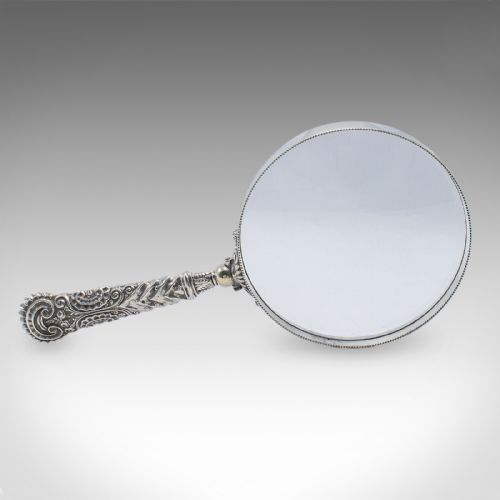


Antique Silver Magnifier
These antique silver magnifier pieces bring functional elegance to a desk, pairing precious metal mounts with clear glass lenses.
Antique Silver Magnifier
An antique silver magnifier is a practical desk accessory or library aid designed for reading small print and examining fine detail. The pieces found here span the Victorian era, the Edwardian period, and the Art Deco years, alongside mid-century examples.
Most items combine sterling silver or silver plate with glass optics, occasionally accompanied by materials such as shagreen, jade, or enamel. Forms range from handheld reading glasses and thumb magnifiers to larger map magnifiers and figural quizzing glasses.
Origins include English workshops, French makers, and Chinese craftsmanship from the nineteenth and twentieth centuries. Buyers encounter both utilitarian library tools and decorative luxury objects bearing distinct period styling.
How they were made
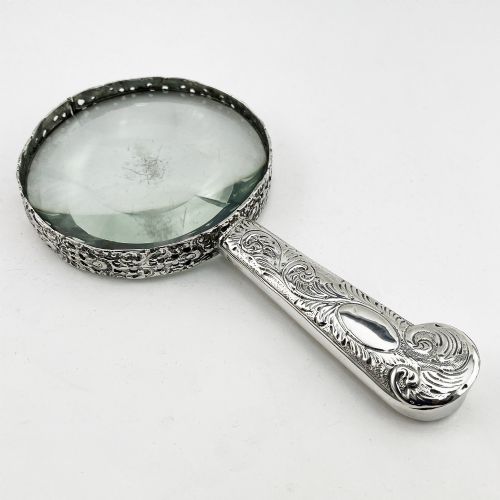
Silversmiths shaped sterling silver and silver plate into frames and handles, often incorporating hallmarks to denote the assay office and year of production. Methods included casting, stamping, and hand-finishing, sometimes applying silver gilt or guilloche enamel directly to the metal surface.
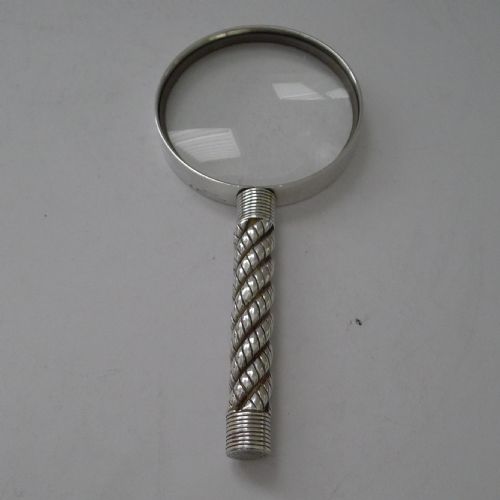
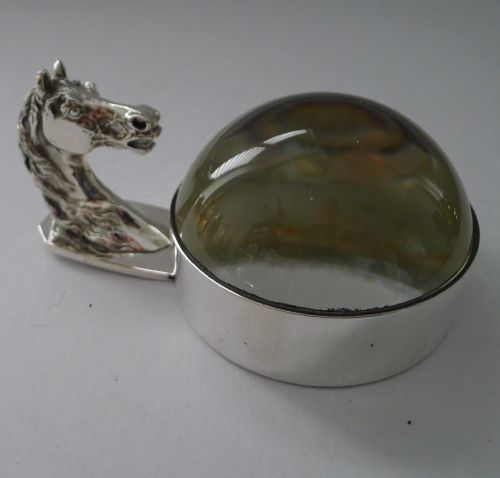
Optical glass lenses were set securely into metal mounts, occasionally supported by secondary materials like leatherette, velvet, brass, or textured shagreen wrapped around a core. Detailed elements such as horse heads or cordage motifs were cast or carved to embellish the handles.
Periods represented range from the nineteenth century through Victorian, Edwardian, and Art Deco eras to mid-century modern design.
What varies in quality
Quality rests upon the weight and purity of the metal frame, the clarity and thickness of the glass lens, and the integrity of any decorative additions like enamel or shagreen. Substantial sterling silver mounts and crisp hallmarks indicate higher production standards than lighter silver plate.
The refinement of the handle design and the precision of the lens seating separate standard library aids from luxury pieces produced by established firms. Preservation of delicate surfaces, such as shagreen or guilloche enamel, distinguishes well-kept examples from heavily worn pieces.
Hermes Paris·Broadway And Co·Mappin And Webb·Asprey
The Antique Silver Magnifier Glossary
- Sterling silver
- An alloy containing a high proportion of pure silver by weight, standard in quality British silverwork. It is typically marked with a lion passant to confirm its standard.
- Silver plate
- A base metal foundation coated with a thin layer of silver. This technique offered the visual appeal of solid silver at a lower production cost.
- Guilloche enamel
- A decorative technique where translucent enamel is layered over mechanically engraved metal. It produces a repeating geometric pattern visible beneath the coloured glass-like coating.
- Shagreen
- Undyed skin from a shark or ray, processed to yield a rough, pebbled texture. It is often wrapped around handles or frames for grip and decoration.
- Quizzing glass
- A type of handheld magnifying lens or monocle mounted on a handle or worn around the neck. It served as both an optical aid and a fashionable accessory in previous centuries.
Antique Silver Magnifier: Frequently Asked Questions
What were antique silver magnifiers used for?
These items served primarily as practical reading aids for books, maps, and correspondence on desks and in libraries. Wealthy owners also used decorative versions for inspecting fine prints, fabrics, or jewellery.
Over time, many of these pieces transitioned from working tools to decorative desk accessories. Their dual function of utility and ornamentation made them staples in studies and drawing rooms.
How do I date an antique silver magnifier?
Dating relies heavily on hallmarks stamped into the metal mounts, which indicate the city of assay and the year of production. Stylistic markers also provide strong clues, such as geometric motifs from the Art Deco period or ornate scrolling from the Victorian era.
Materials can help narrow the timeline as well, since shagreen and guilloche enamel gained particular popularity during the interwar years. Comparing the form and construction to documented pieces from known makers clarifies the age further.
Are these magnifiers still functional today?
Most of these pieces retain their original optical glass lenses and remain entirely usable for reading small print. The magnification strength varies by design, from gentle handheld readers to stronger thumb magnifiers.
Care should be taken when handling older lenses and delicate handle materials like enamel or shagreen. Regular dusting and gentle cleaning of the silver help maintain their appearance during daily use.
What is the difference between sterling and plated versions?
Sterling silver pieces consist of solid silver alloy throughout the frame and handle, usually confirmed by official hallmarking. Silver plate involves a thin layer of silver bonded to a base metal core such as brass.
Solid sterling examples generally carry higher intrinsic value and heavier weight in the hand. Silver plated items provided an accessible luxury for period households without the higher cost of solid precious metal.