



Antique Silver Funnel
An antique silver funnel decants fine wine cleanly while bringing period craftsmanship straight to the dining table.
Antique Silver Funnel
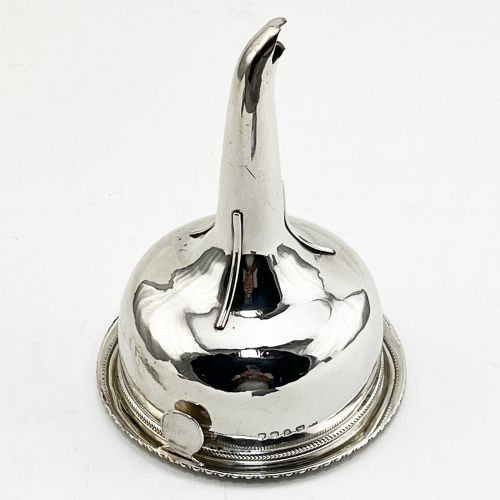
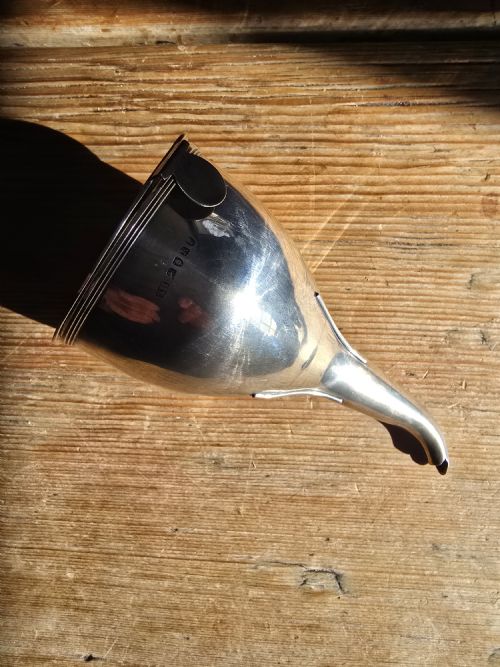
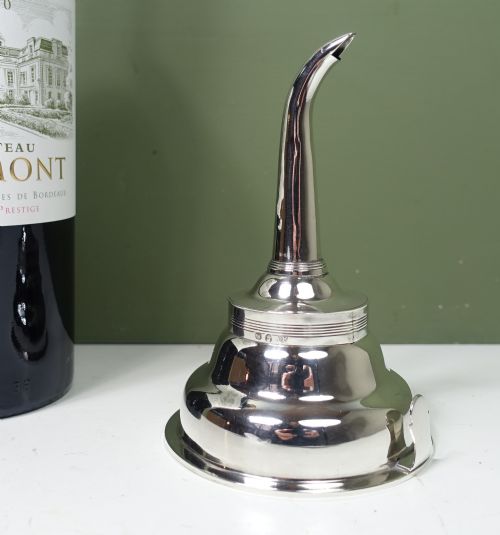
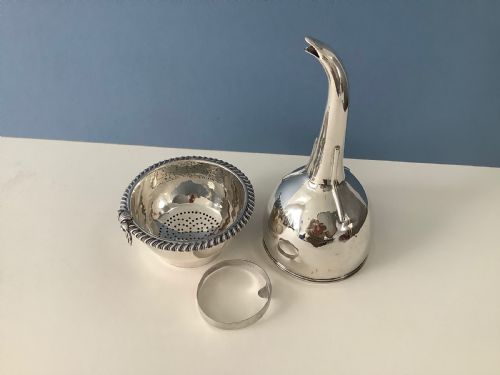
An antique silver funnel serves the traditional purpose of decanting older wines to separate sediment from liquid, appearing primarily in wine-related forms alongside occasional perfume and hip flask variations. The examples found here span the Georgian, Regency, and mid-twentieth century periods, showing how silversmiths adapted this barware accessory over generations.
The most common form on this page is the Georgian sterling silver wine funnel, often constructed in three parts to hold a removable straining gauze. Buyers frequently encounter pieces originating from London workshops, alongside English provincial centres and nineteenth-century iterations.
Materials and construction methods
Silversmiths constructed these pieces primarily from sterling silver and solid silver, hammering and shaping the metal to form the wide bowl and tapering spout. The technique requires precise soldering to join the sections while maintaining a smooth interior flow for liquids.
Many examples incorporate a fitted straining disc or removable gauze held within the central section, punched with tiny holes to catch grape skins and sediment. Artisans also utilised Old Sheffield plate and copper on specific pieces, fusing thin layers of silver over base metal cores.
Antique Silver Funnel Retail Price Guide 2026
Typical asking prices for silver funnel among the pieces listed under this phrase on Sellingantiques today, from the lower quarter to the upper quarter. They describe what is for sale here now, not the wider market.
Distinctions in quality and execution
The gauge of the silver dictates the physical substance and durability of the funnel, with heavier metal providing a reassuring weight in the hand. Substantial metal thickness prevents denting along the fragile rim and spout during daily use.
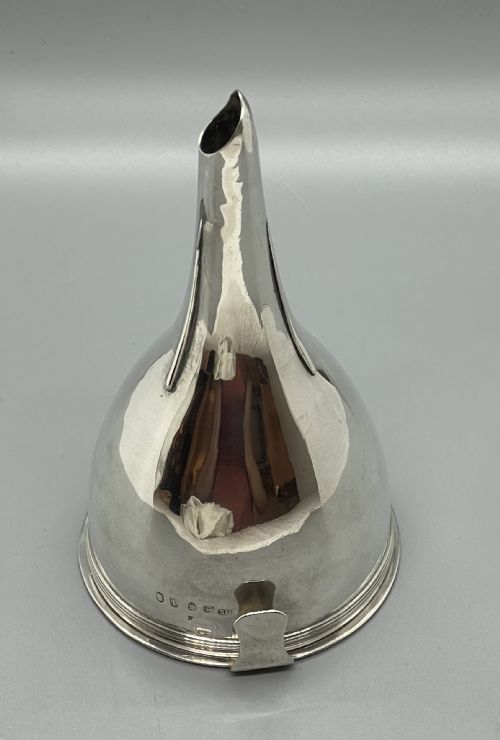
The clarity and placement of the hallmarks indicate the standing of the maker and the provenance of the piece, adding significant interest for collectors. Additionally, the finesse of the pierced work on the internal straining disc separates standard utility items from masterwork creations.
Solomon Hougham·Lowe & Sone·Bateman
The Antique Silver Funnel Glossary
- Gauge
- The thickness of the silver sheet used to form the body of the funnel. A good gauge ensures the object resists bending under pressure.
- Old Sheffield plate
- A composite material made by fusing a thin sheet of silver to a copper base, popular before modern electroplating techniques.
- Hallmark
- A series of official stamps applied to precious metals indicating the standard of purity, the assay office, and the year of manufacture.
- Decanting
- The process of pouring liquid from a bottle into another vessel to separate the clear wine from the accumulated sediment.
- Gauze
- The perforated or mesh insert positioned inside the funnel to strain out solid particles during the pouring process.
Antique Silver Funnel: Frequently Asked Questions
What is an antique silver funnel used for?
These implements were originally designed to transfer wine from a bottle into a decanter while filtering out natural sediment.
Today, collectors use them for their historical charm and functional decanting abilities during formal dinner parties.
How do I date a silver funnel?
Dating relies heavily on the stamped hallmarks, which reveal the assay office, date letter, and maker's mark.
Stylistic cues such as the presence of gadroon borders or the three-part construction also help place pieces within the Georgian or Regency eras.
Are all wine funnels made of solid silver?
While the majority of pieces on this page consist of sterling or solid silver, alternative materials do exist in the historical record.
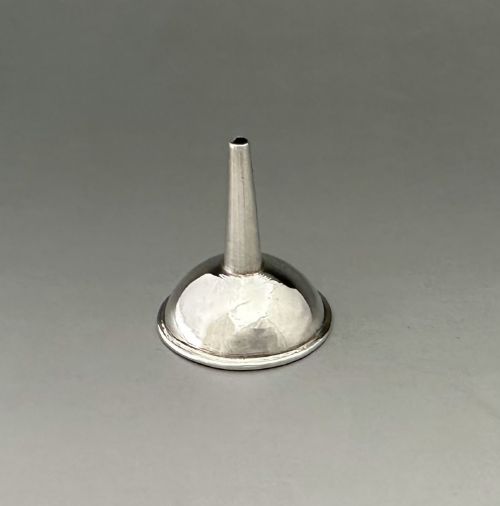
Makers also utilised Old Sheffield plate and copper, particularly for smaller items like perfume funnels or portable hip flask accessories.
How should I clean my silver funnel?
Gentle washing in warm soapy water with a soft cloth removes residue without harming the historical surface.
Harsh abrasive dips should be avoided to preserve the integrity of the antique silver and any underlying base metal.