


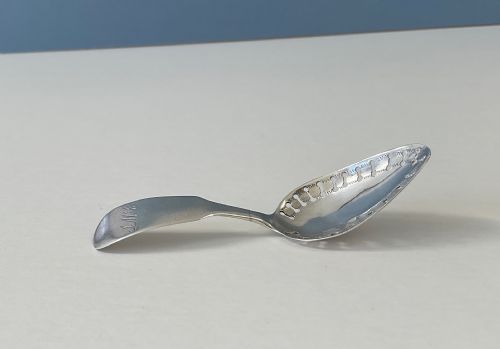


Antique Silver Caddy Shovel
These antique silver caddy shovel pieces are small tea accessories designed for measuring dry leaves, bringing tactile history directly to the daily ritual.
Antique Silver Caddy Shovel
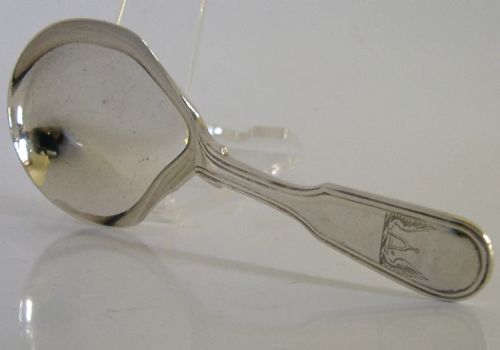
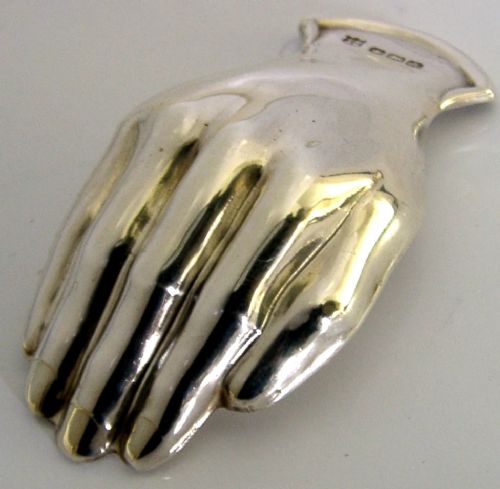
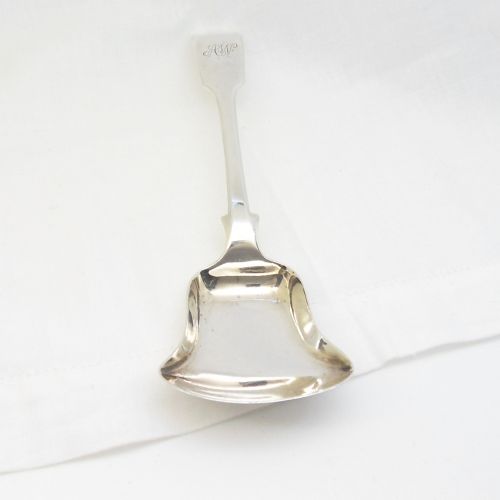
An antique silver caddy shovel is a specialised tea accessory designed to transfer loose leaves from a caddy into a pot, appearing most frequently in forms associated with the Georgian and Victorian eras. These small spoons vary from simple shovel bowls to novelty hand shapes, reflecting the domestic habits of past centuries.
The pieces listed here span the eighteenth, nineteenth, and twentieth centuries, taking in regional British provincial centres alongside London workshops. Buyers encounter everything from plain Georgian shovel designs to Edwardian novelty hands and later Scandinavian interpretations.
Makers shaped these items for practical use alongside fine tea ware, resulting in functional implements that double as miniature sculptures. They remain collected for their varied bowl shapes and period hallmarks.
How They Were Made
Silversmiths constructed these implements primarily from sterling silver, shaping the metal through hammering and cutting to form the distinctive shallow shovel bowls and short handles. Certain examples received parcel-gilt or silver-gilt finishes, applying a layer of gold to the interior of the bowl for decorative contrast and protection against tea stains.
Makers utilised punches to apply hallmarks denoting the town of assay, the date letter, and the sterling standard, alongside individual maker marks. These struck details anchor each piece to a specific workshop and year of production.
Antique Silver Caddy Shovel Retail Price Guide 2026
Typical asking prices for silver caddy shovel among the pieces listed under this phrase on Sellingantiques today, from the lower quarter to the upper quarter. They describe what is for sale here now, not the wider market.
Listings feature sterling silver pieces spanning the Georgian, Victorian, and Edwardian periods, alongside twentieth-century Scandinavian designs.
What Varies in Quality
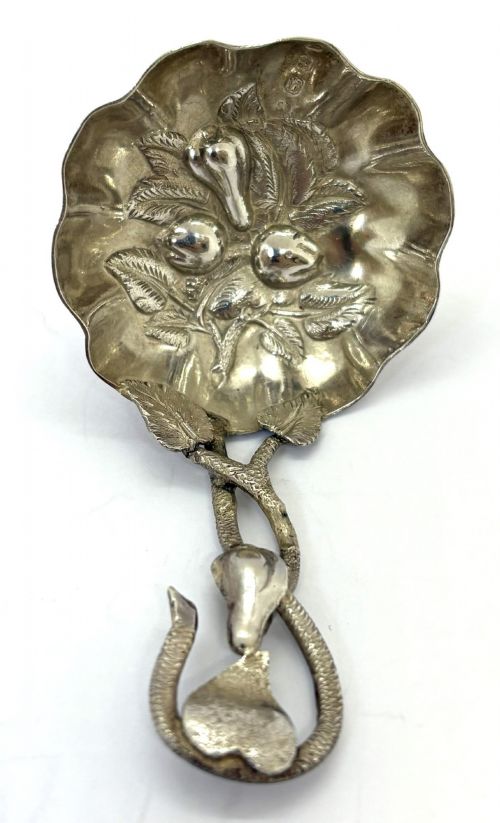
The distinction between standard production and superior examples rests upon the crispness of the strike and the ingenuity of the form. Novelty shapes, such as hands or naturalistic shovels, demand greater skill from the silversmith than plain stamped bowls.
Provincial pieces and items bearing clear, legible hallmarks from identifiable makers generally command greater interest from collectors. The survival of original gilding and the weight of the silver further separate ordinary items from exceptional survivals.
John Walton·Mappin & Webb·Georg Jensen·George Unite·George Wintle
The Antique Silver Caddy Shovel Glossary
- Sterling silver
- An alloy comprising ninety-two point five percent silver and seven point five percent other metals, typically copper. This standard composition ensured durability for daily tea service use.
- Silver-gilt
- Silver objects that have been coated with a thin layer of gold over their entire surface. This treatment protected the metal from tarnishing through contact with tea leaves.
- Parcel-gilt
- Silver work where only specific sections, such as the interior of the shovel bowl, receive a gold coating. It created a two-tone visual effect.
- Assay office
- The official body that tested precious metals and struck hallmarks onto items to guarantee their standard. Towns such as London, Newcastle, and Glasgow maintained distinct offices.
- Hallmark
- A series of official marks stamped onto precious metal items indicating the maker, purity standard, and year of manufacture. These marks provide the primary evidence for dating an antique.
Antique Silver Caddy Shovel: Frequently Asked Questions
How do I date a silver caddy spoon?
Dating these pieces relies on examining the struck hallmarks found on the metal, which include date letters and town marks. Matching these symbols to official assay records reveals the exact year of manufacture.
Stylistic elements like the form of the bowl and handle also help identify whether a piece belongs to the Georgian, Victorian, or Edwardian era.
Were these shovels used for sugar?
While primarily designed for dry tea leaves, similar small shovel forms served for sugar lumps or loose granules during tea service. The terminology in period records sometimes overlaps between tea and sugar accessories.
Examining the bowl depth and shape usually indicates whether the implement was intended for leaves or sugar.
How should I display silver caddy spoons?
Silver caddy spoons fit well inside shallow display cabinets or mounted within specialised frames that protect them from dust and handling. Their small scale allows several examples to be arranged together without requiring excessive space.
Keeping them away from direct sunlight and damp environments preserves the finish of the silver.