




Antique Silver Bottle Collar
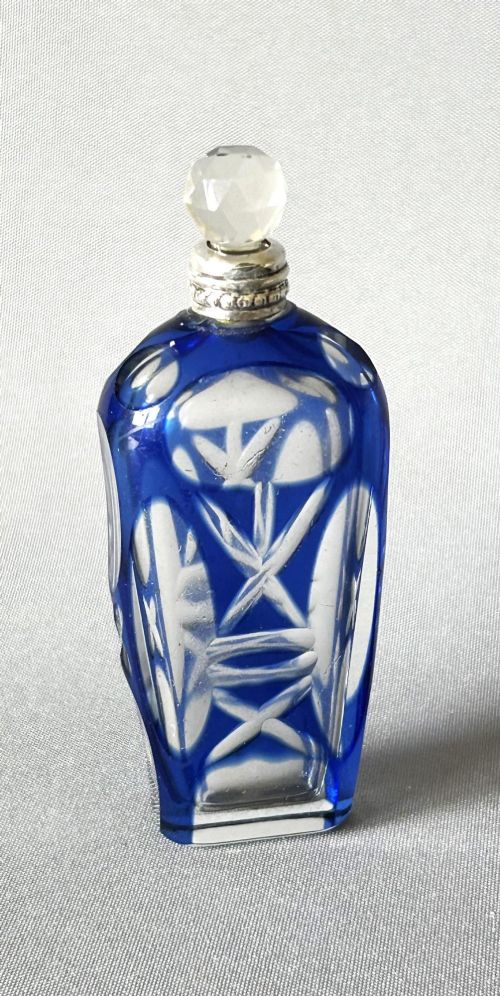
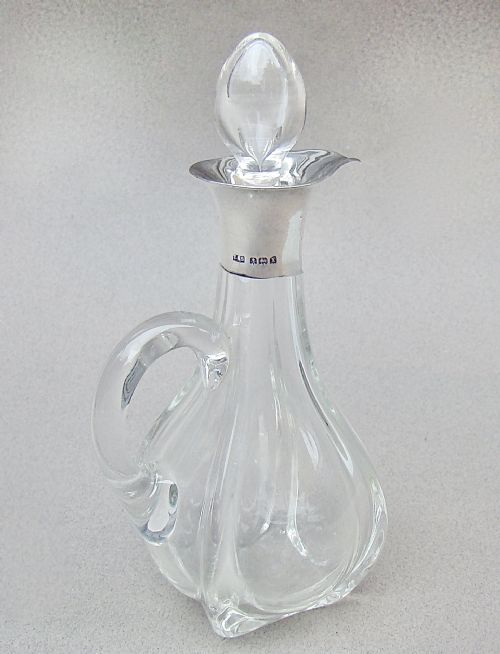
An antique silver bottle collar fastens about the neck of a decanter or scent bottle, bringing bright metalwork to glassware.
Antique Silver Bottle Collar
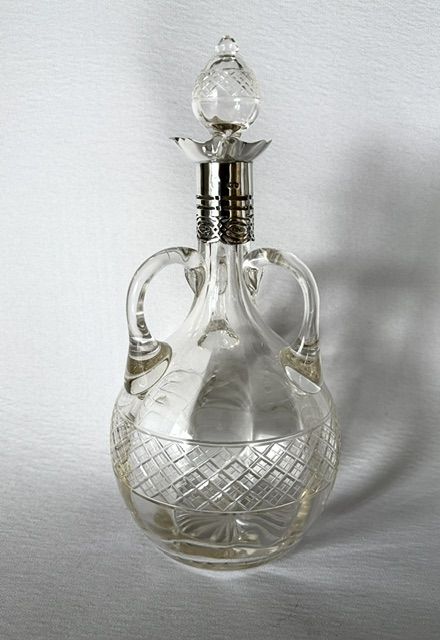
An antique silver bottle collar belongs to vessels designed for the table and dressing room, primarily decanters, whisky noggins, and scent bottles. These pieces span periods from the nineteenth century through the Edwardian era and the Art Deco years into the mid-twentieth century.
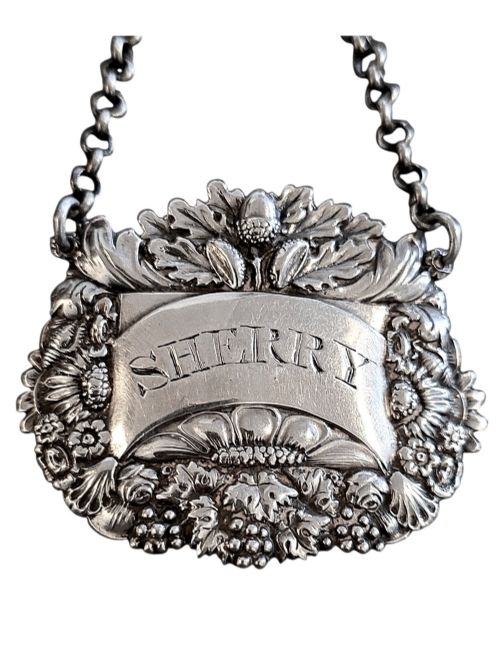
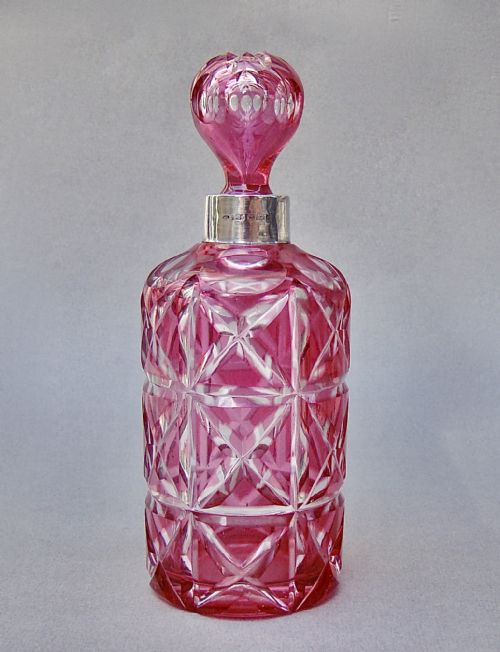
The most common form encountered in this selection is the cut glass or crystal decanter fitted with a hallmarked silver collar framing the neck. Collectors also find smaller perfume bottles, globular scent vessels, and spirit jugs paired with matching labels.
Origins range across English workshops alongside continental examples in Bohemian glass and French silver. Buyers select these items for their blend of heavy pressed or cut glass and polished metalwork.
Silver and glass construction
Makers combined blown or moulded glass bodies with sterling silver, silver plate, or silver gilt mounts shaped to fit the bottleneck precisely. Glass portions frequently feature deep wheel-cutting, floral etching, or faceted panels that catch the light.
Silver collars were shaped from sheet metal, stamped with hallmarks denoting the assay office and year, and secured to the glass neck with specialist adhesives or physical tension. Enamel details and locking mechanisms occasionally supplement the standard metal and glass assembly.
Antique Silver Bottle Collar Retail Price Guide 2026
Typical asking prices for silver bottle collar among the pieces listed under this phrase on Sellingantiques today, from the lower quarter to the upper quarter. They describe what is for sale here now, not the wider market.
One novelty decanter takes the form of a Scottish thistle complete with prickly silver-plated leaves.
Assessing quality in metal and glass
Quality rests upon the clarity and weight of the crystal or glass alongside the crispness of the silver hallmarks and mount execution. Heavy, deeply cut glass with sharp facets indicates superior production compared to lighter moulded alternatives.
The distinction between standard commercial pieces and the finest work lies in the integration of the collar with the vessel and the presence of named maker marks. Superior items maintain unblemished glass surfaces and tight, secure collars without movement.
Harold Bushell and Co·Hukin and Heath Ltd·Archibald Knox for Liberty·Barnsley and Co·Freeman and Son Ltd·Mappin and Webb
The Antique Silver Bottle Collar Glossary
- Hallmark
- Official stamps applied to precious metals indicating the standard of purity, the assay office, and the year of testing. These marks allow collectors to date the silver mount accurately.
- Decanter
- A vessel used for holding and serving wine or spirits, typically supplied with a stopper. In this category, the glass body is enhanced by a metal neck mount.
- Whisky Noggin
- A small spirit decanter designed for a single serving of whisky, often fitted with a silver collar and a matching label. They frequently date from the Edwardian period.
- Cut Glass
- Glass shaped and patterned by abrasive wheels, producing sharp facets that reflect light. This technique provides the heavy texture characteristic of these bottles.
- Silver Gilt
- Silver that has been coated with a thin layer of gold on its surface. This treatment imparts a warm, golden tone to the metal collar or label.
Antique Silver Bottle Collar: Frequently Asked Questions
How do I date a silver bottle collar?
Dating relies upon the assay office marks and date letters stamped directly into the silver collar. Comparing these hallmarks against standard tables reveals the exact year the metal mount was tested and registered.
Secondary indicators include the cutting style of the glass and the overall silhouette, which often reflects design movements such as Edwardian restraint or Art Deco geometry.
Are scent bottle collars removable?
Collars are permanently affixed to the glass necks during manufacture to ensure a rigid mount for stoppers and locks. Attempting to remove the metalwork typically damages both the silver and the underlying glass.
Cleaning must therefore be managed around the fixed collar, using warm water and specialist bottle brushes to clear the interior.
How should I clean silver collars?
Silver collars require gentle polishing with a soft cloth to avoid staining the adjacent glass with cleaning compounds. Protective barriers can be placed between the metal and the glass during maintenance if necessary.
Harsh chemical dips should be avoided to protect both the antique hallmarks and the integrity of the glass adhesive.