


Antique Silver Belt
An antique silver belt delivers a tangible piece of historical attire, bringing sculpted metal and fastened utility straight to modern wear.
Antique Silver Belt
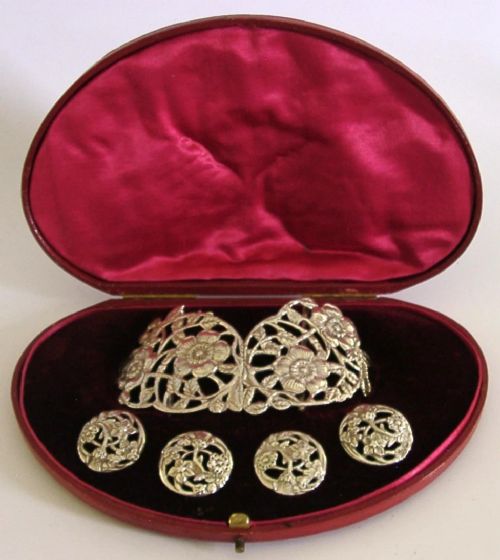
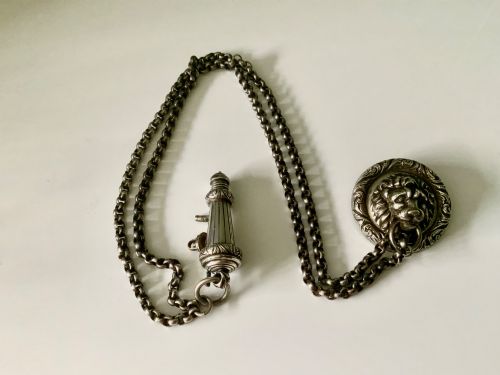
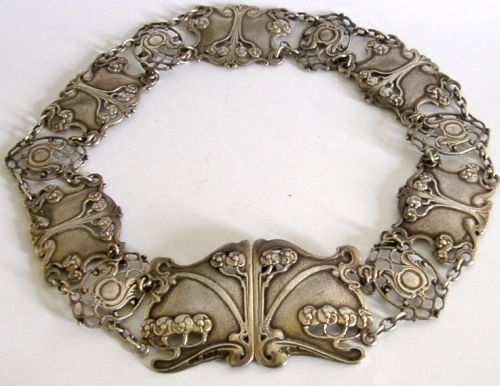
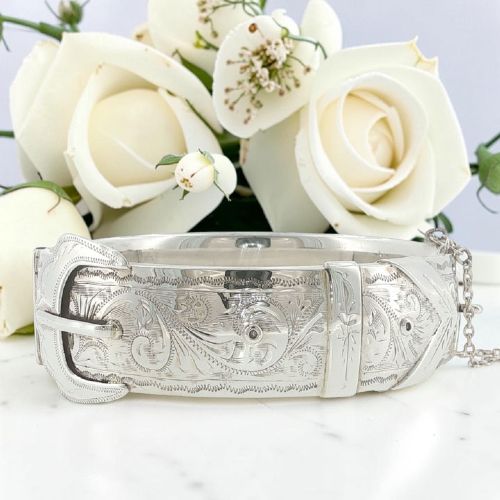
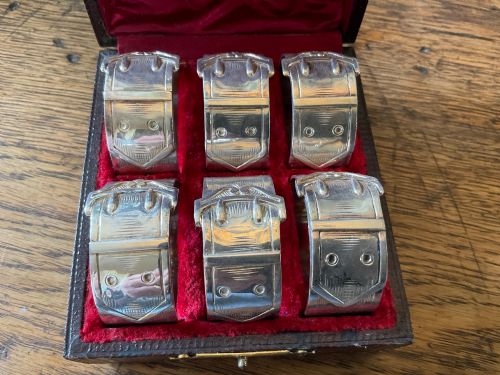
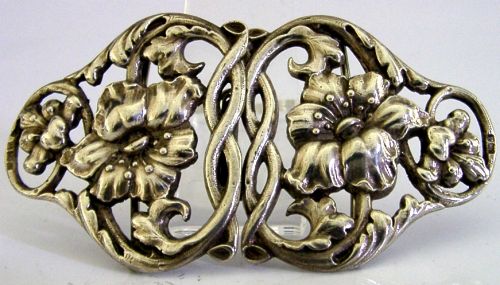
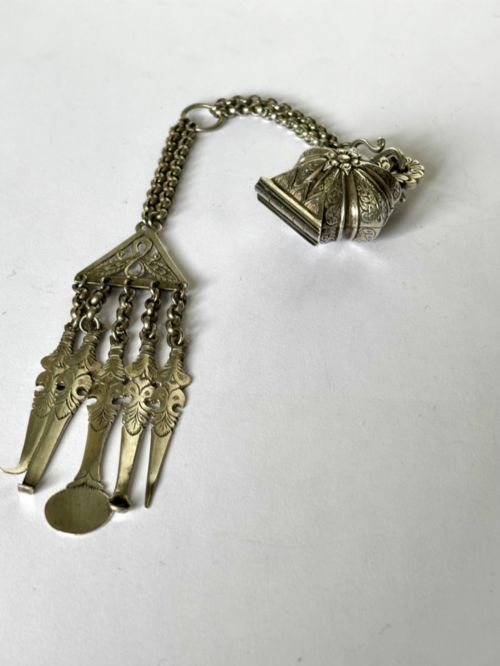
When you search for an antique silver belt, you encounter complete assemblies alongside individual statement buckles, chatelaines, and specialised nurses' uniform pieces. The items span Victorian, Edwardian, and Art Nouveau periods, taking the form of solid sterling links, hinged clasps, and regional filigree work.
You meet English cast sterling examples, Scottish agate-set pieces, and imported silver gilt items from various international workshops. The selection frequently includes pierced scroll designs, heart motifs, and dragon patterns intended to secure traditional or ceremonial garments.
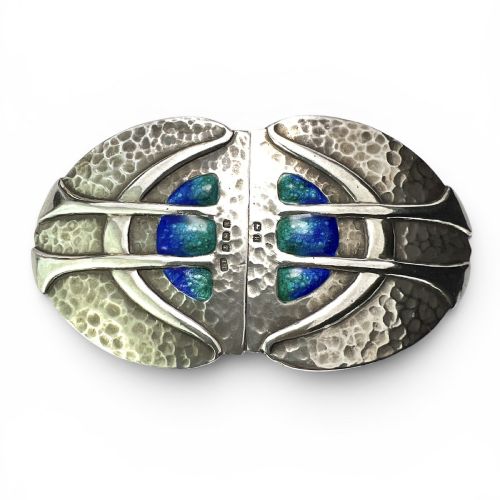
Complete flexible belts appear alongside separate buckles designed to fasten onto fabric bands, offering distinct ways to incorporate period metalwork into contemporary settings.
Distinctions in Execution
Quality rests in the crispness of the cast relief, the depth of the hand-engraving, and the integrity of any applied enamel or gilding. Superior examples maintain sharp detail across high-relief motifs like cherubs or dragons without softening from excessive wear or over-polishing.
The weight of the silver and the sturdiness of the hinge mechanisms separate utilitarian items from finer decorative pieces. Marked assay offices and clear maker stamps provide verifiable origin points that elevate the standing of an individual buckle.
Listings feature silver belts and buckles spanning the eighteenth, nineteenth, and early twentieth centuries.
James Fenton·Henry Matthews·John Campbell of Doune·Peter Behrens for Osiris
The Antique Silver Belt Glossary
- Sterling silver
- A silver alloy containing 92.5 percent pure silver by mass, standard in British silverwork. This metal provides the durable base for many Victorian and Edwardian buckles.
- Silver gilt
- Silver that has been coated with a thin layer of gold on its surface. This technique produces a warm, dual-tone appearance seen on various chatelaines and decorative clasps.
- Chatelaine
- A decorative belt hook or clasp from which suspended chains carry everyday household and personal tools. These functional accessories often featured matching silverwork and specialised hanging implements.
- Niello
- A black metallic alloy used as an inlay on engraved or etched metal surfaces. It creates stark contrasting designs, frequently found on Russian silver pieces.
- Telkari
- A traditional wire-work filigree technique involving twisted silver threads soldered together. This method creates open, lace-like patterns characteristic of regional belts from the Black Sea coast.
Antique Silver Belt: Frequently Asked Questions
What periods do these silver belts come from?
The pieces originate primarily from the nineteenth and early twentieth centuries, spanning Victorian, Edwardian, and Art Nouveau movements. You also find eighteenth-century Scottish Highland examples and later regional imports.
Most items cluster around the late Victorian and Edwardian eras, reflecting the popularity of decorative waist accessories and nursing uniforms during those decades.
How were nurses' belt buckles used?
Nurses wore solid silver buckles attached to heavy cotton or fabric belts as part of their formal hospital uniform. These pieces often denoted specific training schools or professional status.
The sturdy construction allowed the buckles to withstand daily wear while remaining a polished, decorative element of the traditional ward attire.
Can I wear an antique buckle on a modern belt?
Many individual buckles feature a standard loop and prong mechanism designed to accommodate flexible fabric or leather straps. You can attach them to appropriately sized modern bands.
Heavier cast metal pieces or fragile enamel examples require careful handling to ensure the antique fastenings experience minimal strain during regular use.
How do I identify silver purity marks?
British pieces carry hallmarks indicating the assay office, the standard of silver, and a date letter corresponding to the year of manufacture. Sterling items typically display the lion passant.
International or regional pieces may feature different stamps, such as foreign control marks or local maker initials, which help pinpoint the origin of the metalwork.