




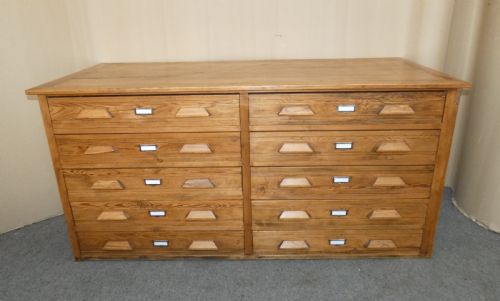


Antique Shop Drawers
Antique shop drawers bring sturdy commercial utility into domestic spaces, offering vast multicompartment storage built for trade.
Antique Shop Drawers
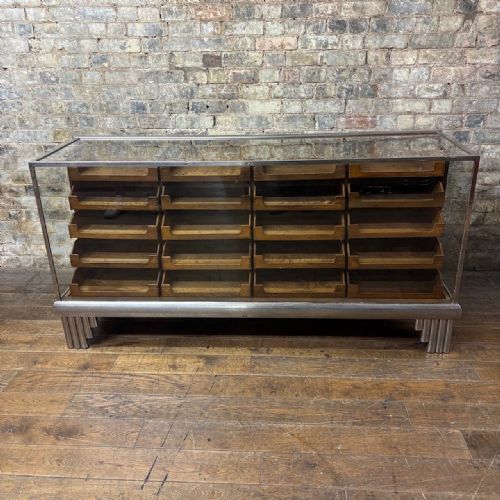
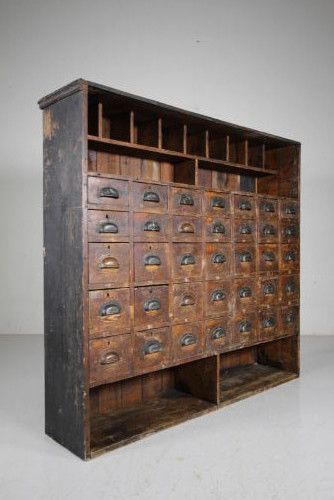
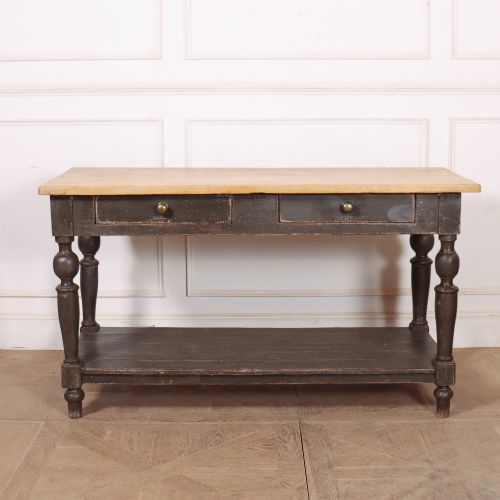
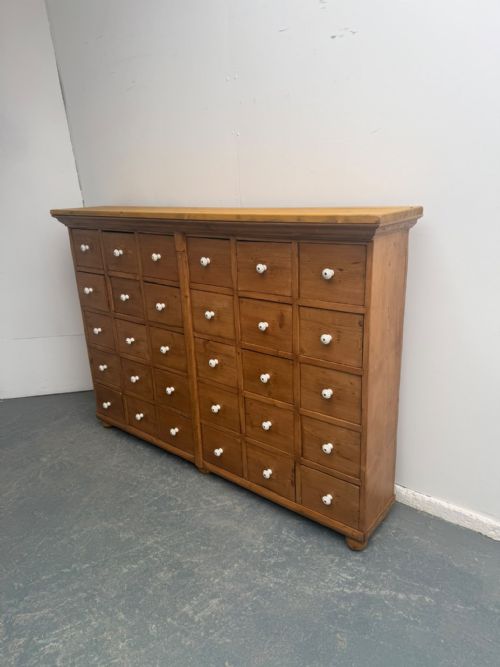
When you search for antique shop drawers, you encounter banks of small compartments, haberdashery cabinets, drapers counters, and multi-drawer shop fittings designed for retail organisation. The pieces span the Victorian, Edwardian, and early twentieth-century periods, originating from English, French, Hungarian, and American workshops. You meet large banks of pine with numerous small drawers alongside oak, mahogany, and fruitwood counter-top display cases.
Commercial utility defines these items, which traders originally used to store cottons, needles, hardware, and drapery behind retail counters. Many examples retain original sign-writing, painted finishes in white, cream, or light green, and brass or chrome hardware. Domestic spaces now adopt these units as sideboards, artists storage, and console tables.
What varies in quality
Scale and compartment density drive the distinction between standard commercial units and exceptional retail furniture. Large multi-drawer banks featuring dozens of matching drawers demand greater joinery skill than simple chests.
Originality of surface finish and hardware preserves the commercial character of each piece. Units retaining original paint, sign-writing, and matching metal pulls hold distinct presence compared to stripped or heavily altered examples.
Antique Shop Drawers Retail Price Guide 2026
Typical asking prices for shop drawers among the pieces listed under this phrase on Sellingantiques today, from the lower quarter to the upper quarter. They describe what is for sale here now, not the wider market.
Materials recorded across the inventory include pine, oak, mahogany, fruitwood, walnut, brass, iron, chrome, glass, and painted wood.
Dudley & Co·G H Gledhill Halifax·Trussant & Cie·Luxmore's of Ilfracombe
The Antique Shop Drawers Glossary
- Bank of drawers
- A large cabinetry unit housing numerous small drawers arranged in a grid. These were essential for sorting small mercantile goods.
- Haberdashery cabinet
- A glass-fronted or multi-drawer retail unit built to display and store sewing accessories, cottons, and ribbons.
- Drapers counter
- A long timber table or counter surface used in cloth merchants shops, often incorporating drawers or lower shelving.
- Shop fitting
- Custom architectural furniture built specifically for commercial retail interiors rather than domestic use.
Antique Shop Drawers: Frequently Asked Questions
What were antique shop drawers used for?
Traders utilised these multi-compartment units in drapers, haberdashers, and hardware stores to organise small merchandise like threads, buttons, and tools.
Customers viewed goods displayed on top counters while merchants retrieved stock swiftly from the numbered or labelled compartments behind.
How do I fit shop drawers at home?
Large banks of drawers function effectively as sideboards in dining rooms or kitchen islands providing substantial compartmentalized storage.
Smaller counter-top display cases sit well on desks or side tables to house collections, stationery, or craft supplies.
Are painted finishes original on these pieces?
Many trade cabinets received utilitarian coats of white, cream, or green paint by the merchants who used them daily.
Original sign-writing often survives on these painted surfaces, indicating the specific agricultural merchants or drapers who once owned the fittings.
Which woods appear most frequently?
Pine appears constantly in large English, French, and Hungarian multi-drawer banks and shop fittings built for heavy utility.
Hardwoods such as oak, mahogany, fruitwood, and walnut form the finer counter-top cabinets and drapers counters.