

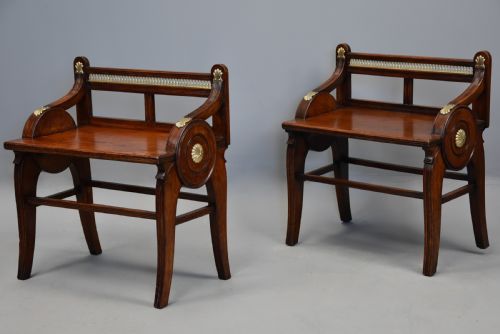


Antique Shoolbred Furniture
Antique shoolbred furniture brings the renowned craftsmanship of Tottenham Court Road into domestic spaces through desks, seating and sideboards.
Antique Shoolbred Furniture
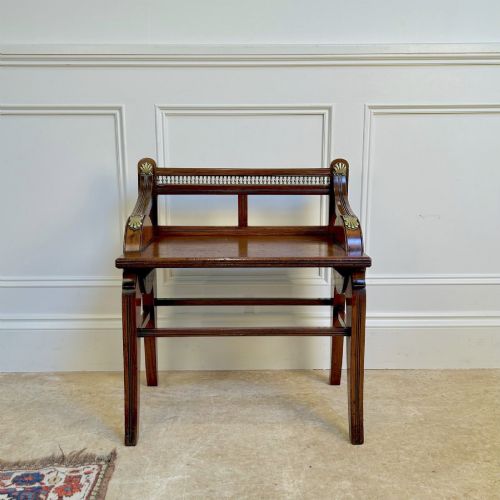
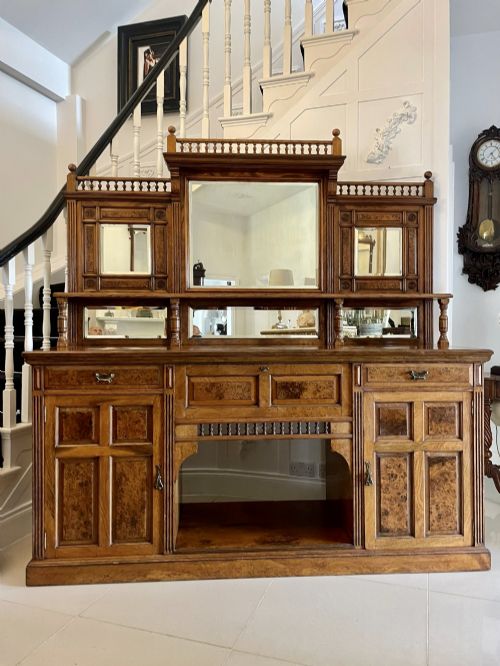
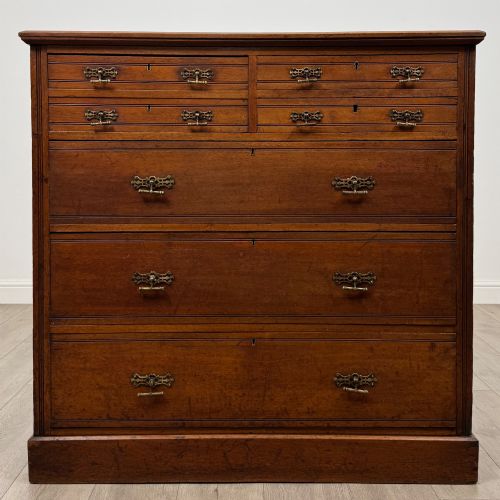
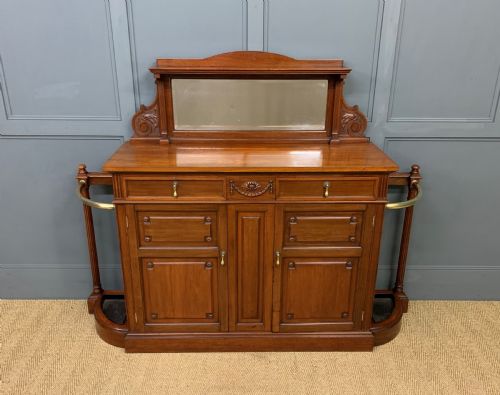
Antique shoolbred furniture encompasses a diverse selection of practical domestic items produced by the prominent London maker during the Victorian and Edwardian periods. Pieces range from large dining chairs and sideboards to smaller items like writing tables, stools and shaving stands.
Buyers encountering this selection most frequently meet walnut, mahogany and oak forms spanning the late nineteenth century up to the early twentieth century. These domestic furnishings reflect both formal revival styles and the simpler lines of the Arts and Crafts movement.
The objects originate from a major London cabinet maker and upholsterer known for supplying high-end domestic interiors. Surviving examples demonstrate how the firm equipped contemporary homes with both utilitarian hall stands and decorative salon suites.
Materials and Technique
Cabinet makers utilised dense hardwoods such as mahogany, walnut and oak alongside decorative veneers like burr walnut, satin birch and rosewood. These materials formed the structural carcass and decorative surfaces of desks, cabinets and seating.
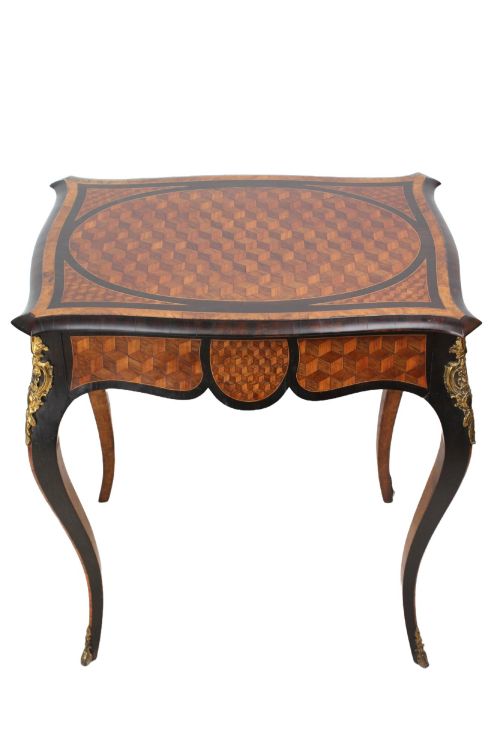
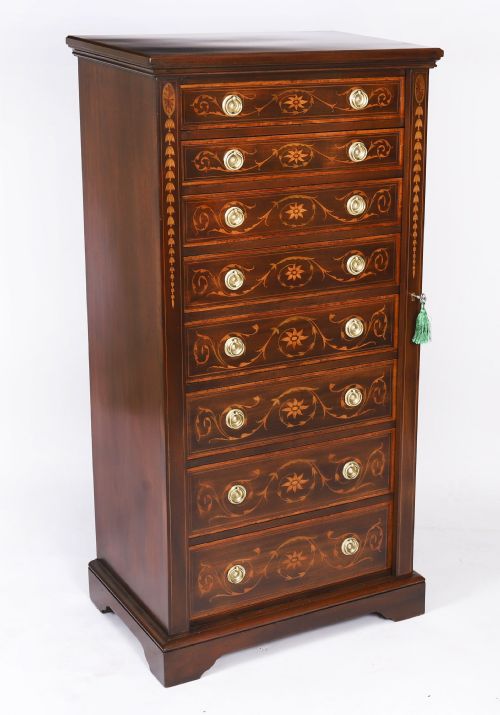
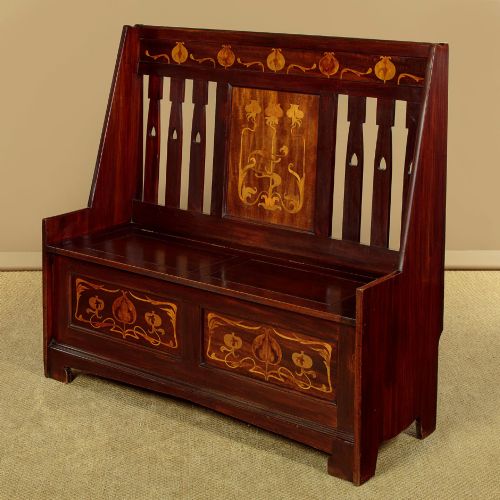
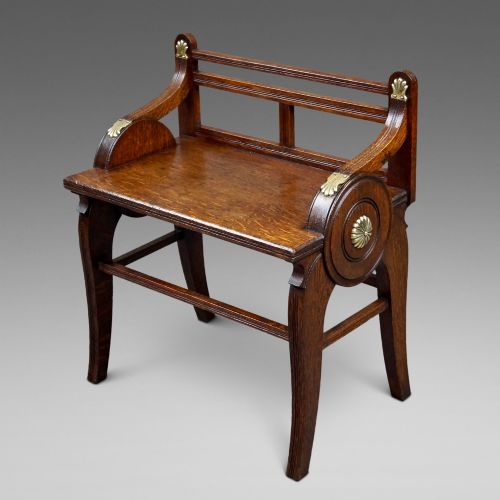
Joinery techniques included precise parquetry inlay, marquetry decoration and structural brass mounts on items like hall benches and writing tables. Metal components such as cast iron and brass provided durable support and functional hardware for beds, umbrella stands and swivel chairs.
Antique Shoolbred Furniture Retail Price Guide 2026
Typical asking prices for shoolbred furniture among the pieces listed under this phrase on Sellingantiques today, from the lower quarter to the upper quarter. They describe what is for sale here now, not the wider market.
Listings feature Victorian and Edwardian pieces in walnut, mahogany, oak and rosewood, including desks, seating and hall stands.
Quality and Construction
Distinctions in quality rest upon the selection of timber veneers and the intricacy of inlay work applied to the surface. Richly figured burr walnut or detailed marquetry distinguishes finer cabinet pieces from plain utilitarian examples.
The standard of execution in carved details and structural hardware dictates the overall success of a piece. Robust joinery and well-cast brass mounts elevate standard functional items into distinguished examples of period cabinet-making.
Jas Shoolbred·Shoolbred and Co·James Shoolbred and Co
The Antique Shoolbred Furniture Glossary
- Marquetry
- Decorative veneer work arranged in pictorial patterns using various coloured woods. This technique adorned the tops of Edwardian tables and cabinet doors.
- Parquetry
- Geometric wood inlay forming repeating patterns on table tops and desk surfaces. It creates a durable and decorative geometric mosaic.
- Canterbury
- A low multi-section stand designed to hold sheet music or folios, fitted with carrying handles and small feet. Mid-Victorian versions often incorporated turned spindles.
- Wellington chest
- A tall, narrow chest of drawers secured by a locking hinged side pilaster bar. This design originated in the nineteenth century for secure document storage.
Antique Shoolbred Furniture: Frequently Asked Questions
What is antique shoolbred furniture?
Antique shoolbred furniture comprises desks, seating, tables and storage cabinets manufactured by the London firm James Shoolbred and Company during the Victorian and Edwardian eras. The company operated from Tottenham Court Road as a major retail draper, upholsterer and cabinet maker.
Items bear stamps or marks identifying the maker on drawers or structural framework. The inventory includes diverse domestic furnishings ranging from utilitarian office chairs to elaborate inlaid salon suites.
How do I identify a Shoolbred piece?
Identification relies primarily on maker stamps, which often appear impressed directly onto drawer linings, wood frames or brass components. Examining the firm name helps confirm the origin of the desk, chair or cabinet.
Stylistic cues also assist attribution, as the workshop produced characteristic Arts and Crafts oak pieces, aesthetic ebonised suites and walnut writing tables during the nineteenth and early twentieth centuries.
How were these items used originally?
Original utilisation varied widely according to the specific form, serving domestic needs in reception rooms, bedrooms, hallways and home offices. Items like gentlemen's shaving stands, hall benches and umbrella racks filled functional domestic roles in large period houses.
Other pieces such as Davenport desks, Canterbury stands and dining chairs supported daily household administration, dining and music practice. High-end salon suites provided formal seating for entertaining guests in Victorian parlours.
How do I care for walnut and mahogany?
Preserving finished hardwoods requires maintaining stable indoor humidity levels and keeping pieces away from direct heat sources and strong sunlight. Gentle dusting with a dry cloth prevents abrasive particle accumulation on polished wood surfaces.
Applying traditional wax polish occasionally nourishes mahogany, walnut and rosewood without building up heavy chemical residues. Avoid using modern liquid silicone sprays that can penetrate aged wood finishes.