



Antique Shell Carved Jewellery
Antique shell carved jewellery brings together classical subjects, delicate relief work and precious metal mounts crafted across the Victorian, Edwardian and mid-century periods.
Antique Shell Carved Jewellery
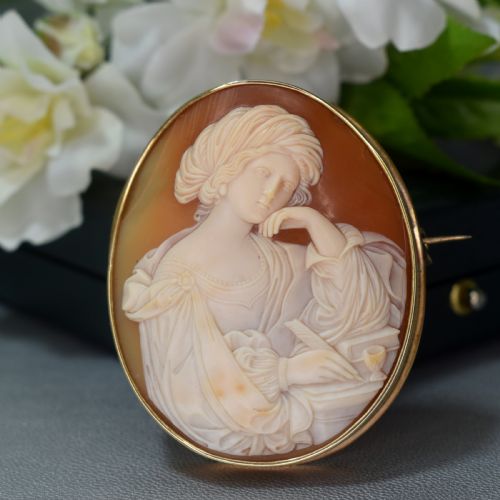
The pieces on this page are heavily represented by Victorian and Edwardian examples, alongside occasional Georgian and mid-century items. Classical figures, mythological deities and portraits dominate the subjects depicted in the relief carving.
Beyond personal adornment, the selection includes decorative boxes and bracelets featuring carved shell or shell inlay. Most items showcase the natural layering of the shell to create contrast between the carved subject and the darker background.
Materials and methods of construction
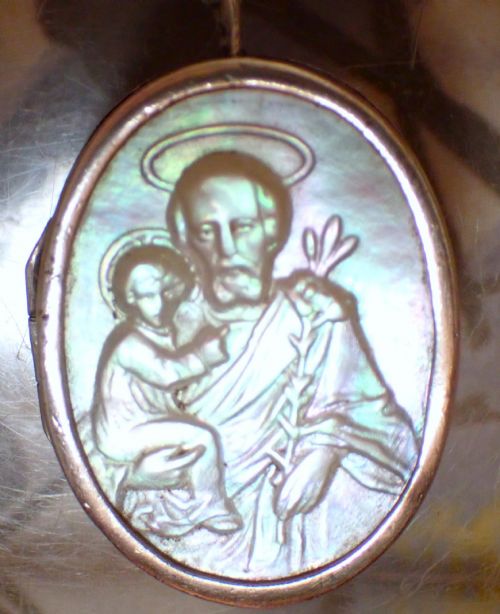
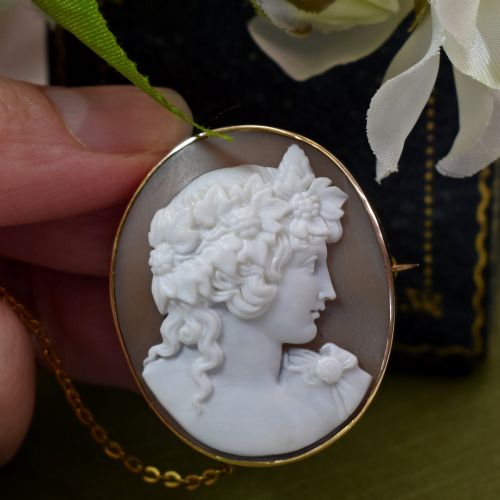
Carvers selected helmet shells, conch shells and mother of pearl for their natural colour variations, cutting through the outer white layer to reveal the darker background beneath. This technique required immense precision to maintain consistent depth across the entire design.
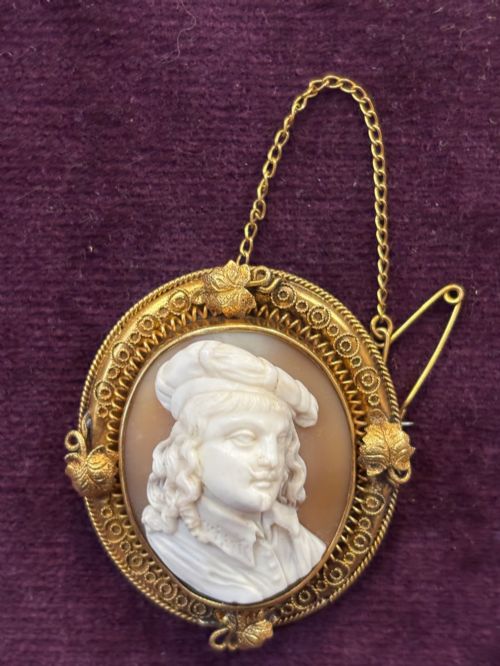
Mounts were fashioned from various metals, ranging from base metal pinchbeck and silver to yellow gold spanning nine to twenty carats. Master jewellers frequently added decorative wirework, filigree or seed pearl accents to frame the carved shell securely.
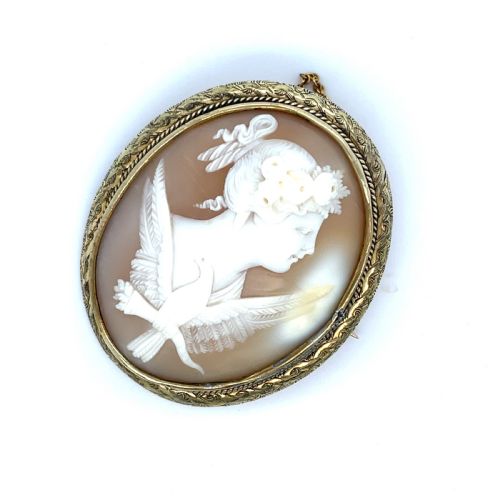
Carvers occasionally utilised the natural blemishes in a shell to incorporate a flying bird or a stray curl of hair.
Assessing quality and craftsmanship
The metalwork framing the shell also dictates the tier of the piece. Hand-formed gold settings with intricate filigree or integrated safety chains demonstrate a higher grade of manufacture than plain, mass-produced bezels.
R Pernice
The Antique Shell Carved Jewellery Glossary
- Cameo
- A method of carving an object such as a engraved gem, item of shell or piece of stone where the relief image stands out distinctly from a background of a different colour. This technique exploits the natural strata found in specific shells.
- Pinchbeck
- An alloy of copper and zinc invented in the eighteenth century to imitate gold. It provides a warm, durable yellow metal finish found on many nineteenth-century mounts.
- Mother of pearl
- The iridescent internal layer of certain mollusc shells, utilised for carved pendants, plaques and inlay work. It yields a shimmering, pearlescent surface.
- Conch shell
- A marine mollusc shell used by carvers to produce cameos with a distinct pinkish or salmon-coloured background. It allows for bold, high-relief classical imagery.
- Filigree
- Delicate jewellery-making work consisting of twisted threads of gold or silver soldered together in intricate patterns. It often surrounds the perimeter of high-grade shell cameos.
Antique Shell Carved Jewellery: Frequently Asked Questions
What periods do these pieces span?
The selection includes items originating from the Georgian, Victorian, Edwardian and mid-twentieth-century eras. Each period introduced distinct framing styles and mounting techniques.
Victorian pieces frequently display substantial gold frames and classical mythological subjects, while later twentieth-century items often utilise silver or lighter gold mounts.
How should I clean shell jewellery?
Shell is a delicate organic material that reacts poorly to harsh chemicals, ultrasonic cleaners and prolonged immersion in water. A soft, dry cloth is usually sufficient for general maintenance.
Avoid applying perfumes or cosmetics directly onto the carved surface, as these substances can gradually dull the natural lustre of the shell over time.
What motifs appear on these items?
Classical deities, mythological figures and historical sibyls are the most frequent subjects depicted by the carvers. Common identifications include Aurora, Flora, Psyche and classical profile portraits.
Religious figures also appear, particularly on mother of pearl pendants and charms dating from the Edwardian period onwards.
How can I tell shell from plastic?
Natural shell feels cool to the touch and exhibits fine growth lines under magnification rather than uniform plastic moulding seams. The weight and rigidity also differ distinctly from synthetic alternatives.
Examining the reverse of the piece often reveals the natural concave curvature and organic texture of the original mollusc shell.