



Antique Shell Cameo Jewellery
Antique shell cameo jewellery is carved relief ornamentation set in precious metal mounts that collectors prize for classical portraiture.
Antique Shell Cameo Jewellery
Antique shell cameo jewellery comprises carved portrait and mythological reliefs mounted as brooches, earrings, pendants, bracelets, and rings. Buyers searching this phrase look for miniature relief sculptures worn as personal adornment, capturing classical subjects carved into natural shell layers.
The pieces appearing on this page span several key eras, with Victorian examples appearing most frequently alongside Georgian, Edwardian, and mid-twentieth century items. Surviving forms range from single mounted brooches depicting goddesses and historical figures to matched sets comprising earrings and pendants.
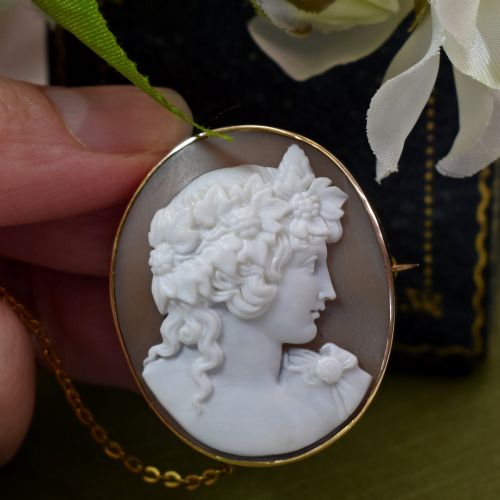
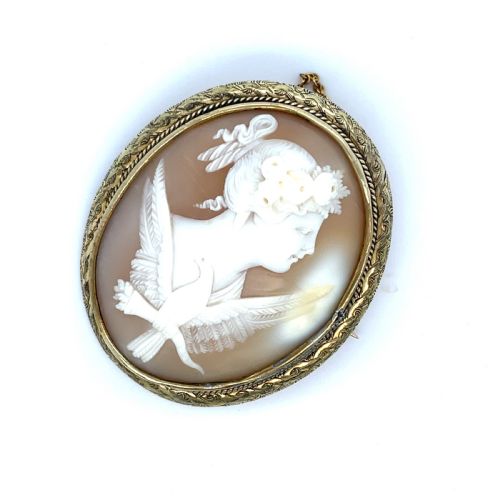
The subjects draw heavily on classical mythology and historical portraiture, depicting figures such as Aphrodite, Flora, Aurora, Psyche and Cupid, and the Persian Sibyl. These miniature carvings served as fashionable accessories during the Grand Tour and subsequent nineteenth-century revivals.
Materials and Carving Techniques
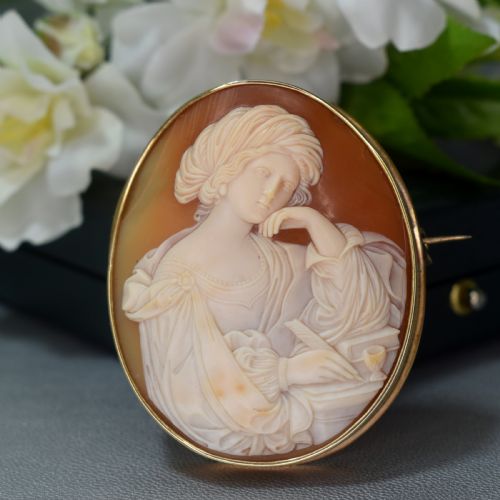
Carvers utilised natural shells, including Queen Conch and layered helmet shells, where the upper white stratum contrasts against a deeper brown or pinkish inner layer. This natural variation in shell depth allowed the artisan to isolate the carved figure in high relief against a darker background.
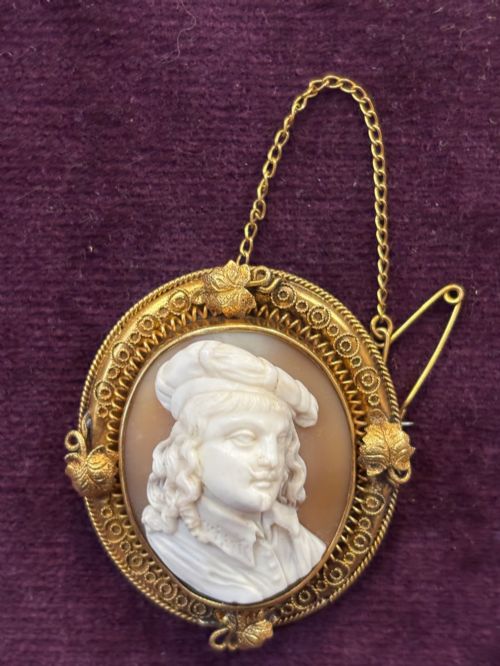
Mounts were fabricated in a range of metals according to the period and status of the piece, spanning silver, pinchbeck, 9ct gold, 12ct gold, 14ct gold, 15ct gold, 18ct gold, and 20ct gold. Frames often featured detailed filigree, chased work, or ornate bezels designed to complement the carved shell insert.
Victorian carvers occasionally depicted famous historical figures like Bonnie Prince Charlie alongside ancient Greek goddesses on the same Baltic shore.
Assessing Carving and Mounting Quality
The calibre of the metal frame further distinguishes the piece, as solid high-carat gold mounts and intricate filigree or wirework indicate workshop production of higher status. Simpler pinchbeck or lower carat mounts often house commercial carvings produced in larger volume.
R. Pernice
The Antique Shell Cameo Jewellery Glossary
- Cameo
- A method of carving an object such as a engraved gem or shell where a relief image stands out distinctly from a background of a different colour. This technique exploits the natural layered strata of the material.
- Pinchbeck
- An alloy of copper and zinc invented in the eighteenth century to imitate gold. It provides a warm golden tone frequently utilised for period jewellery mounts.
- Grand Tour
- A traditional trip of Europe undertaken by upper-class European young men of means and other affluent individuals during the eighteenth and nineteenth centuries. Travellers frequently acquired carved shell cameos in Italy as portable mementos.
- Filigree
- Ornamental work of fine wire of gold or silver formed into delicate tracery. This technique appears often in the bezels and frames surrounding Victorian cameos.
- Bezel
- A grooved rim or collar holding a gem or cameo in place by its edge. In these pieces, the metal bezel secures the shaped shell within its decorative frame.
Antique Shell Cameo Jewellery: Frequently Asked Questions
What periods do these pieces date from?
The inventory spans the Georgian era through the Victorian period, Edwardian years, and into the mid-twentieth century. Victorian examples form the largest group, reflecting the peak of cameo production.
Earlier pieces from the early nineteenth century often feature neoclassical motifs in high-carat frames, while later twentieth-century items incorporate silver and alternative metal mounts.
How were shell cameos worn?
Wearers displayed these carvings primarily as brooches pinned to collars, bodices, and sashes. They also appeared as drop earrings, pendant necklaces, rings, and multi-piece suites.
Matching sets combined earrings and brooches into unified parures worn for formal occasions during the nineteenth century.
What subjects are depicted on the shell?
Carvers drew inspiration from classical mythology, antique sculpture, and Renaissance painting. Common subjects include goddesses, sibyls, putti, and historical figures such as Bonnie Prince Charlie.
Profiles of classical deities like Aurora, Flora, and Aphrodite dominate the surviving examples.
What metals are used for the frames?
Mounts range from silver and pinchbeck to various purities of gold including 9ct, 12ct, 14ct, 15ct, 18ct, and 20ct. Solid gold frames frequently feature ornate chased decoration, filigree, or pearl accents.
Pinchbeck served as an accessible alternative metal that offered the appearance of gold during the nineteenth century.
Are cameos made from different types of shell?
Carvers selected specific mollusc shells with distinct contrasting layers, such as Queen Conch and helmet shells. The outer white layer provides the raised figure, while the underlying brown or pink shell creates the contrasting background.
This natural variation in shell thickness dictated the depth and colour palette of each individual carving.