



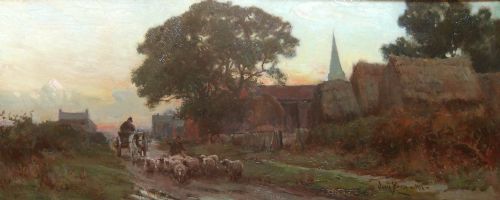


Antique Sheep Oil Canvas
When you search for antique sheep oil canvas, you enter a pastoral tradition stretching across the nineteenth and twentieth centuries.
Antique Sheep Oil Canvas
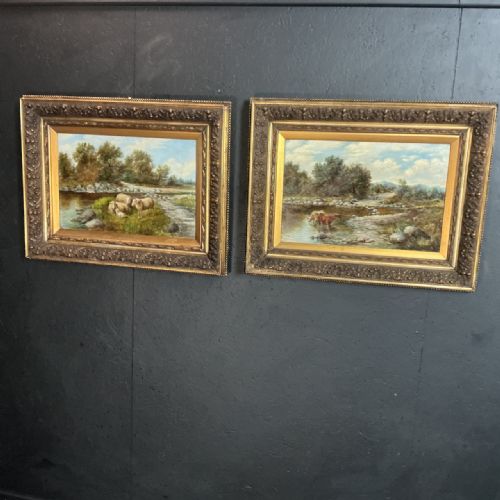
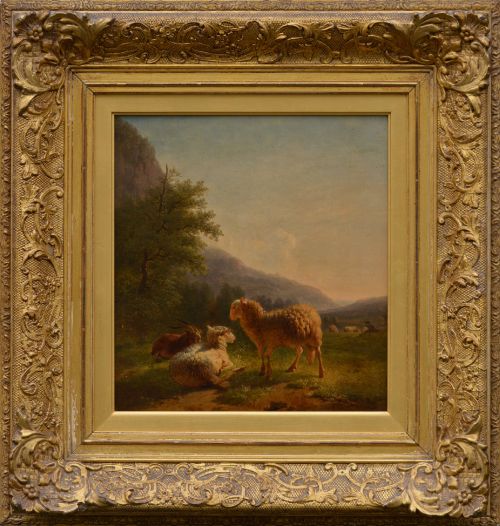
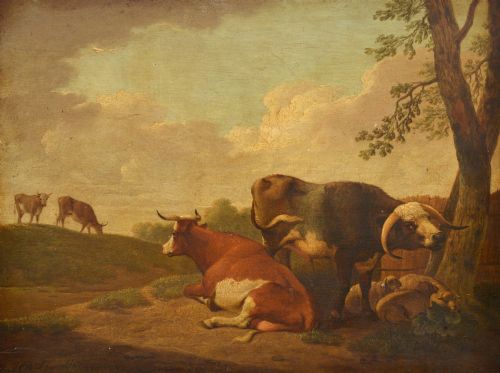
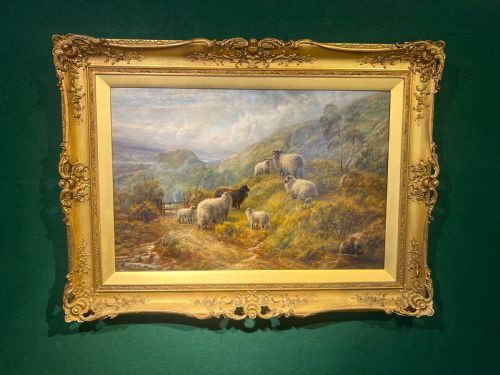
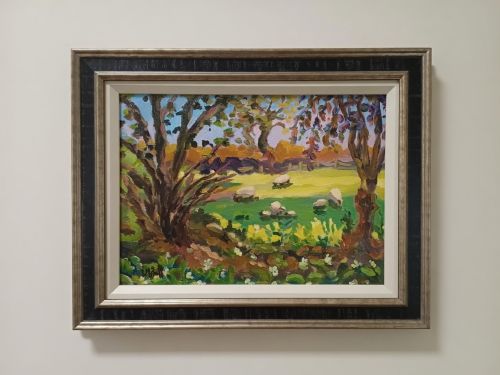
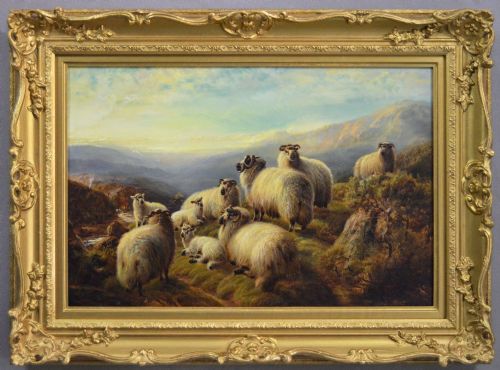
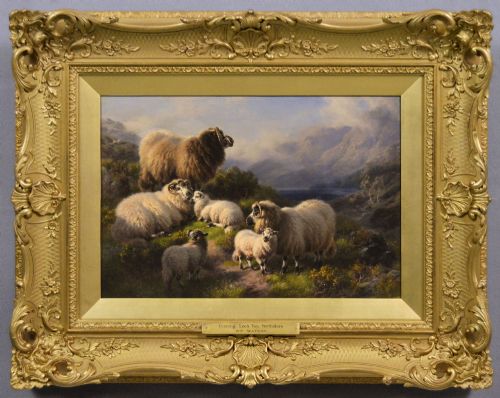
An antique sheep oil canvas depicts rural livestock within British, Scottish, and continental landscapes, capturing the quiet rhythm of agrarian life. These works range from intimate depictions of flock and shepherd to wide vistas of Highland pastures and Sussex lanes.
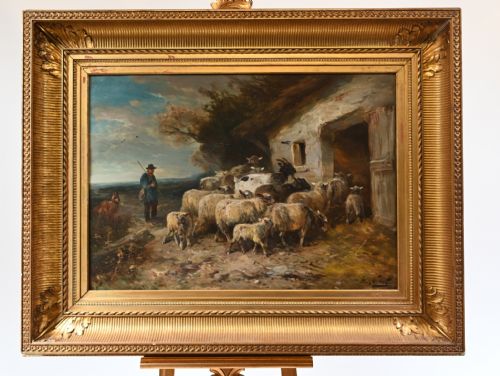
The pieces on this page stem predominantly from the nineteenth century and the early twentieth century, spanning Victorian realism, pastoral scenes, and British impressionism. Works often place sheep at the centre of the composition, resting in valleys, sheltering in barns, or grazing under blossom.
Framed typically in wood and gesso with giltwood finishes, these canvases preserve the atmosphere of rural industry and landscape painting from decades past.
Materials and technique
The primary medium recorded is oil paint applied to woven canvas support, allowing artists to build rich textures in wool, foliage, and earth. Painters utilised brushwork and palette knife techniques to render the soft fleece of sheep against the hard lines of stone walls and timber barns.
Antique Sheep Oil Canvas Retail Price Guide 2026
Typical asking prices for sheep oil canvas among the pieces listed under this phrase on Sellingantiques today, from the lower quarter to the upper quarter. They describe what is for sale here now, not the wider market.
Several canvases capture sheep enduring sudden snowstorms, proving that even Victorian livestock suffered from unpredictable British weather.
Judging the work
Quality rests upon the artist's command of anatomical form and the natural interaction between livestock and light. Stronger canvases display careful observation of the sheep's posture and fleece texture, avoiding stiff or repetitive animal figures.
The depth of the surrounding landscape and the handling of atmospheric conditions further separate standard commercial works from accomplished academic or impressionist canvases. Preservation of the original oil paint surface and the stability of the canvas ground also influence the standing of a piece.
Eugène Verboeckhoven·Hendrik Willem Schweickhardt·William Watson Jnr·Robert Watson·Henry Schouten·William Henry Mander·Thomas Sidney Cooper·Owen Bowen·William Sydney Cooper·Robert John Hammond·Willem Anton Alexander Knip·Eugene Joseph Verboeckhoven·Frederick W Jackson·Walter J Watson·James de Rijk·Lorenzo Headley·Herbert Royle·Charles Jones·George Turner·GW Horlor·Ernest Higgins Rigg·William Greaves·William Luker Snr·John W Morris·Anthonij Anton Mauve
The Antique Sheep Oil Canvas Glossary
- Oil on Canvas
- A painting medium where pigments are suspended in a drying oil, applied to a stretched cloth support. This technique permits subtle blending of tone and long-term durability.
- Gesso
- A plaster-like mixture applied to wooden frames as a base for gilding and ornamentation. It provides a smooth surface that accepts gold leaf and decorative moulding.
- Giltwood
- Wood carved and coated with gold leaf or metallic powder. It forms the traditional ornate framing characteristic of nineteenth-century picture presentation.
- Victorian Pastoral
- An artistic style celebrating rural scenes and agricultural life during the reign of Queen Victoria. These compositions emphasise harmony between animals, herdsmen, and the British countryside.
- British Impressionism
- A movement focusing on light, brushwork, and everyday subjects rather than strict academic detail. Painters working in this manner captured transient effects of weather upon rural landscapes.
Antique Sheep Oil Canvas: Frequently Asked Questions
How do I identify a nineteenth-century sheep painting?
Look for canvas preparation, pigment characteristics, and stylistic markers typical of the period. Victorian works often combine realistic animal studies with romanticized British or Scottish topography.
Examine the stretcher frame and the back of the canvas for age-related darkening, maker stamps, or historical inscriptions that corroborate the era.
Where were these pastoral scenes usually painted?
Artists worked across diverse rural locations, including the Yorkshire dales, North Wales, the Kent coast, and the Scottish Highlands. Painters sought out working farms, open pastures, and coastal cliffs where livestock grazed.
Many compositions reflect specific regional landscapes noted by the artist in the title or signature lower down on the canvas.
How should I care for an oil on canvas painting?
Keep the artwork away from direct sunlight, high humidity, and rapid temperature fluctuations to protect the oil paint and canvas. Dust the surface gently with a soft, dry brush without applying pressure to the paint layer.
Avoid using water or chemical cleaners on the canvas or the giltwood frame, consulting a professional conservator for cleaning.
What subjects accompany sheep in these landscapes?
Shepherds, cattle, horses, sheepdogs, and farm workers frequently share the canvas with the flock. These figures provide a sense of scale and document traditional rural labour.
Architectural elements such as barns, stone walls, and rustic homesteads also appear to anchor the composition within a working countryside.