



Antique Shamrock Jewellery
Antique shamrock jewellery brings botanical luck into wearable form, offering the enduring charm of clover motifs set in fine gold and precious stones.
Antique Shamrock Jewellery
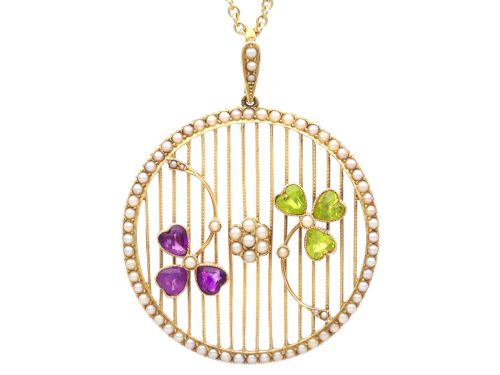
Antique shamrock jewellery encompasses a charming array of personal adornments shaped around the clover motif, celebrating a deep-rooted botanical symbol of fortune and affection. These pieces span the nineteenth century into the Edwardian era, capturing Victorian sentimentality alongside early twentieth-century elegance.
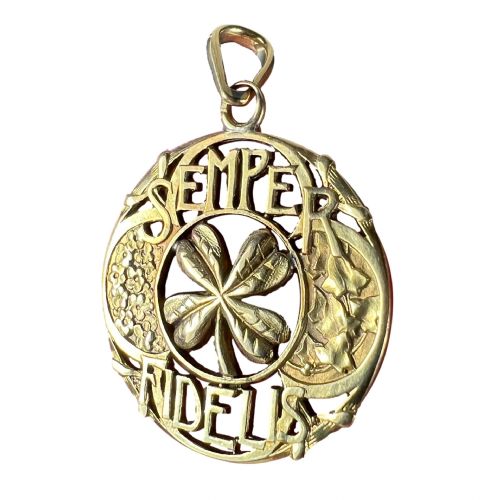
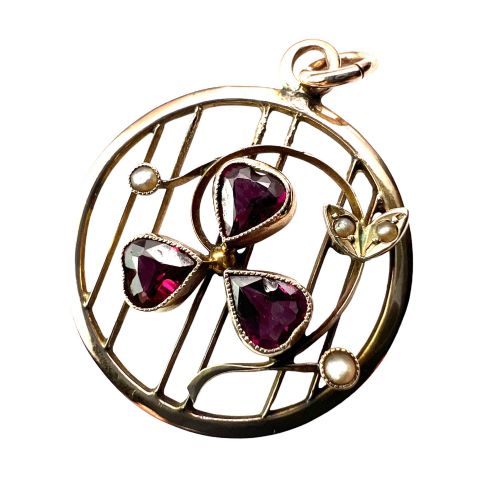
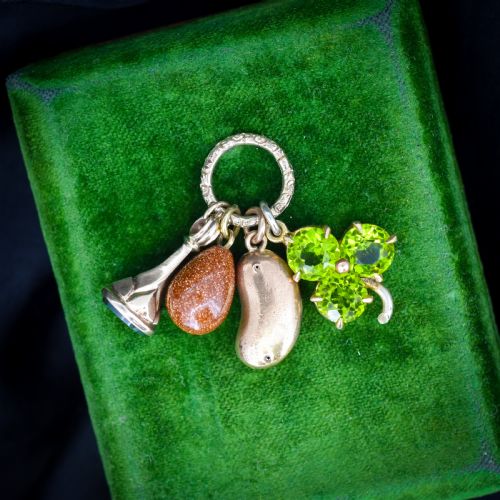
Buyers browsing antique shamrock jewellery will most frequently encounter brooches, pendants, and bracelets fashioned from varied gold purities and embellished with gemstones. These items emerge in distinct iterations, ranging from multi-stone clover clusters to engraved lucky charms and boxed button sets.
Origins stretch across British and French workshops, utilising regional design preferences that blend sentimental symbolism with refined metalwork. The forms remain remarkably wearable today, functioning as subtle daily talismans or treasured additions to a focused historical collection.
Materials and construction methods
Goldsmiths utilised differing gold purities including nine-carat, fifteen-carat, and eighteen-carat yellow gold, alongside silver, to construct the foundational structures of these clover motifs. These metals were shaped into delicate split rings, articulated bracelet links, and secure settings tailored to hold intricate gem arrangements.
Gemstone setting relied on integrating precious and semi-precious stones such as diamonds, peridots, garnets, opals, emeralds, rubies, sapphires, tourmalines, aquamarines, and seed pearls to delineate the clover leaves. Master jewellers frequently combined old-cut diamonds with colourful stones and pearls to create vibrant contrast within the botanical shapes.
Antique Shamrock Jewellery Retail Price Guide 2026
Typical asking prices for shamrock jewellery among the pieces listed under this phrase on Sellingantiques today, from the lower quarter to the upper quarter. They describe what is for sale here now, not the wider market.
Someone once needed six silver shamrock buttons just to fasten a very lucky waistcoat.
Distinctions in craftsmanship and design
Quality rests significantly upon the precision of stone selection and the harmony of the clover proportions, where matched coloured gemstones and well-oriented diamonds elevate a piece. The integration of supporting details, such as finely engraved split rings or purposeful box settings, signals higher manufacturing standards.
The sophistication of the metalwork further separates examples, distinguishing standard production from pieces featuring complex articulated links or integrated inscriptions like French sentiments. Preservation of original components, from seed pearls to secure clasp mechanisms, dictates the lasting integrity of the item.
The Antique Shamrock Jewellery Glossary
- Clover
- A botanical motif with three leaves symbolising luck, often utilised interchangeably with shamrock in sentimental jewellery design. It forms the visual cornerstone of the pieces found in this category.
- Seed pearl
- A very small, naturally formed or cultured pearl used extensively in clusters and delicate border work during the Victorian and Edwardian periods. These tiny gems provide a soft, lustrous contrast to polished yellow gold.
- Old-cut diamond
- A diamond cut by hand before the advent of modern machinery, characterised by a high crown, small table, and open culet. These stones exhibit a distinctive, warm sparkle under candlelight.
- Split ring
- A circular metal ring formed of two overlapping coils of wire, functioning similarly to a modern key ring for securing charms safely. They often feature hand-engraved surface patterns on better examples.
- Pendant
- An ornamental piece suspended from a necklace or chain, designed to hang freely against the wearer. In this context, they frequently showcase central gem-set clover clusters.
Antique Shamrock Jewellery: Frequently Asked Questions
What periods do these pieces date from?
The available items predominantly span the nineteenth century, including Victorian examples, alongside Edwardian creations from the early twentieth century. These periods reflect a strong societal fascination with sentimentality and botanical symbolism.
Craftsmanship from these eras often incorporates distinct hallmarks and construction techniques that help establish their historical timeline accurately.
How were these items worn originally?
Brooches were pinned to lapels, bodices, or hats, while pendants adorned delicate gold chains close to the heart. Bracelets and charms offered more personal, visible displays of fortune for the wearer.
Button sets served a functional purpose on garments, transforming everyday fastening into decorative botanical statements.
What gemstones typically accent the clovers?
Jewellers frequently employed a colourful palette of peridots, garnets, opals, tourmalines, aquamarines, emeralds, rubies, and sapphires to delineate the individual leaves. Diamonds and seed pearls were also widely integrated to add brilliance and textural contrast.
These stones were carefully chosen to complement the warm tones of nine-carat, fifteen-carat, or eighteen-carat yellow gold.
How do I care for antique gold jewellery?
Gentle handling is essential, particularly for pieces set with delicate seed pearls or softer stones like opals that can be sensitive to moisture and chemicals. Store items individually in soft pouches to prevent scratching between different metal and gemstone surfaces.
Professional inspection of settings helps ensure that older claw and flush settings remain secure over time.
Are French pieces markedly different in style?
French examples often incorporate specific sentimental inscriptions, such as sempiternal love phrases, alongside distinctive regional gold standards and maker marks. Their design language frequently pairs the familiar clover motif with refined elegance characteristic of the period.
These variations offer collectors a compelling cross-channel comparison with British production of the same era.