




Antique Sevres Urns
Antique sevres urns combine painted porcelain and cast metal mounts, bringing nineteenth-century French decoration to a mantelpiece or side table.
Antique Sevres Urns
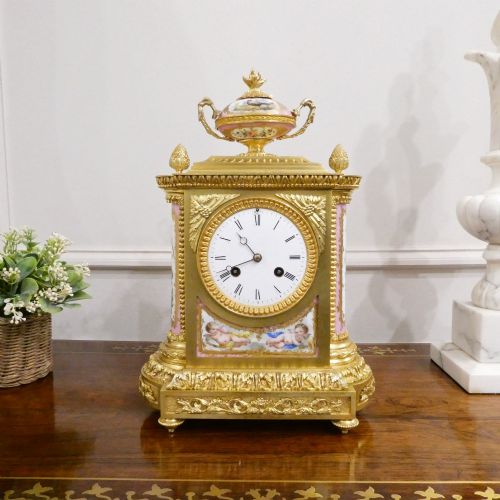
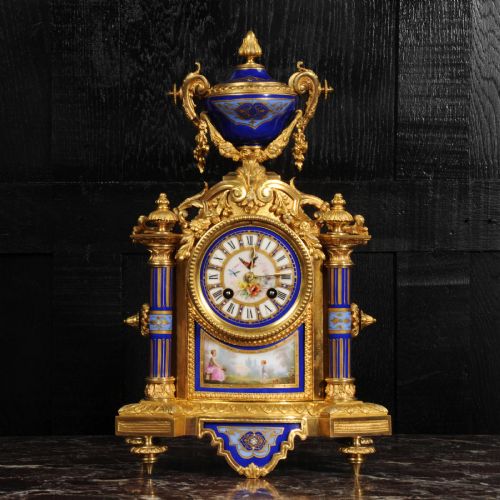
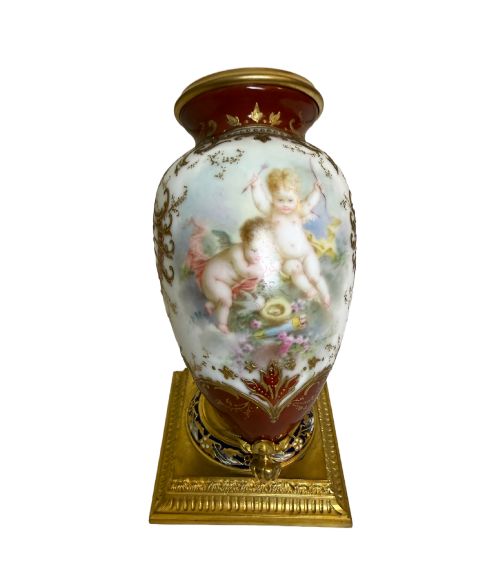
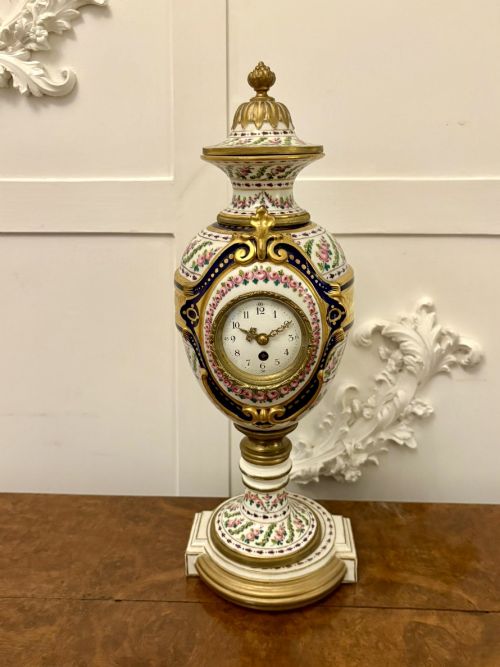
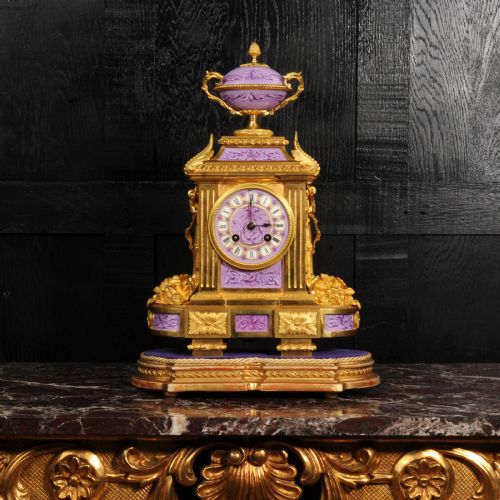
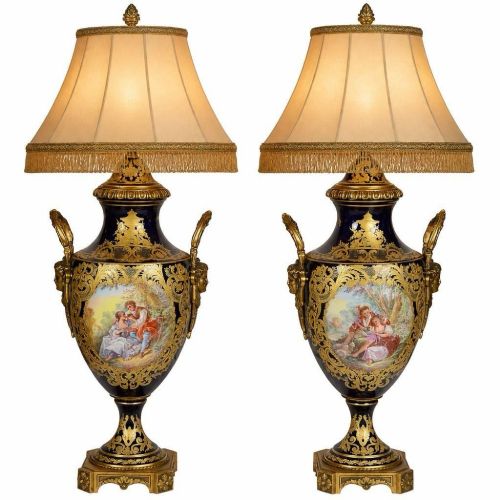
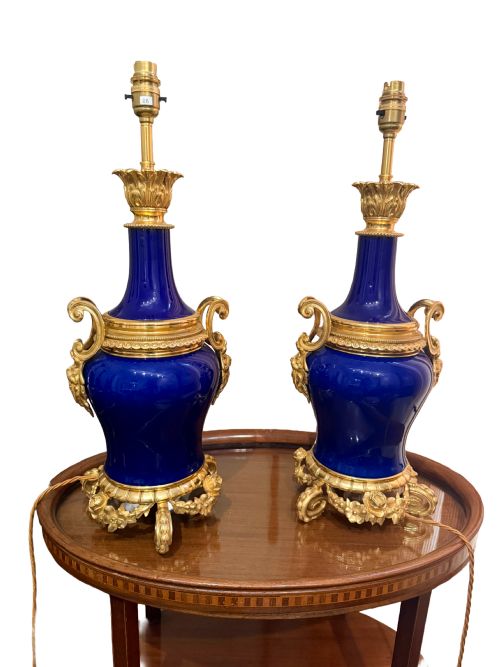
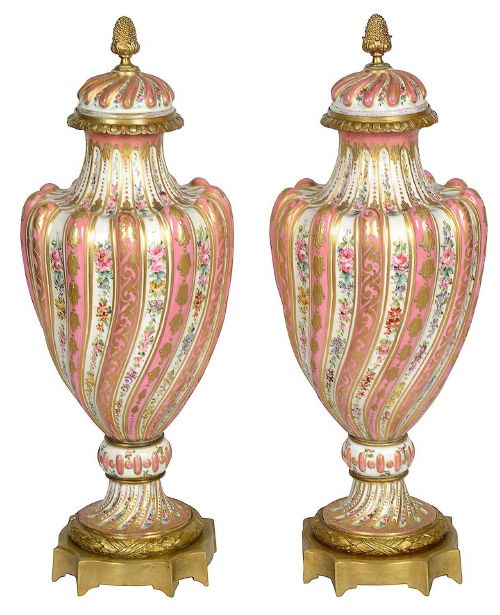
When searching for antique sevres urns, buyers encounter nineteenth-century French porcelain vessels, often mounted in gilt bronze or ormolu and created in various revival styles. These objects appear as lidded vases, table lamps, clock garnitures and mantel clocks spanning the 1850s to the early twentieth century.
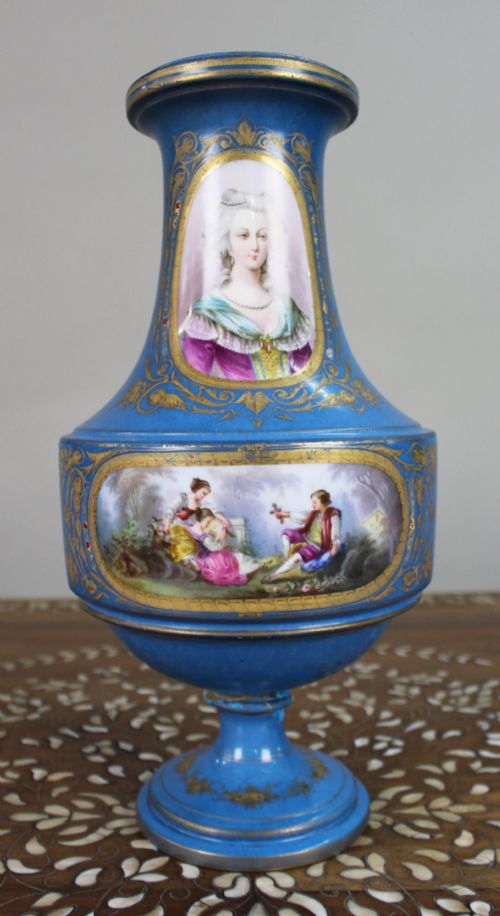
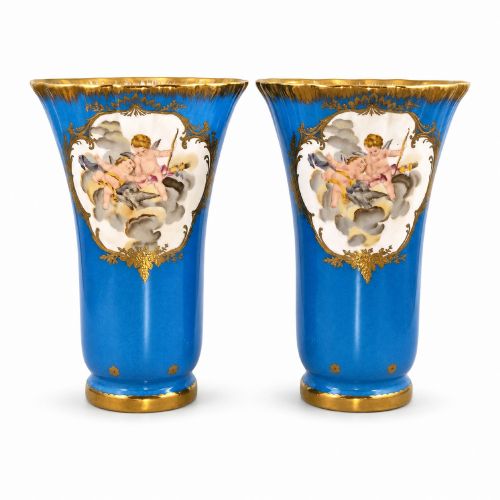
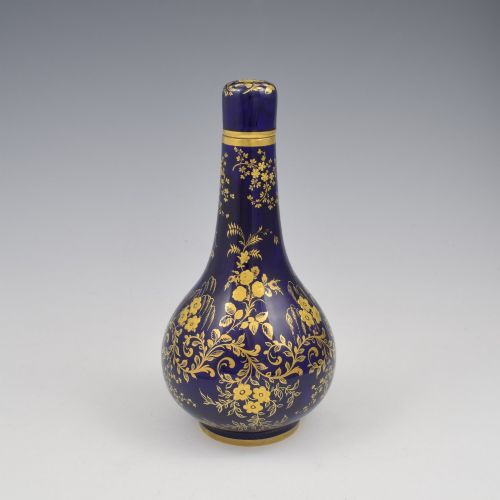
The pieces on this page include both direct factory productions and nineteenth-century sevres-style creations from Parisian makers and workshops. Many feature hand-painted scenes or rich monochrome grounds in shades of blue, turquoise and pink.
Vessels take many forms, from tall monumental lidded pairs to smaller cassolettes and comports. They serve primarily as decorative focal points within period interiors, frequently accompanied by matching side pieces.
How they were made
Potters shaped the ceramic bodies from fine porcelain before applying coloured enamel grounds, such as bleu céleste and cobalt, alongside hand-painted panels. Gilding in gold leaf or gilt paint was added by hand to highlight borders and decorative motifs.
Metalworkers cast mounts in bronze, brass or ormolu using traditional foundry techniques, then chased the surfaces by hand to achieve crisp detail. These metal collars, handles and bases were secured to the ceramic bodies to complete the architectural structure of each piece.
Antique Sevres Urns Retail Price Guide 2026
Typical asking prices for sevres urns among the pieces listed under this phrase on Sellingantiques today, from the lower quarter to the upper quarter. They describe what is for sale here now, not the wider market.
Some nineteenth-century makers cleverly fitted dual-design reversible lids to cassolettes, letting owners switch between a solid porcelain top and an open burner at will.
What varies in quality
The refinement of the hand-painted detailing on the porcelain panels distinguishes standard output from exceptional examples. Finer pieces display delicate brushwork in figural scenes and botanical motifs, whereas lesser examples rely on simpler transfer prints or uniform decoration.
The weight and precision of the gilt bronze or ormolu mounts also set pieces apart. Heavier, deeply chased metalwork that fits the contours of the ceramic precisely indicates superior workshop production.
Japy Freres·Jean Baptiste Delettrez·Achille Brocot·Samson Paris·Vincenti of Paris
The Antique Sevres Urns Glossary
- Ormolu
- Gilt bronze mounted on decorative objects. This technique uses mercury amalgamation or electroplating to apply gold to a bronze base.
- Bleu Céleste
- A bright sky-blue enamel ground colour developed at the Sevres factory. It provides a vivid backdrop for hand-painted panels.
- Cassolette
- A decorative vase with a reversible lid that functions either as a vase or a censer. These objects often feature ormolu mounts and classical styling.
- Garniture
- A set of three or more matching decorative objects designed to be displayed together on a mantelpiece. Typical sets include a central clock flanked by matching urns or candelabra.
- Chasing
- The manual finishing of cast metal mounts using small punches and hammers to sharpen details. This technique adds texture and depth to ormolu surfaces.
Antique Sevres Urns: Frequently Asked Questions
What is the difference between Sevres and Sevres-style?
Sevres refers to pieces produced directly by the royal French porcelain manufactory, whilst Sevres-style describes nineteenth-century pieces made by other European factories and studios in imitation of that aesthetic.
Both categories utilise similar colour palettes, hand-painted panels and gilt mounts, making stylistic attribution depend on factory marks and the quality of execution.
How do I identify the period of an urn?
Dating relies on stylistic clues, mounting techniques and any underlying factory stamps or painter signatures visible on the porcelain. Most decorative urns and garnitures on this page date from the middle to the late nineteenth century.
Revival styles such as Louis XVI and Napoleon III offer further chronological indicators, reflecting the design preferences of the Second Empire and the Third Republic.
Where should I display a garniture set?
Garniture sets of clocks and urns suit principal reception rooms, traditionally positioned upon a mantelpiece, sideboard or console table where the central piece commands attention. The matching side urns or candelabra balance the arrangement symmetrically.
Secure placement on a stable surface is essential due to the combined weight of porcelain and metal mounts.
How should I clean my porcelain urn?
Dusting with a soft, dry artist's brush removes surface particles safely from both the ceramic body and the intricate ormolu mounts. Avoid liquid cleaners and harsh abrasives, as water or chemical solvents can damage delicate surface gilding and enamel paint.
Professional restoration is recommended if structural components require attention.