

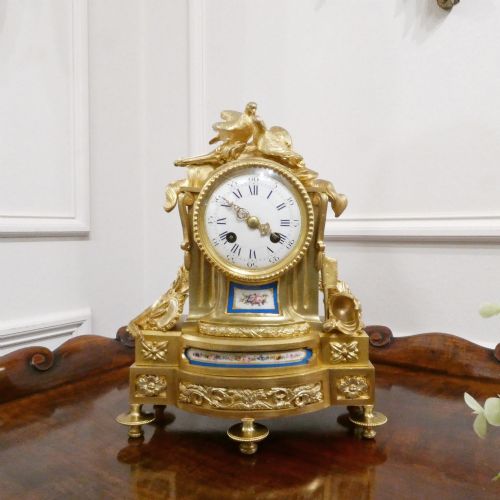
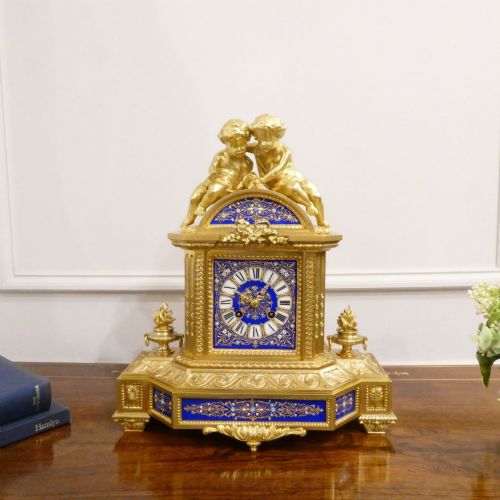
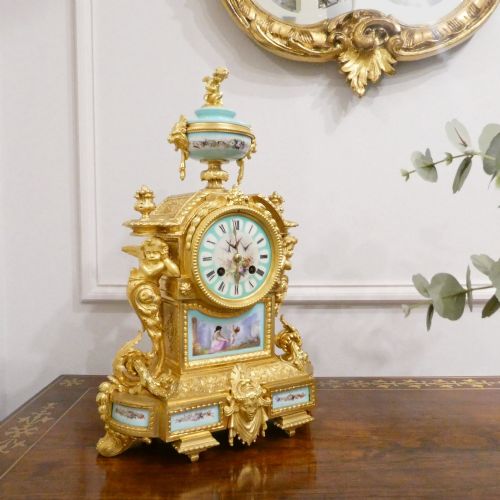
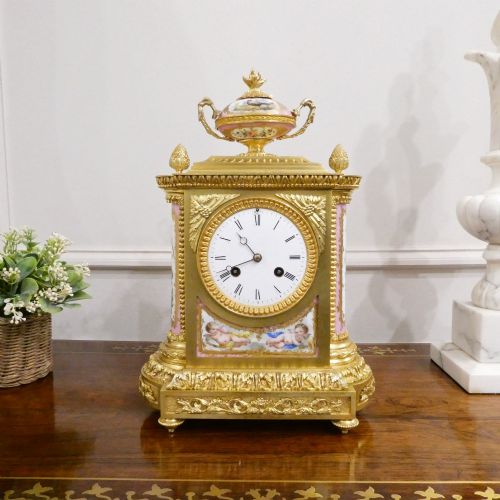



Antique Sevres Clock
When you handle an antique sevres clock, you touch the height of nineteenth-century French domestic luxury and mechanical skill.
Antique Sevres Clock
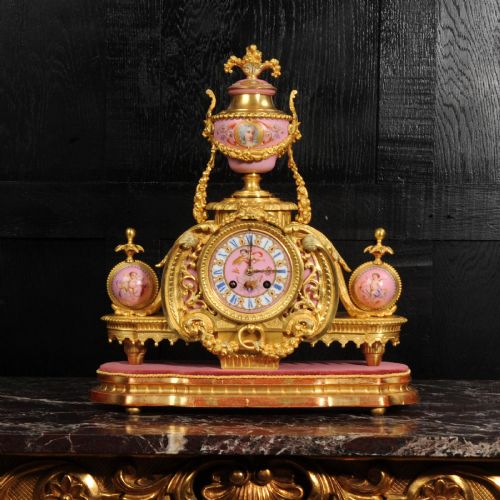
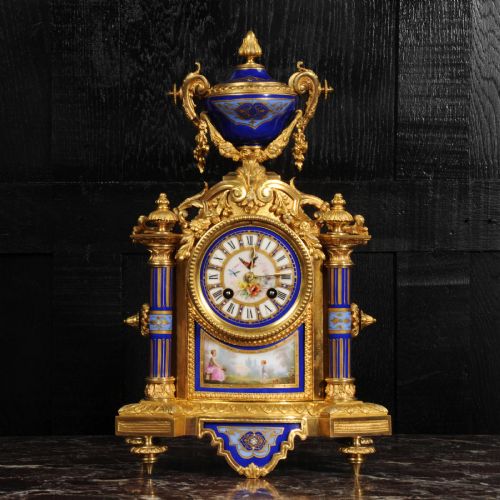
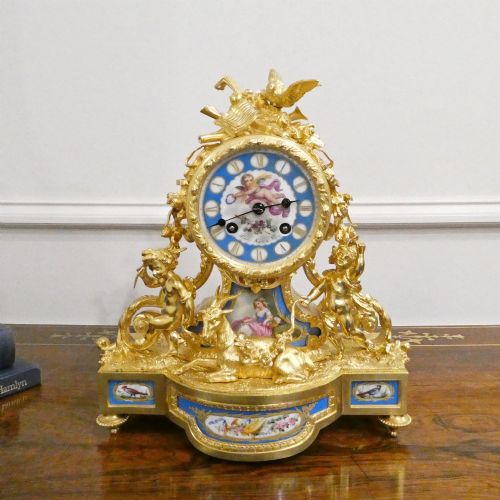
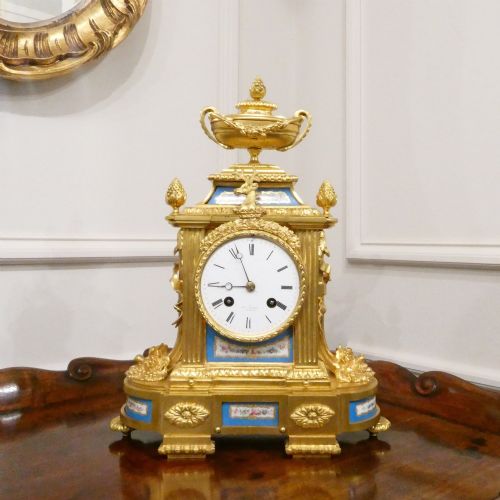
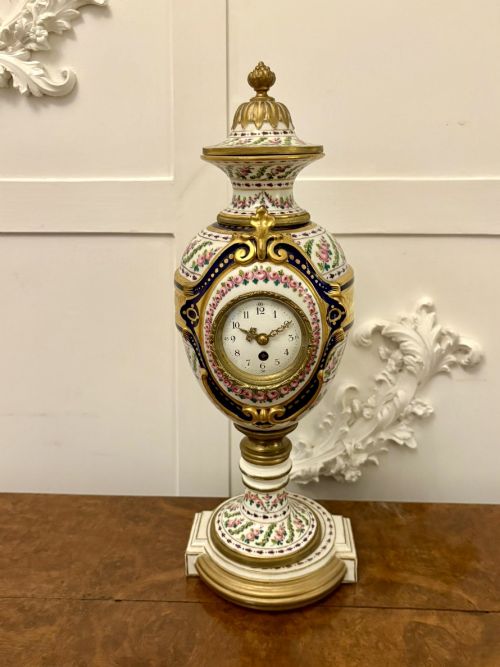
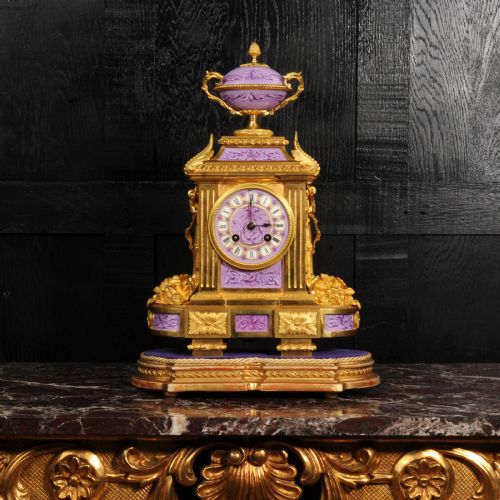
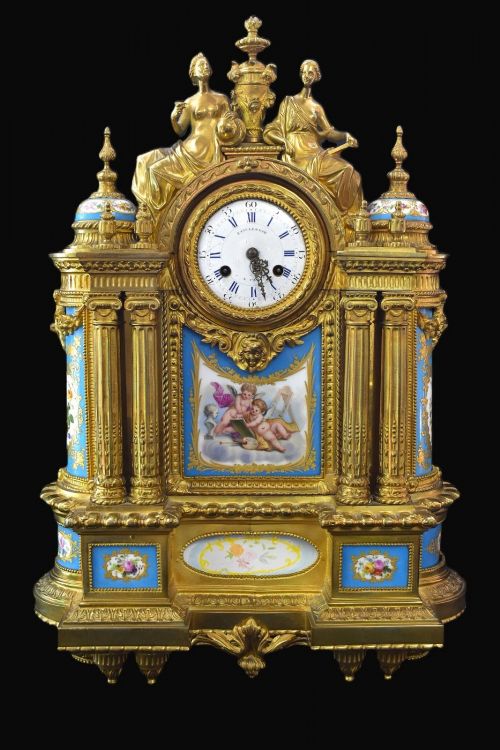
An antique sevres clock brings together glazed porcelain panels and cast metal mounts in decorative forms designed for the principal rooms of nineteenth-century homes.
Most examples found here date from the Victorian decades between eighteen-fifty and eighteen-ninety, reflecting Louis XVI and Rococo revival tastes.
The objects range from single mantel pieces to large garniture sets complete with matching urns or candelabra under glass domes.
How they were made
Makers combined hand-painted porcelain panels with cast ormolu, gilt bronze, and gilded metal mounts.
Clock movements were produced by specialised Parisian workshops and fitted into heavy bronze housings framed by decorative ceramic elements.
Antique Sevres Clock Retail Price Guide 2026
Typical asking prices for sevres clock among the pieces listed under this phrase on Sellingantiques today, from the lower quarter to the upper quarter. They describe what is for sale here now, not the wider market.
What varies in quality
The distinction between tiers rests upon the crispness of the bronze chasing and the delicacy of the hand-painted porcelain panels.
Makers signed their movements and dials, and the presence of recognised horological names alters the standing of an individual piece.
Japy Freres·Jean-Baptiste Delettrez·Achille Brocot·Henry Marc·Etienne Lenoir·Leroy Paris·PH Mourey·Le Roy Et Fils·Henri Jacot·A D Mougin·Raingo Freres·Lepine Paris·Vincenti
The Antique Sevres Clock Glossary
- Ormolu
- Gilded bronze produced by applying a mercury-gilding technique to cast brass or bronze, creating a rich golden surface.
- Garniture
- A set of matching ornamental objects, typically a clock flanked by urns or candelabra designed to sit together on a mantelpiece.
- Drum head clock
- A clock design featuring a circular dial housing mounted upon a decorated base or plinth.
- Crystal regulator
- A mantel clock enclosed in glass panels that allow the movement and pendulum to be viewed from multiple angles.
Antique Sevres Clock: Frequently Asked Questions
What periods do these clocks come from?
The pieces span the nineteenth century, with the majority originating between eighteen-fifty and eighteen-ninety during the Victorian and Napoleon III eras.
Earlier examples from the beginning of the century also appear alongside revival styles.
How were clock garnitures used?
Garniture sets were placed on mantelpieces or console tables as centrepieces, accompanied by matching side ornaments like urns or candelabra.
They provided a balanced decorative scheme for formal nineteenth-century interiors.
How do I care for an antique clock?
Keep the clock away from direct sunlight, dampness, and sudden temperature shifts to protect the porcelain and gilt surfaces.
Professional servicing is recommended to maintain the mechanical movement over time.
What materials are typical for these clocks?
The primary materials are painted porcelain panels combined with ormolu, gilt bronze, and brass housings.
Enamel dials and glass domes also frequently accompany the pieces.