



Antique Serving Tongs
These antique serving tongs are practical silver implements designed for the dining table, offering both elegance and utility for hosting.
Antique Serving Tongs
When you search for antique serving tongs, you encounter specialised implements intended for handling particular foods at the table. The selections span from the late eighteenth century through the Georgian, Victorian, and Edwardian eras, extending into the nineteen-thirties.
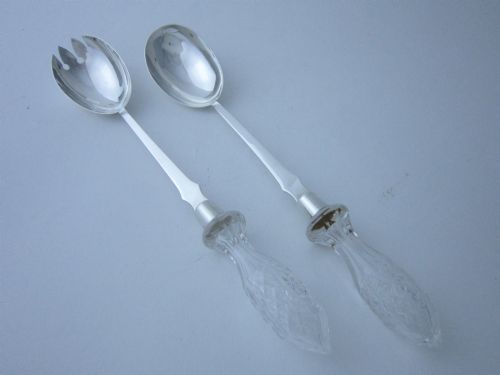
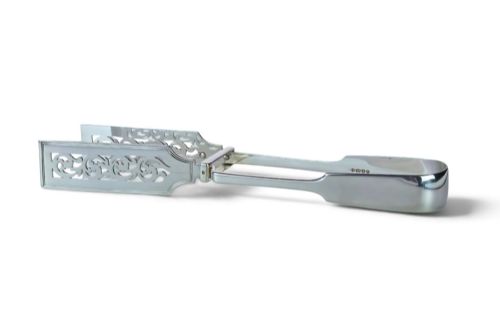
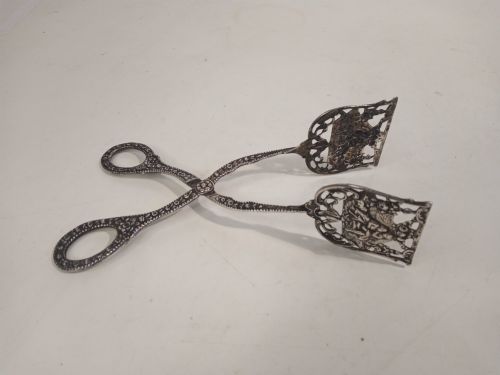
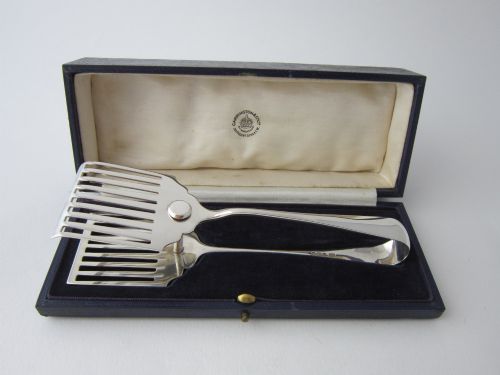
The forms vary according to their original purpose, encompassing asparagus tongs, pastry servers, sugar tongs, and salad servers. Many examples feature pierced ends or matched glass components, reflecting the specific dining customs of their respective periods.
Originating predominantly from British workshops alongside continental European makers, these utensils demonstrate the shifting aesthetic preferences from Georgian restraint to Victorian ornamentation and Art Deco geometry.
Materials and construction
The primary material across these pieces is sterling silver, supplemented by silver gilt, silver plate, and electroplated nickel silver. Certain serving sets incorporate cut glass alongside metal elements to create functional contrasts.
Craftsmen utilised techniques such as casting, piercing, and engraving to shape the metal and form decorative crests or patterned handles. Joints and hinge mechanisms were engineered to provide the necessary tension for grasping food securely.
Antique Serving Tongs Retail Price Guide 2026
Typical asking prices for serving tongs among the pieces listed under this phrase on Sellingantiques today, from the lower quarter to the upper quarter. They describe what is for sale here now, not the wider market.
Some Victorian dining tables required dedicated tongs just to pass asparagus without buttering one's fingers.
Distinctions in quality
Quality in these implements rests upon the weight of the metal and the crispness of any pierced or engraved decoration. Substantial gauge silver provides a firmer grip and greater durability during use.
The distinction between standard production items and work by notable makers involves the precision of the hinge mechanism and the balance of the tongs in the hand. Superior examples display careful finishing on interior surfaces that lesser pieces often leave plain.
Tiffany and Company·Georg Jensen·Wilkes Booth·Walker and Hall·Mappin and Webb
The Antique Serving Tongs Glossary
- Sterling silver
- A silver alloy containing ninety-two point five percent pure silver by mass, standard for quality British tableware. This composition ensures both structural integrity and a bright finish.
- Silver gilt
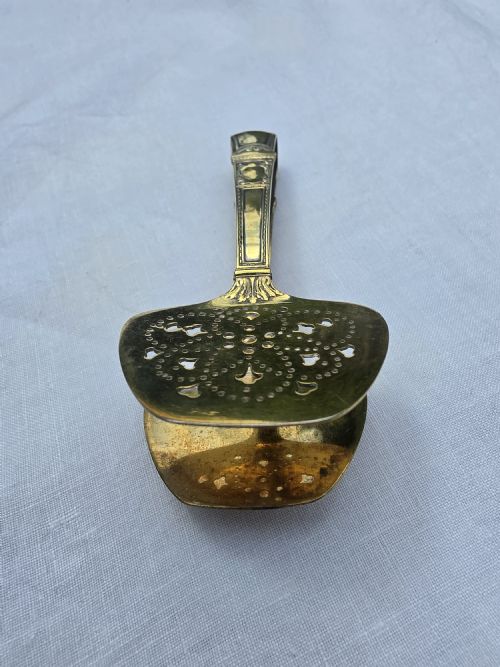
- Silver that has been coated with a thin layer of gold on its surface. This technique provides the rich appearance of solid gold while utilising a silver base.
- Silver plate
- A base metal coated with a thin layer of silver through electroplating or older methods. It offered an accessible alternative to solid silver for household dining.
- Pierced ends
- Metal terminals cut through with decorative openwork designs. This method lightened the utensil while adding visual ornamentation to the serving area.
- Rat tail
- A traditional strengthening ridge running down the back of a spoon bowl or server base. It reinforces the junction where the handle meets the functional part.
Antique Serving Tongs: Frequently Asked Questions
What were antique serving tongs used for?
These implements served specific dining functions such as lifting asparagus, pastries, or sugar lumps without direct hand contact. They kept the table service formal and orderly.
Different foods required distinct designs, which explains the variety in width, length, and terminal shape found among these pieces.
How do I date antique serving tongs?
Dating relies heavily on hallmarks stamped into the metal, which record the assay office, the year of testing, and the maker's mark. Stylistic clues also indicate the period.
Georgian pieces often display simpler neoclassical lines, whereas Victorian and Edwardian examples lean towards heavier ornamentation and distinct regional crests.
Can I use silver serving tongs daily?
Solid silver and silver-plated utensils remain fully functional for modern dining and entertaining. Regular handling and gentle washing help maintain the metal finish.
Proper storage away from high humidity prevents excessive tarnishing and preserves the structural integrity of the hinge mechanisms.
What is the difference between sugar tongs and asparagus tongs?
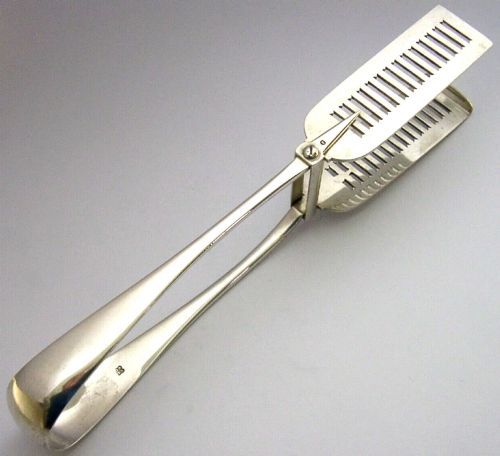
Sugar tongs are typically smaller implements designed to grip single lumps, often featuring claw or spoon-shaped ends. Asparagus tongs are longer and wider.
Asparagus tongs incorporate broad blades to support the delicate vegetable stalks securely across the length of the tool during transfer.