



Antique Serving Jug
An antique serving jug brings genuine table craft into your home, offering heavy glass, bright silver plate, and warm copper for everyday pours.
Antique Serving Jug
An antique serving jug encompasses versatile vessels designed for pouring liquids at the table, ranging from water pots and lemonade containers to wine ewers and coffee servers. These pieces cross several eras, appearing in Georgian elegance, Victorian elaboration, and Edwardian clarity.
The most frequent examples on this page are cut glass and silver plated jugs, alongside robust copper pitchers. Forms span from substantial claret ewers to miniature whisky noggins and large water pitchers.
Origins are predominantly English, with occasional Irish silverwork represented. Forms shift from eighteenth-century lidded copper to nineteenth-century glass and silver plate combinations.
Materials and construction
Copper construction relies on heavy gauge hammering and seaming to create lidded pitchers and tankards built for durability. Electroplated nickel silver and standard silver plate over base metals offer a bright reflective finish.
Antique Serving Jug Retail Price Guide 2026
Typical asking prices for serving jug among the pieces listed under this phrase on Sellingantiques today, from the lower quarter to the upper quarter. They describe what is for sale here now, not the wider market.
Materials recorded across current items include cut glass, sterling silver, copper, and silver plate.
Judging quality in antique serving jugs
Quality rests on the depth and clarity of the glass cutting, the weight of the metal components, and the crispness of any engraved decoration. Superior examples display thick, resonant glass and balanced handles that sit comfortably in the hand.
The integration between metal mounts and glass bodies distinguishes finer pieces, showing tight seals and secure hinges on lidded examples. Heavier gauge copper and substantial silver plating indicate higher grade manufacturing.
Daniel Arter·Edward Power
The Antique Serving Jug Glossary
- Claret jug
- A specialised pouring vessel designed specifically for serving red wine, typically combining a glass body with a silver or silver plated mount and handle.
- Whisky noggin
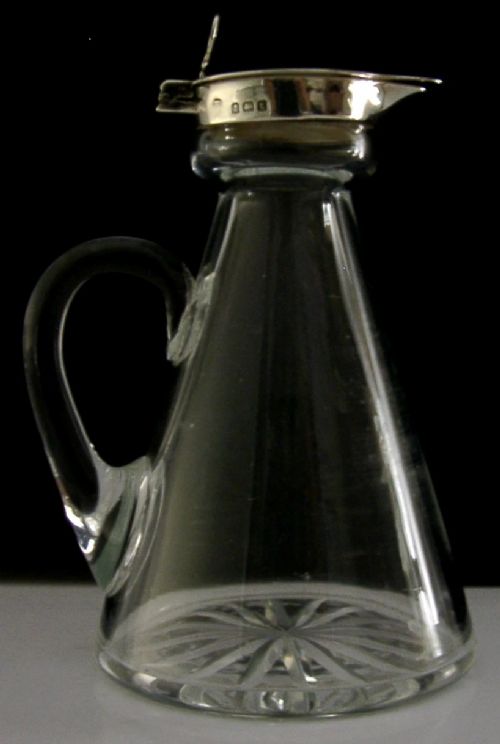
- A small spirit decanter or pouring jug, usually fitted with a sterling silver top, intended for individual use.
- Silver plate
- A manufacturing method where a thin layer of silver is fused to a base metal such as copper or nickel silver.
- Gold wash
- A thin layer of gold applied to the interior of a silver or metal vessel to prevent acidic liquids from tarnishing the metal.
- Cut glass
- Glass decorated by grinding facets or patterns into the surface using a rotating wheel.
Antique Serving Jug: Frequently Asked Questions
How were antique serving jugs used?
These vessels served water, wine, lemonade, coffee, and spirits at formal dining tables and sideboards. Their designs catered to both everyday family meals and formal entertaining.
Lidded versions kept contents covered during long meals, while open pouring lips allowed swift service of water or wine.
How do I clean an antique jug?
Wash glass and metal components separately using warm water and mild soap, avoiding harsh abrasives that scratch old surfaces. Dry metal immediately to prevent water spots.
Polish silver plate gently with a dedicated cloth, keeping polish away from glass cuts and crevices.
Can I use these jugs daily?
Many sturdy glass and metal pieces handle regular service well, provided you lift them by the body rather than relying solely on antique handles. Copper and heavy glass are particularly robust.
Delicate cut glass and pieces with thin silver plating suit display or careful occasional use better.
How do I date a serving jug?
Look to the overall style, manufacturing marks, and material combinations recorded in the piece description. Georgian examples often show distinct heft and hand-hammered or early cast details.
Victorian and Edwardian pieces frequently feature machine-pressed glass patterns alongside electroplated mounts.