

Antique Serving Console
An antique serving console brings architectural presence and practical surface space to a dining room or hallway.
Antique Serving Console
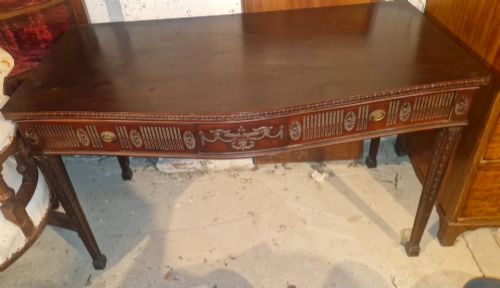
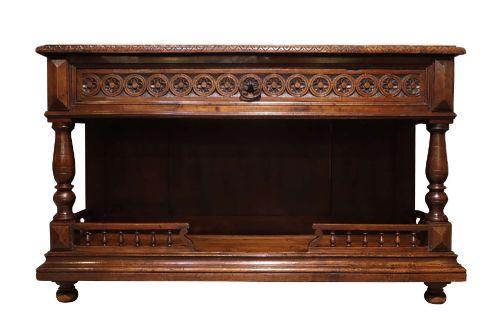
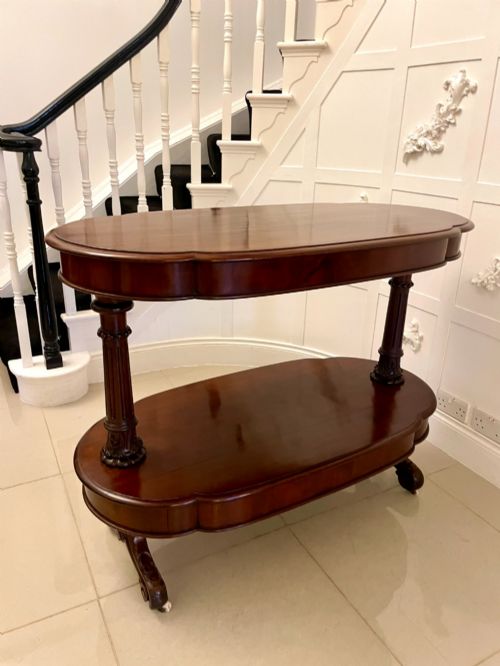
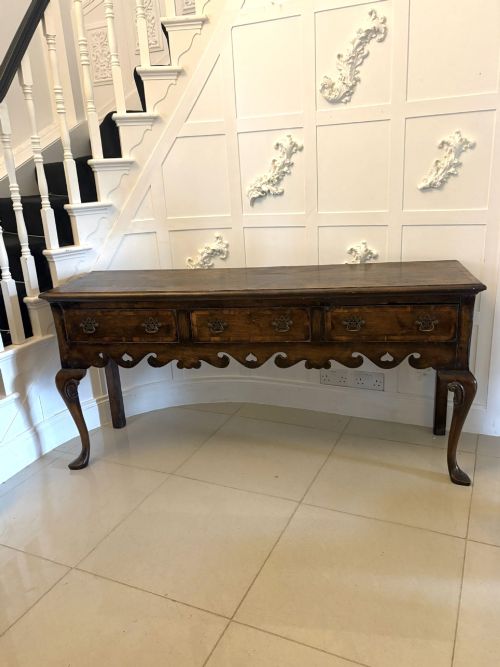
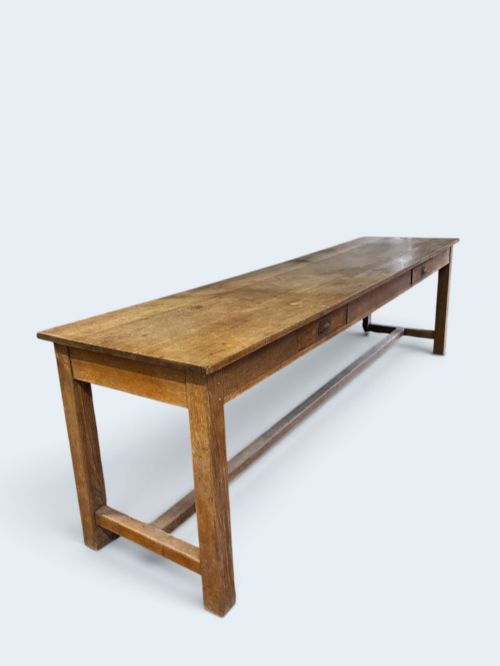
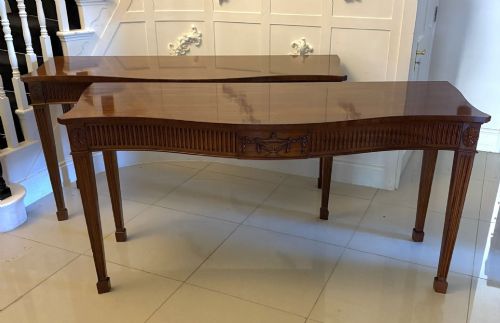
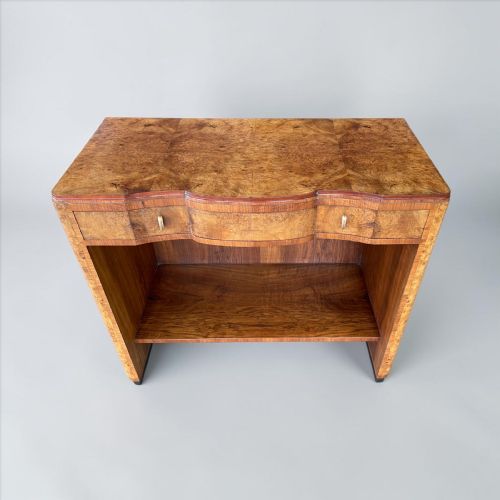
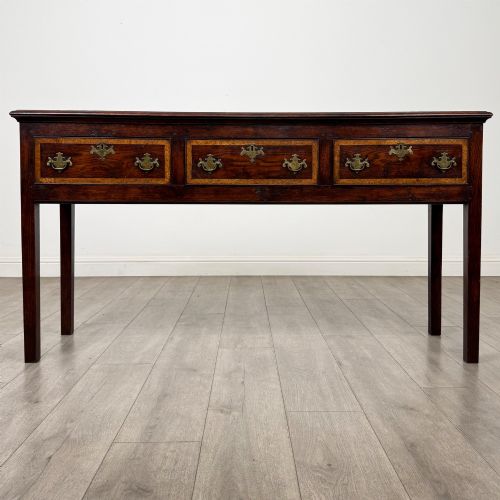
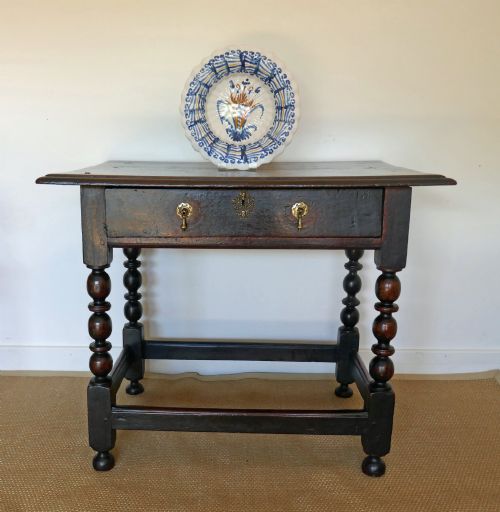
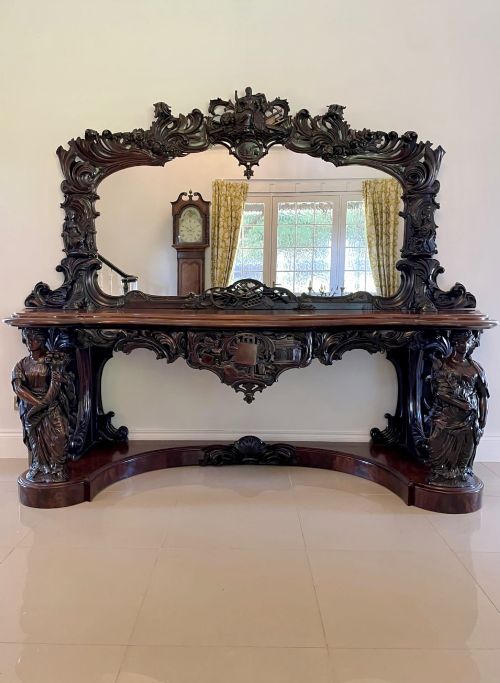
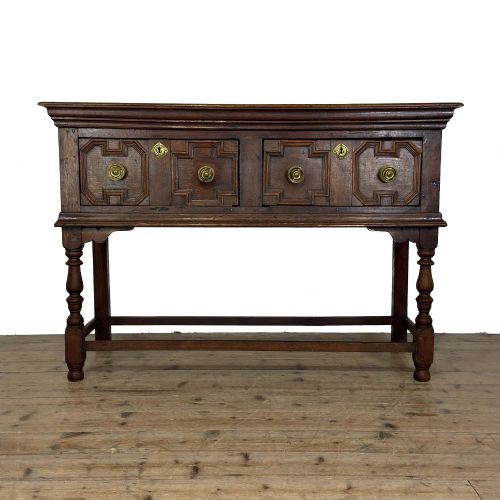
An antique serving console encompasses heavy timber sideboards, dresser bases, and console tables designed for dining rooms and grand halls. These pieces originate from the eighteenth, nineteenth, and early twentieth centuries, spanning periods from George III through to Edwardian and Art Deco designs.
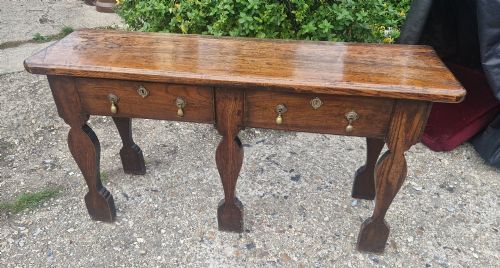
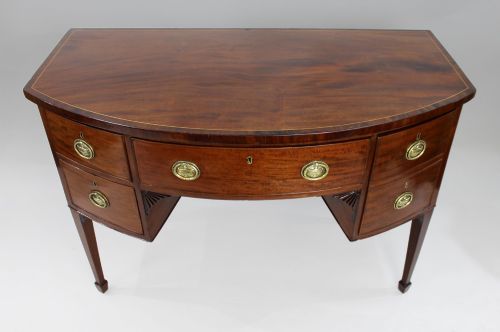
The selections on this page appear as mahogany bow-front servers, oak dresser bases, and walnut side tables. Regional styles range from English country furniture to French provincial and Neoclassical interpretations.
Buyers choose an antique serving console to anchor a dining space or hallway with period character and robust timber construction. These tables provide long rectangular surfaces and storage drawers suited to domestic life.
Materials and construction
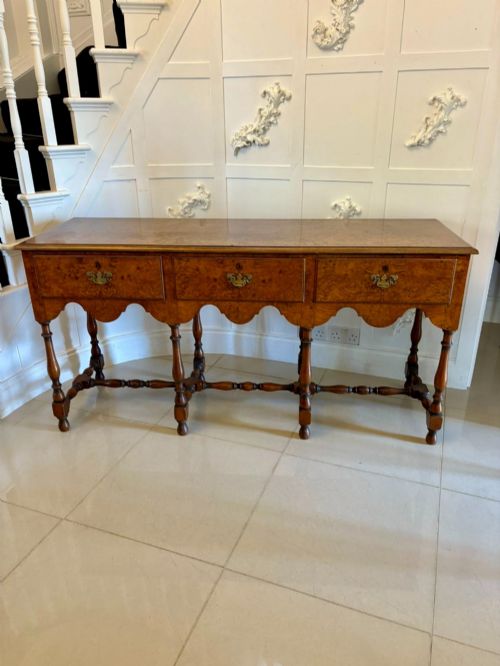
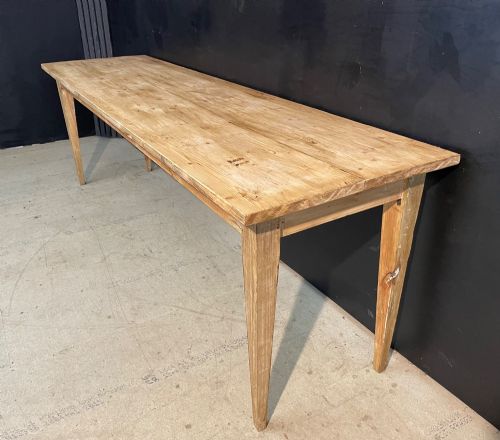
Cabinetmakers constructed these serving consoles primarily from solid hardwoods such as mahogany, oak, and walnut, frequently incorporating burr walnut veneers for decorative contrast. Pine and painted finishes appear in regional country pieces.
Joinery techniques relied on pegged mortise and tenon frames, hand-cut dovetails for drawer construction, and structural turning or cabriole legs. Surface decoration involved wood inlay, brass hardware, and hand-carved Neoclassical motifs.
Listings feature oak, mahogany, walnut, and pine across periods from the seventeenth century through to Art Deco.
What separates the tiers
Quality rests upon timber selection and the precision of the cabinetmaker's joinery. Fine examples display carefully matched grain patterns, crisp carving, and substantial proportions rather than mass-produced uniformity.
The distinction between standard utility furniture and exhibition pieces lies in secondary details such as original brass handles, inlaid stringing, and integrated marble tops. Maker attribution and well-preserved structural integrity elevate specific examples.
Maurice Adams·Beresford & Hicks·Fortnum and Mason·Gillows
The Antique Serving Console Glossary
- Bow front
- A convex curved front section common on eighteenth and nineteenth-century serving tables. This shape softens linear room layouts.
- Dresser base
- A low wooden sideboard fitted with drawers and sometimes lower shelves. It served a functional role in country houses for food preparation and storage.
- Enfilade
- A long sideboard or serving cabinet designed for formal dining rooms. Originating in France, these pieces often feature marble tops and carved oak doors.
- Demi-lune
- A half-moon shape used for console tables designed to sit flush against a wall. This profile saves floor space in narrower hallways.
- Serpentine
- A gently undulating front edge with a central convex curve flanked by concave sections. Cabinetmakers utilised this contour to create visual depth.
Antique Serving Console: Frequently Asked Questions
What is an antique serving console?
An antique serving console is a heavy wooden table or dresser base designed to hold food, tableware, or decorative objects in dining rooms and grand halls. These tables date from the eighteenth to the early twentieth century.
They combine the narrow profile of a console with the surface area and drawer space required for entertaining.
How were serving consoles used historically?
These tables stood against dining room walls to hold dishes before service or to display silver and porcelain. In country houses, dresser bases functioned as both work surfaces and storage units.
Their sturdy timber construction allowed them to bear heavy loads of serving platters and household provisions.
Where should I place a console table?
A serving console suits dining rooms, wide hallways, and living spaces where a long surface is practical. Their shallow depth allows them to sit against walls without obstructing walkways.
Posing a mirror or artwork above the console helps anchor the piece within the room.
How do I identify George III tables?
George III pieces date from the late eighteenth century and often feature mahogany construction, clean classical proportions, and fine inlay work. Cabriole legs or straight tapered legs with spade feet are typical.
Construction details include hand-dovetailed drawer boxes and solid secondary timbers such as oak or pine.