





Antique Seaweed Marquetry
Antique seaweed marquetry brings incredible fine-line pattern to walnut cabinets, chests, and writing furniture from the seventeenth century.
Antique Seaweed Marquetry
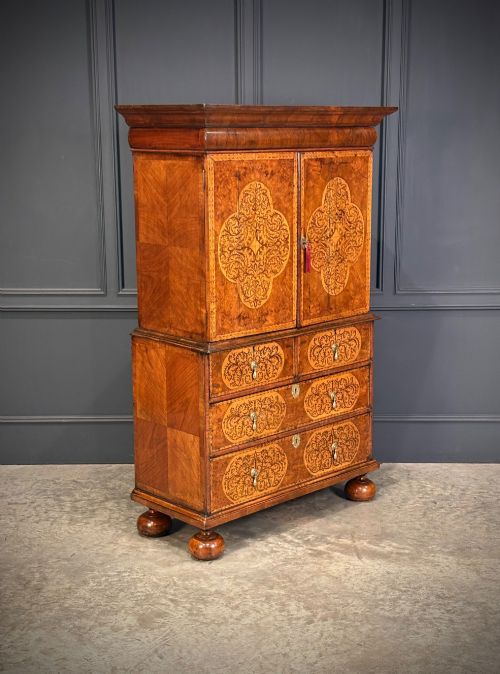
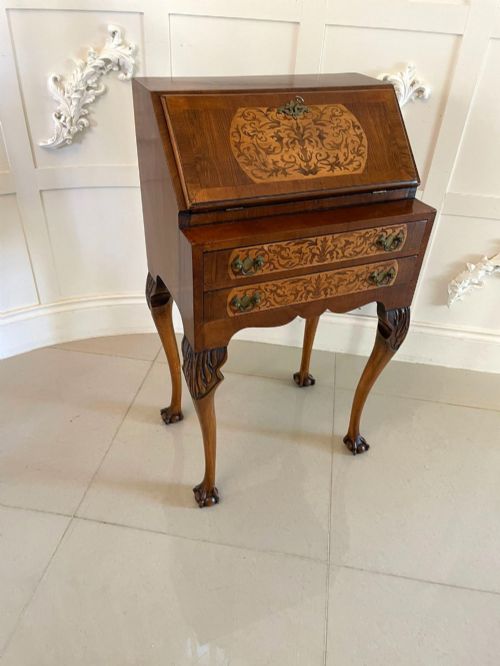
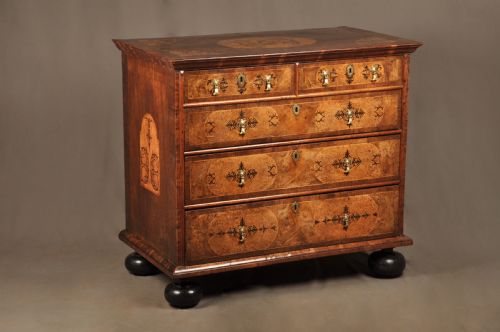
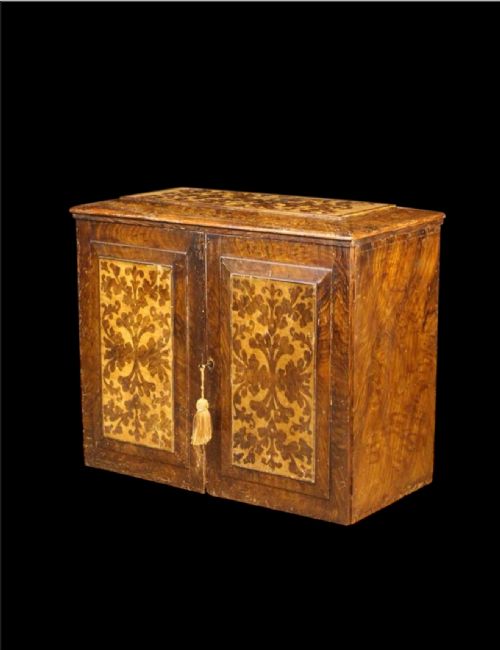
When you search for antique seaweed marquetry, you encounter intricate two-colour wood inlay work that resembles delicate botanical fronds or seaweed. These pieces are predominantly seventeenth-century furniture forms, featuring chests of drawers, cabinets on stand, and writing bureaus executed in rich walnut.
The aesthetic relies on dense, scrolling floral and linear patterns across drawer fronts and cabinet doors. Alongside seventeenth-century originals, you occasionally meet later revivals from the Victorian era and the nineteen-twenties that emulate these early cabinet-making traditions.
Materials and construction
Craftsmen built these pieces using solid and veneered walnut, frequently incorporating burr walnut for its rich, mottled grain. Marquetry inlay employed contrasting woods such as boxwood and fruitwood to create the sharp, two-tone seaweed effect against a darker ground.
The delicate inlay patterns were meticulously sawn from thin sheets of veneer, fitted together like a jigsaw puzzle, and glued to carcases typically constructed from oak or pine. Brass hardware, including escutcheons and drop handles, complemented the elaborate woodwork.
Antique Seaweed Marquetry Retail Price Guide 2026
Typical asking prices for seaweed marquetry among the pieces listed under this phrase on Sellingantiques today, from the lower quarter to the upper quarter. They describe what is for sale here now, not the wider market.
Listings feature walnut, burr walnut, oak, and fruitwood across seventeenth-century and Victorian periods, forming chests of drawers, cabinets, and writing bureaus.
Quality differences
Quality rests upon the precision of the veneer work and the complexity of the scrolling patterns. Finer examples display exceptionally tight, seamless joins in the seaweed inlay without excessive filler or misalignment.
The choice of primary timber also dictates standing, with highly figured burr walnut surfaces and well-matched arabesque panels marking out superior pieces. Original surfaces and minimal restoration preserve the integrity that separates standard items from exceptional ones.
The Antique Seaweed Marquetry Glossary
- Marquetry inlay
- Decorative wood patterns applied to a furniture carcase using contrasting veneers. This technique defines the intricate surface designs of the period.
- Burr walnut
- Wood harvested from walnut tree growths, producing swirling grain patterns. It provides a highly decorative background for fine inlay work.
- Arabesque
- Elaborate surface decoration consisting of flowing, interlaced scrollwork. It frequently accompanies seaweed patterns on seventeenth-century drawer fronts.
- Cabinet on stand
- A large storage box raised upon a distinct supporting table structure. This form showcases extensive marquetry across multiple visible surfaces.
Antique Seaweed Marquetry: Frequently Asked Questions
What is seaweed marquetry?
Seaweed marquetry is a detailed form of wood inlay popular in the late seventeenth century, featuring fine, scrolling patterns that resemble marine plants. It creates a dense, patterned surface across furniture panels.
Craftsmen cut contrasting light and dark veneers to form intricate, continuous designs that cover entire drawer fronts and cabinet tops.
How do I date these pieces?
Dating relies on examining the timber construction, furniture form, and the style of the inlay work. Seventeenth-century originals display specific carcase assembly methods and authentic walnut patination.
Later Victorian and twentieth-century revivals often utilise different internal woods and modern construction techniques beneath the decorative surface.
Where were these pieces used?
These fine walnut items furnished principal rooms in wealthy seventeenth-century homes, serving as status symbols to display refined taste. Chests and cabinets stored valuable textiles and personal documents.
Today, they function as striking focal points in traditional or contemporary interiors, requiring stable room environments away from direct heat.
How do I care for walnut marquetry?
Protect antique walnut by maintaining steady indoor humidity and avoiding placement near radiators or direct sunlight. Gentle dusting with a dry cloth preserves the delicate surface.
Refrain from using modern chemical polishes, applying traditional wax sparingly only when the timber appears dry.