



Antique Scroll Footstool
An antique scroll footstool offers low-slung, sculptural comfort, bringing refined period character and rich timber warmth to any sitting room.
Antique Scroll Footstool
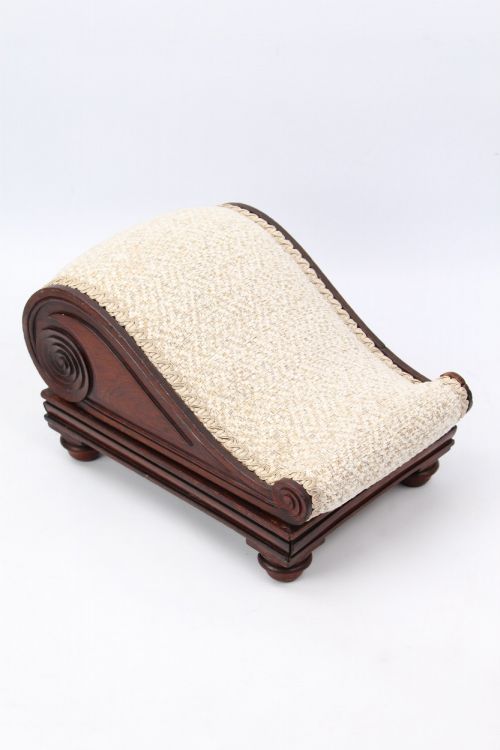
When you search for an antique scroll footstool, you are looking at low seating forms designed for resting feet or low occasional sitting, typically featuring scrolled terminal details to the frame or ends. These pieces appear across several centuries, with particular concentrations in Regency, Victorian, and Georgian styles.
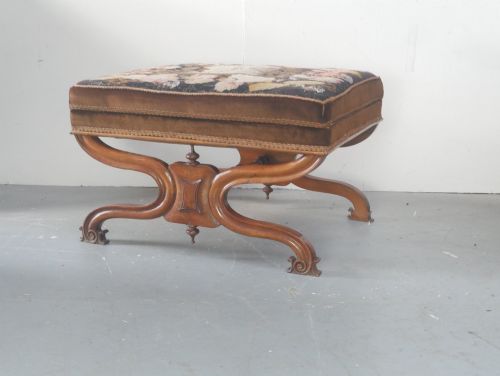
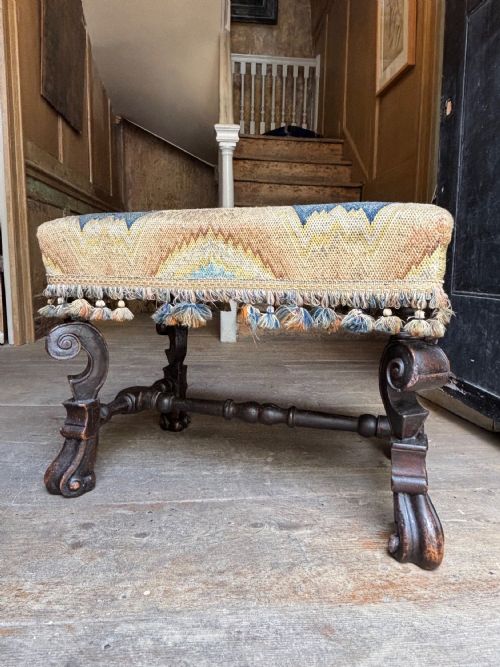
The versions you are most likely to meet on this page span the nineteenth century, utilising dense hardwoods like mahogany and rosewood alongside softer pine frames. Forms range from simple upholstered benches to X-framed and cabriole-legged examples.
Makers and designers from various eras adapted these forms for domestic parlours and drawing rooms, drawing on Neoclassical, Louis XV, and Carolean influences. The resulting pieces combine practical low seating with ornamental woodwork and traditional upholstery.
How they were made
Construction relies heavily on traditional cabinet timbers, principally mahogany and rosewood, alongside structural elements in oak, walnut, and pine. Woodworkers shaped these materials into curved frames, cabriole legs, and distinctive scroll terminals.
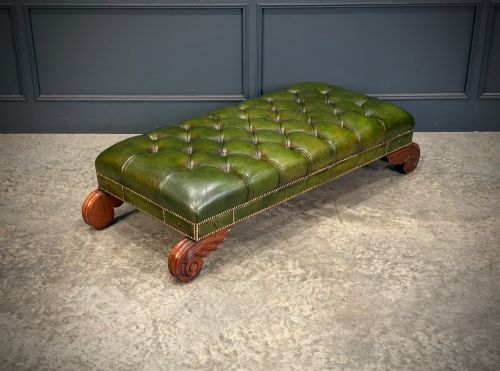
Upholstery forms an essential part of the construction, employing traditional textile coverings such as velvet, leather, damask, tapestry, and fabric. Brass detailing and decorative carving frequently finish the woodwork.
Antique Scroll Footstool Retail Price Guide 2026
Typical asking prices for scroll footstool among the pieces listed under this phrase on Sellingantiques today, from the lower quarter to the upper quarter. They describe what is for sale here now, not the wider market.
Some nineteenth-century makers packed their scroll stools with enough dense mahogany to survive generations of lively drawing room foot-resting.
What varies in quality
The standard of carving and timber selection dictates the distinction between standard domestic seating and exceptional library pieces. Dense grains in rosewood and mahogany, paired with crisp hand-carved scrollwork, indicate superior workshop origins.
The integrity of the frame construction and the fidelity of period upholstery styles, such as buttoned leather or hand-woven tapestry, determine the overall execution of the piece.
The Antique Scroll Footstool Glossary
- Scroll footstool
- A low seat featuring distinctive curved scroll terminals to the wooden frame or ends. These pieces are designed primarily for domestic comfort.
- Regency
- A style period spanning the early nineteenth century, characterised by classical restraint, Neoclassical motifs, and rich dark timbers. Pieces from this era often feature precise turning and scrolling.
- X-frame
- A structural furniture base formed by intersecting diagonal cross-legs. This design provides robust support while offering an elegant architectural silhouette.
Antique Scroll Footstool: Frequently Asked Questions
What is an antique scroll footstool used for?
These low seats served historically for resting feet while sitting in armchairs or for secondary seating in parlours and drawing rooms. Their compact proportions made them easily movable about the room.
Today, they function well as decorative accent pieces, low occasional seats, or traditional footrests in front of modern sofas.
How do I date an antique scroll footstool?
Dating relies upon identifying the primary timber, secondary framing woods, and stylistic vocabulary such as Regency curves or Victorian cabriole legs. Examining the underlying construction methods and joinery provides further clues to the period.
Comparing the upholstery style and any surviving design book references helps narrow the exact decade of manufacture.
How do I care for antique wood and upholstery?
Protect timber frames from direct sunlight and rapid humidity changes to prevent wood splitting or veneer lifting. Regular dusting with a soft, dry cloth preserves the finish without damaging the patina.
Upholstered surfaces benefit from gentle vacuuming using a low-suction attachment and professional textile cleaning when necessary.
What is the difference between a footstool and a window seat?
Footstools are low, compact seating units designed specifically for foot support or low seating, often featuring square or oblong proportions. Window seats are generally longer and higher, designed to fit beneath architectural window bays.
While both utilise similar timber frames and upholstery methods, their intended domestic placement and overall scale differ significantly.