

Antique Scroll Chairs
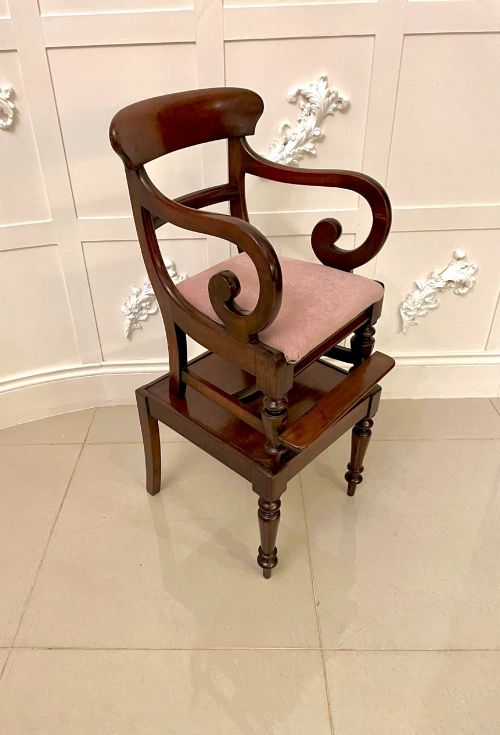
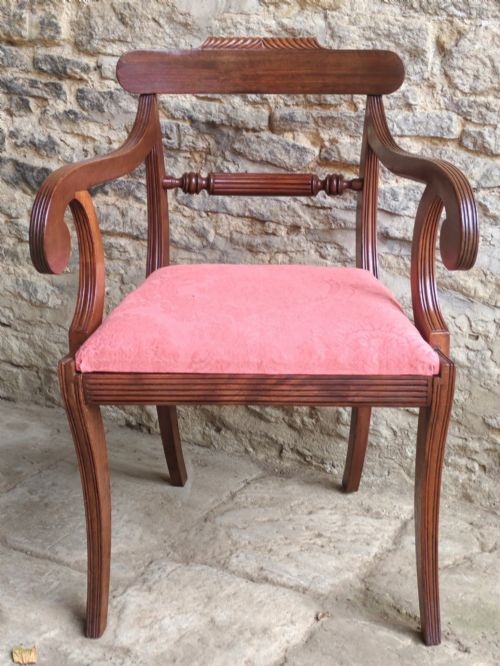
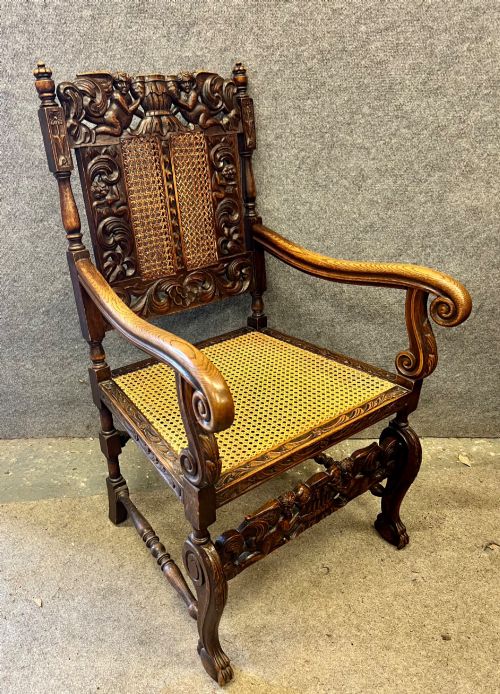
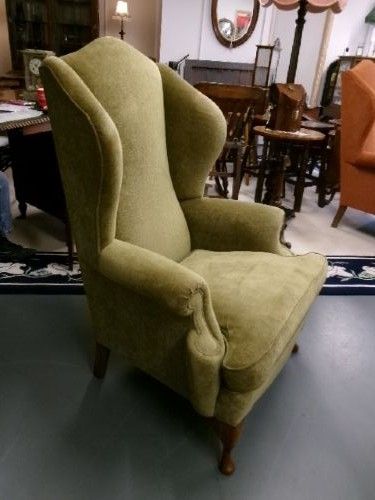
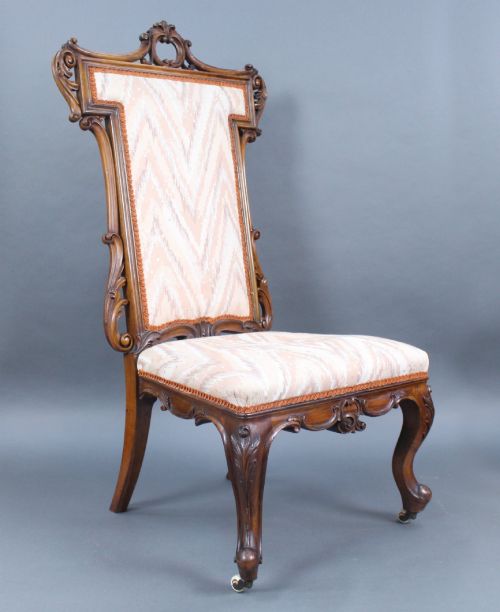
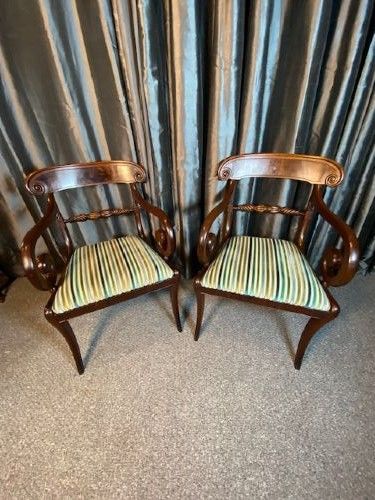
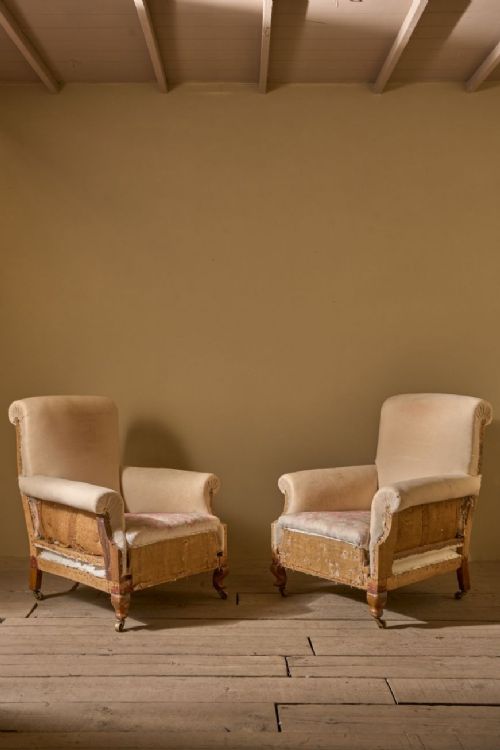
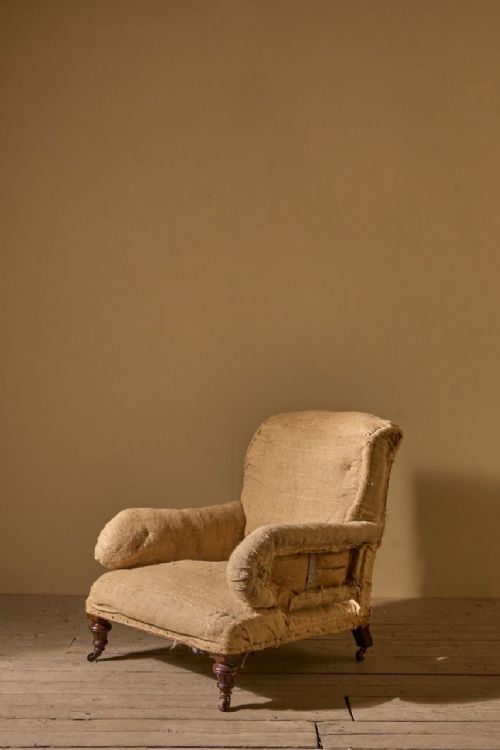
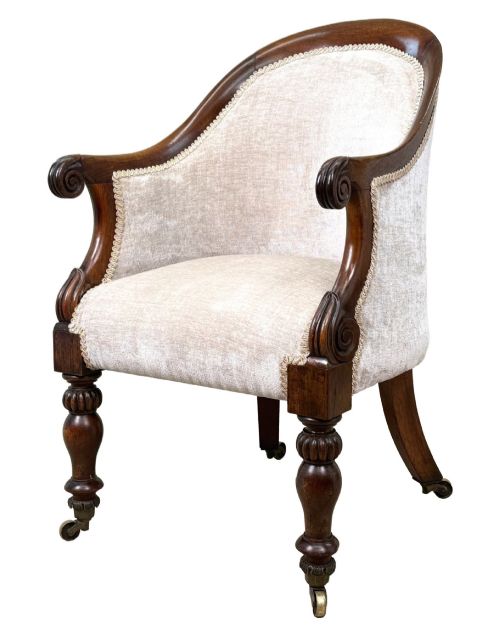
These antique scroll chairs bring sculptural timber frames and sweeping arm terminals into a room, offering robust seating shaped by nineteenth-century cabinet makers.
Antique Scroll Chairs
When you search for antique scroll chairs, you encounter seating united by outward-curling arm terminals or backrests, most frequently appearing in nineteenth-century forms. The selection relies heavily on Regency, William IV, and Victorian periods, alongside later revivals from nineteen hundred and nineteen twenty.
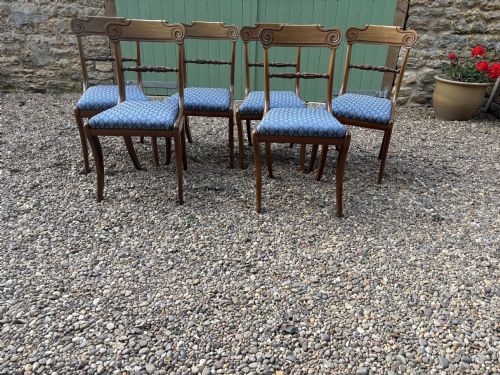
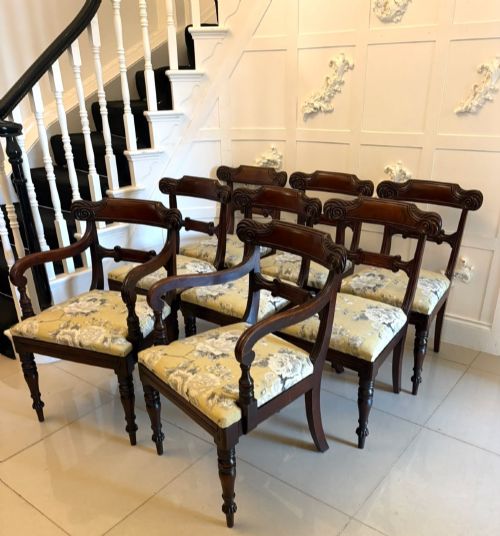
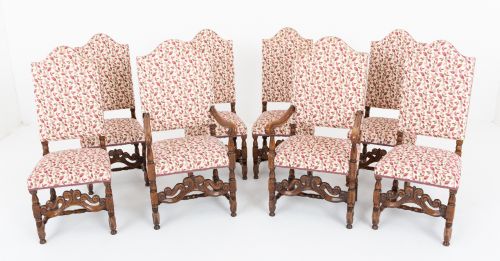
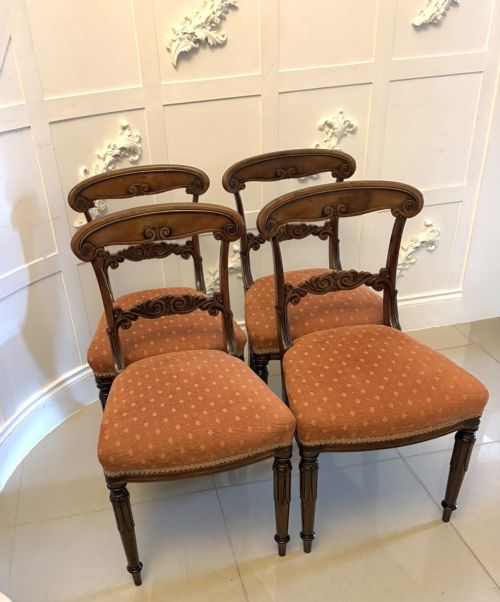
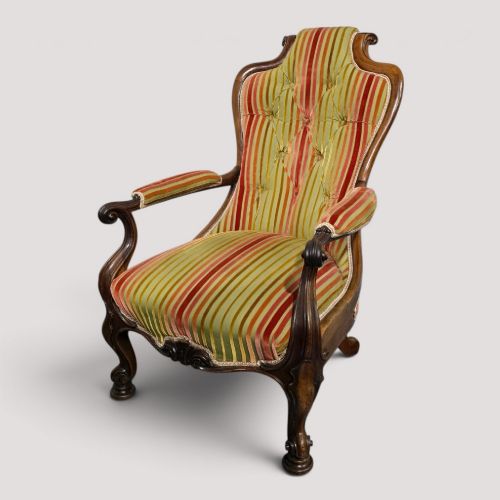
The inventory spans dining chairs, armchairs, carvers, elbow chairs, and library seating rather than a single uniform model. Mahogany and rosewood dominate the earlier pieces, while oak and walnut support the revival and country house styles.
Makers and designers from the period favoured substantial timber frames upholstered in velvet, leather, fabric, or plain wood. Buyers select these pieces to anchor a study, library, or dining room with defined period character.
Materials and construction methods
Cabinet makers built these frames primarily from dense hardwoods like mahogany, rosewood, walnut, and oak. Selected timbers were carved, turned, or bent to form the characteristic scroll arms and supportive backs.
Detailing often included brass inlay, reeded legs, and carved supports integrated directly into the timber frame. Upholstery was built up using traditional webbing and stuffing before being secured with leather, velvet, or woven fabric.
Mahogany and rosewood dominate the nineteenth-century listings, alongside occasional oak and walnut pieces from later revival periods.
Distinctions in quality and execution
Quality rests in the crispness of the timber carving and the architectural proportion of the scroll arms relative to the seat. Superior examples exhibit tightly grained mahogany or rosewood with integrated brass detailing and stable, well-joined frames.
Lesser pieces show softer carving wear or later timber replacements in the structural joints. The integrity of the original wood finish and the appropriateness of the upholstery fabric further separate standard workshop production from finer commissions.
Howard and Sons
The Antique Scroll Chairs Glossary
- Carver
- An armchair designed to match a set of dining chairs, usually featuring open arms to accommodate wide clothing. These pieces sit at the head and foot of a dining table.
- Scroll arm
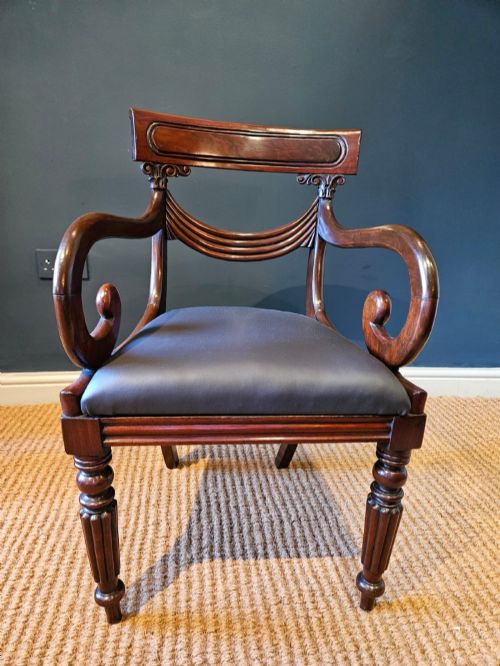
- An armrest terminating in a tight, outward-curling volute shape resembling a rolled parchment. This feature defines the visual movement of Regency and Victorian seating.
- Reeded leg
- A column decorated with parallel convex mouldings carved directly into the wood. This classical detail appears frequently on Regency and William IV chair supports.
- Bergere
- An enclosed upholstered armchair with exposed wooden framing and cane or fabric sides. These seats provide a deeper, more relaxed sit than standard dining chairs.
Antique Scroll Chairs: Frequently Asked Questions
How do I date an antique chair?
Dating relies on timber selection, joining techniques, and stylistic markers recorded across the nineteenth century. Regency and William IV pieces often display rich mahogany or rosewood with brass inlay.
Later Victorian and nineteen-hundred examples shift towards walnut, oak, and heavier carved revival styles. Examining the structural build under the seat reveals the age of the frame.
Where should I place a scroll armchair?
These armchairs suit studies, libraries, and drawing rooms where their architectural timber frames act as focal points. Pair a mahogany library chair with a partner desk or position an elbow chair beside a fireplace.
Their substantial proportions require adequate floor space to let the curved arms and carved legs remain visible from all angles.
Are scroll chairs comfortable for daily use?
Nineteenth-century models offer varied seating depths depending on whether they were built for dining or lounging. Library chairs and daybeds provide deep, supportive seating upholstered in leather or velvet.
Dining carvers offer a more upright posture designed for use around a table rather than deep relaxation.