


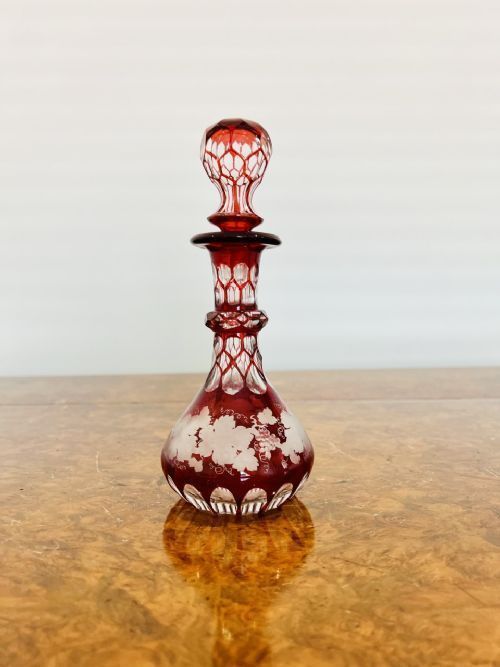


Antique Scent Flacon
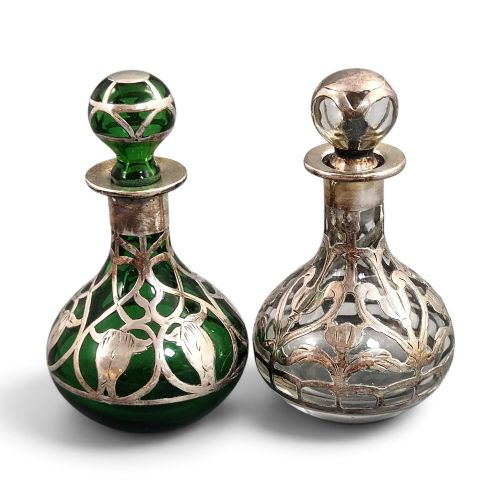
An antique scent flacon is a small vessel designed to hold perfume, combining glass or porcelain with precious metal mounts.
Antique Scent Flacon
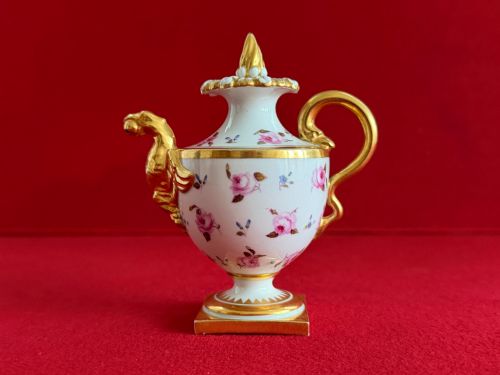
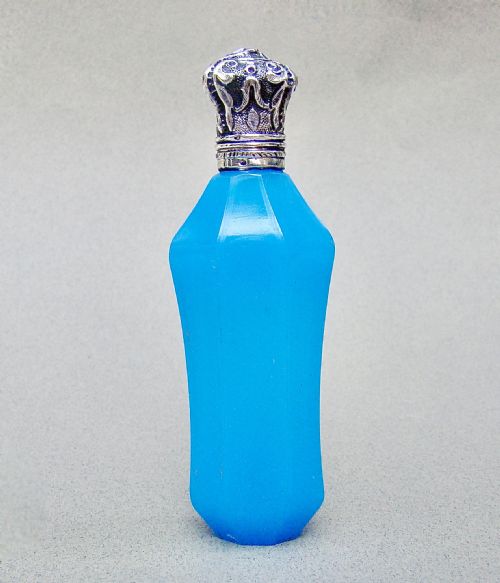
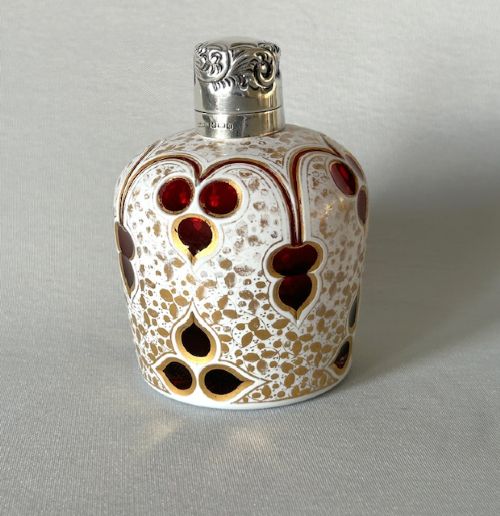
The most common versions met on this page include cut glass bottles fitted with silver collars, alongside porcelain scent bottles and opaline glass examples from French and English makers. Forms range from pocket-sized flasks to desk decanters and figural porcelain pieces.
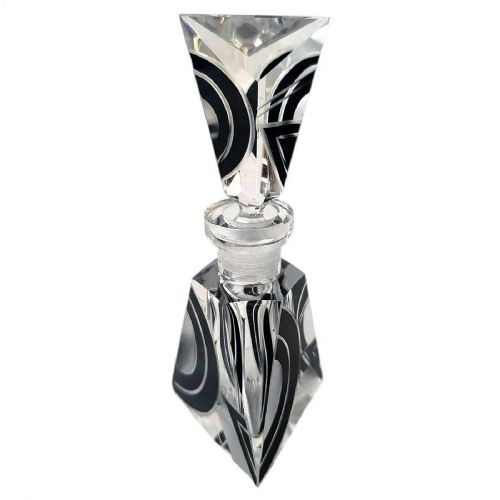
Originating across Europe, these pieces reflect the shifting aesthetic tastes from Georgian hand-painted enamel through Victorian overlay glass to geometric Art Deco Czech designs. Each period brought distinct forms, materials, and mounting techniques to the traditional scent bottle.
Materials and production methods
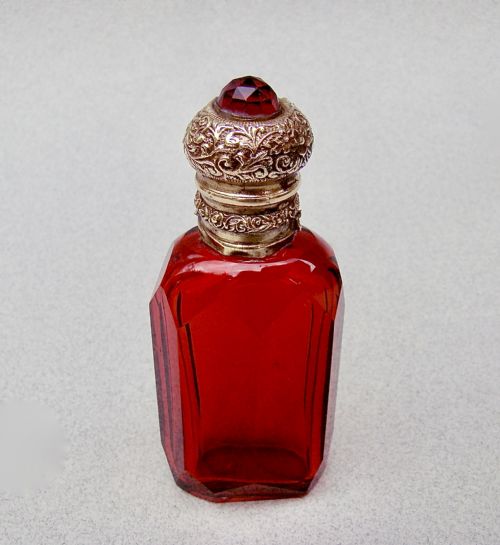
Makers utilised heavy lead crystal and coloured glass, often employing overlay techniques where a layer of ruby, cranberry, or blue glass was cased over clear crystal before being cut back to reveal the contrast. Porcelain factories similarly shaped fine clay bodies, sometimes adding hand-painted scenes or applied floral encrustations.
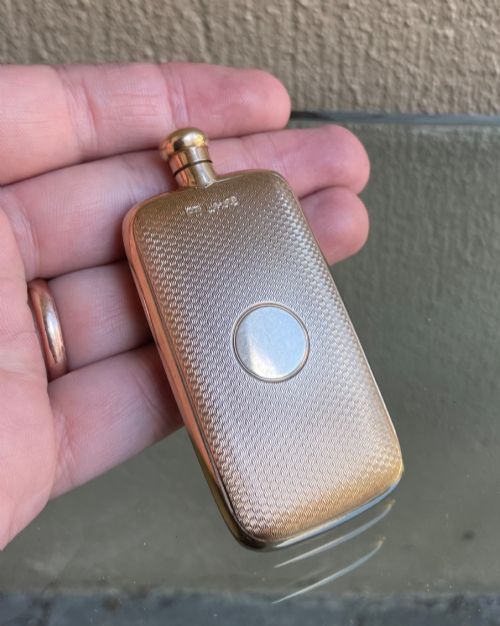
Metalwork played a structural role, with sterling silver, ormolu, and 9ct gold formed into hinged caps, screw lids, and decorative collars. Guilloche enamel and tortoiseshell panels were frequently inset into silver mounts, particularly during the Edwardian and Art Deco decades.
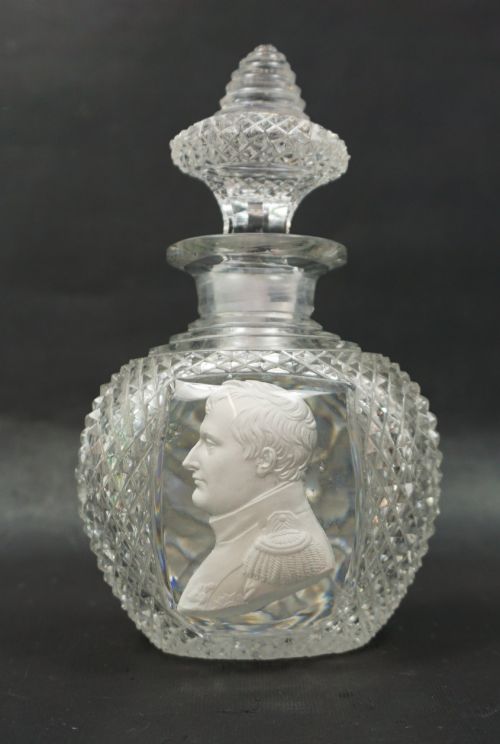
Napoleon's portrait occasionally peers out from inside solid crystal scent bottles, watching the vanity table from a tiny sulphide cameo.
Distinctions in quality and execution
The sophistication of the glass cutting and the purity of the metal mounts define the distinction between standard production and superior examples. Deeply faceted crystal with sharp, crisp edges and heavy gauge silver or gold mounts indicate higher workshop standards.
Artistic execution in decorative details, such as intricate hand-painted enamel scenes or precise guilloche patterns under translucent enamel, separates ordinary containers from exceptional collector pieces. The integrity of the original stopper matching the body also influences the standing of the piece.
Flight Barr And Barr·Gorham·Karl Palda·Rene Lalique·Royal Worcester·Jacob Petit·Minton·Mappin And Webb
The Antique Scent Flacon Glossary
- Flacon
- A small stoppered bottle or flask used for perfume or scent. This French term is frequently applied to decorative European glass and crystal containers.
- Guilloche
- A decorative mechanical technique where a precise repeating pattern is engraved into metal beneath a layer of translucent enamel. This finish is commonly found on Edwardian and Art Deco silver mounts.
- Opaline glass
- An opaque or translucent pale glass developed in France during the nineteenth century. It provides a smooth surface often mounted in ormolu or silver.
- Sulphide
- A small cameo made of white ceramic porcelain encased within clear crystal glass. Portraits of notable figures such as Napoleon were frequently embedded in this manner during the nineteenth century.
Antique Scent Flacon: Frequently Asked Questions
How were scent bottles used historically?
These vessels were carried in pockets or reticules, or kept upon dressing tables to refresh the air or revive someone feeling faint. The tight stoppers prevented the precious perfume from evaporating.
They also served as status symbols, reflecting the personal taste and wealth of the owner through rich materials and intricate metalwork.
How do I care for an antique scent bottle?
Keep these delicate objects out of direct sunlight and away from extreme temperature fluctuations to protect enamel work and historic glass. Handle them by the body rather than relying on hinged lids or delicate stoppers.
Clean them gently with a dry or barely damp cloth, avoiding harsh chemical immersion that might damage antique silver mounts or painted surfaces.
How can I tell the period of a scent bottle?
Dating relies on observing the combination of glass colours, cutting styles, and metal hallmarks. Georgian and early Victorian pieces often feature hand-painted enamel or simpler collars, while Art Deco examples display geometric cutting and streamlined silver work.
Assay office marks and maker stamps on silver collars provide precise dates for many Edwardian and later pieces.