



Antique Scent Casket
An antique scent casket holds precious perfume bottles securely, offering a glimpse into nineteenth-century dressing rituals.
Antique Scent Casket
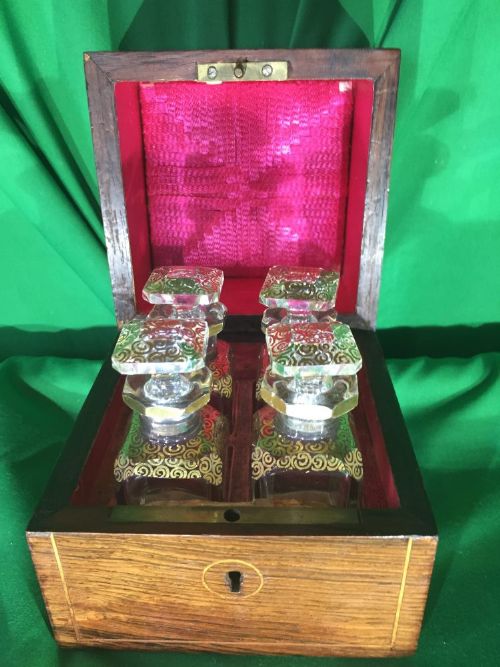
An antique scent casket is a fitted box designed specifically to house perfume bottles, often doubling as a vanity or jewellery container. These pieces typically date from the Victorian and Edwardian eras, alongside French nineteenth-century examples.
The forms range from rosewood, walnut, coromandel and fruitwood boxes to brass-mounted and leather-covered caskets. Inside, they house cut glass or Baccarat scent bottles, sometimes accompanied by travelling sets or potpourri sections.
Buyers meet variations spanning English and continental workshops, incorporating materials such as pietra dura, silk and velvet linings. Many retain their original glass bottles and fitted interior trays.
How they were made
Cabinetmakers utilised dense timbers like rosewood, walnut and coromandel, constructing sturdy carcasses often reinforced with brass mounts, ormolu or embossed leather. Interior compartments were carved or partitioned to hold fragile glass bottles securely during travel.
Glassmakers produced heavy cut glass and Baccarat bottles designed to fit the exact contours of the casket interiors. Artisans lined these compartments in silk and velvet, while specialised stone inlay techniques like pietra dura appeared on continental panels.
Antique Scent Casket Retail Price Guide 2026
Typical asking prices for scent casket among the pieces listed under this phrase on Sellingantiques today, from the lower quarter to the upper quarter. They describe what is for sale here now, not the wider market.
Some nineteenth-century travellers required a locked box just to keep their smelling salts from vanishing during a carriage ride.
What varies in quality
The distinction between standard boxes and superior caskets lies in the complexity of the cabinetry, the inclusion of exotic timbers like coromandel, and the presence of decorative mounts in bronze or ormolu. Finer examples integrate specialised mechanisms or combination locks.
The internal contents heavily influence the standing of a piece, particularly the presence of a matching set of original Baccarat or cut glass scent bottles rather than replacement vessels. The refinement of interior silk and velvet linings also marks out the higher tier of production.
William Comyns
The Antique Scent Casket Glossary
- Coromandel
- A dense, heavily figured exotic timber from Asia utilised for luxury nineteenth-century boxes. Its dark brown grain with black streaks makes it highly sought after by collectors.
- Ormolu
- Gilded bronze mounts applied to furniture and decorative boxes during the nineteenth century. This technique added metallic brilliance to wood and leather surfaces.
- Pietra dura
- An inlay technique using polished, cut coloured stones to create pictorial or geometric designs. Florentine workshops frequently applied these stone panels to box lids.
- Baccarat
- A renowned French crystalworks producing high-quality glass bottles found within nineteenth-century caskets. Their work is celebrated for its clarity and heavy cutting.
- Pot pourri
- A mixture of dried petals and spices kept in a decorative container to perfume a room. Some caskets contained dedicated sections for this purpose.
Antique Scent Casket: Frequently Asked Questions
What is an antique scent casket?
An antique scent casket is a specialised box created in the nineteenth century to store delicate perfume bottles and vanity items. They range from simple brass-mounted leather boxes to elaborate wood and ormolu containers.
Inside, these caskets feature fitted velvet or silk-lined compartments designed to hold glass or crystal bottles safely. They reflect the personal grooming habits of the Victorian and Edwardian periods.
How were scent caskets used?
Owners kept these caskets on dressing tables or boudoirs to hold everyday perfumes and aromatic oils. Some were built as travelling sets for use on journeys.
The fitted interiors kept glass bottles upright and protected, while locks secured valuable scents and personal trinkets from domestic staff.
What woods are common?
Victorian and nineteenth-century caskets frequently employ rosewood, walnut and exotic coromandel. French examples sometimes utilise fruitwood or incorporate bronze mounts.
These timbers were chosen for their grain patterns and durability, often polished to a high finish and complemented by brass stringing or ormolu mounts.
Are the glass bottles usually original?
Many caskets retain their original matched set of cut glass or Baccarat bottles, nestled into the custom interior compartments. Surviving complete sets remain desirable to collectors.
Because bottles were fragile and prone to breakage, replacement vessels do occur in older boxes, making the presence of matching original glass significant.