

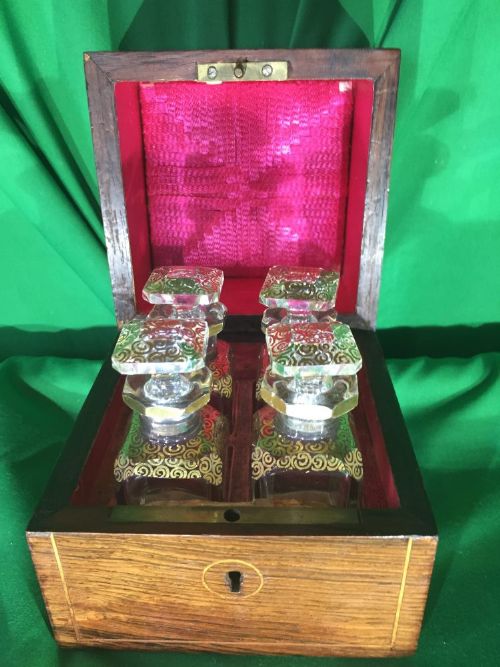


Antique Scent Bottle Casket
An antique scent bottle casket houses delicate glass vessels in a secure, fitted interior designed for dressing tables and travel.
Antique Scent Bottle Casket
An antique scent bottle casket is a specialised box designed to hold multiple perfume bottles safely, often incorporating compartments for trinkets or jewellery. The examples encountered on this page span the Victorian and nineteenth-century periods, showing distinct European influences from French, English, Charles X, and Napoleon III makers.
The primary forms take shape as rosewood, walnut, coromandel, or fruitwood boxes, alongside embossed leather dome-topped designs and brass-mounted or ormolu-decorated housings. Inside these fitted enclosures, buyers find cut glass scent bottles or matched sets bearing ground glass stoppers, ready for daily dressing table use.
Many variations appear in the archive and current listings, from travel sets in original boxes to combination tantalus setups and elaborately inlaid pietra dura or boullework caskets. The overarching purpose remains consistent across these domestic containers: protecting precious fragrance while displaying fine nineteenth-century cabinetmaking.
Materials and construction methods
Cabinetmakers utilised dense timbers such as rosewood, walnut, coromandel, and fruitwood to build the structural shells of an antique scent bottle casket, frequently reinforcing the corners with brass mounts or ormolu. Interiors were typically lined with fitted velvet and silk to cushion the delicate glass vessels housed inside.
The scent bottles themselves were formed from cut glass or fine crystal, sometimes associated with French glassmakers like Baccarat, featuring precise ground stoppers to prevent evaporation. Exterior decoration ranged from embossed leather and bronze mounts to intricate inlay work and carved wood details.
Antique Scent Bottle Casket Retail Price Guide 2026
Typical asking prices for scent bottle casket among the pieces listed under this phrase on Sellingantiques today, from the lower quarter to the upper quarter. They describe what is for sale here now, not the wider market.
Listings for an antique scent bottle casket commonly feature Victorian and nineteenth-century examples utilising rosewood, coromandel, cut glass, and velvet.
Assessing quality in a scent bottle casket
Quality in an antique scent bottle casket rests heavily on the integrity of the fitted interior and the matching status of its glass vessels. Caskets retaining their original complete set of cut glass bottles, undamaged silk or velvet linings, and working locks demonstrate superior original preservation.
The refinement of the exterior housing also dictates standard, with dense exotic hardwoods, precise brass or ormolu mounts, and complex decorative techniques like boullework or pietra dura marking the higher tiers of nineteenth-century craftsmanship.
Baccarat
The Antique Scent Bottle Casket Glossary
- Boullework
- An elaborate marquetry technique using tortoiseshell and brass inlay, often seen on French nineteenth-century caskets. This decorative method was popularized during the reign of Louis XIV and revived in later centuries.
- Coromandel
- A dense, dark East Indian timber featuring striking contrasting grain patterns, frequently utilised for luxury nineteenth-century boxes. It provides a heavy, durable shell for fitted interiors.
- Ormolu
- Gilded bronze mounts applied to the exterior corners and hinges of decorative boxes. The technique involves applying a mercury-gold amalgam to cast bronze.
- Pietra dura
- An artistic technique using cut and fitted polished coloured stones to create pictorial inlays on box lids. Hardstones such as lapis lazuli and marble are typically employed.
- Tantalus
- A locking wooden frame that secures decanters or bottles to prevent unauthorized access while displaying the contents. In combination caskets, this mechanism secures the perfume bottles within the box.
Antique Scent Bottle Casket: Frequently Asked Questions
What is an antique scent bottle casket?
An antique scent bottle casket is a specialised container built during the nineteenth century to house multiple perfume bottles and small vanity items. These boxes protected delicate glass vessels from damage during daily use or travel.
Inside, custom-fitted compartments lined with silk or velvet held the bottles securely in place. They served as both functional dressing table accessories and decorative ornamental pieces.
How were scent bottles kept secure inside?
Makers constructed fitted wooden or metal internal platforms that cradled the base and body of each individual glass vessel. This prevented the bottles from shifting or colliding during transit.
Many caskets also featured locking lids with functional keys, ensuring the valuable perfumes remained safe from accidental spills or unauthorized handling.
Which woods are common on these caskets?
Nineteenth-century cabinetmakers frequently employed dense exotic and native hardwoods including rosewood, walnut, coromandel, and fruitwood. These timbers provided a stable, durable frame for intricate brass mounting and velvet interiors.
Some examples also feature specialised surface finishes like embossed leather or bronze and ormolu mounts rather than exposed polished timber.
How do I distinguish French and English caskets?
French caskets from the nineteenth century often incorporate gilt bronze, ormolu, or distinct decorative styles associated with Napoleon III and Charles X periods, alongside makers like Baccarat. English examples frequently favour solid exotic timbers like rosewood and coromandel with brass campaign-style handles.
Examining the interior lining, hardware construction, and overall aesthetic provides clear indicators of the piece's geographic origin.