



Antique Savonarola Seat
An antique savonarola seat brings folding X-frame geometry and historical revival carved detail into any interior.
Antique Savonarola Seat
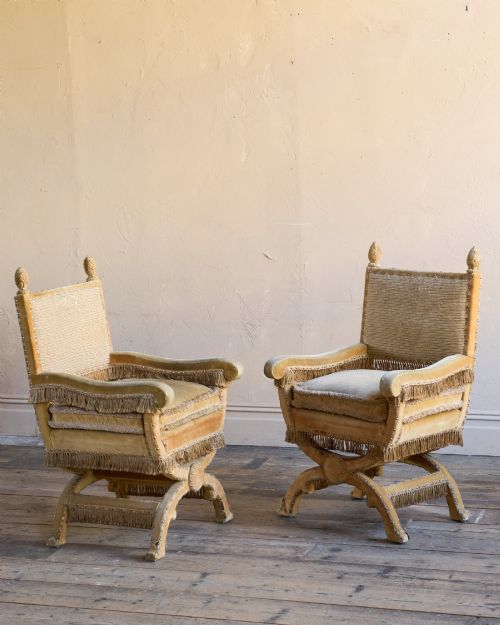
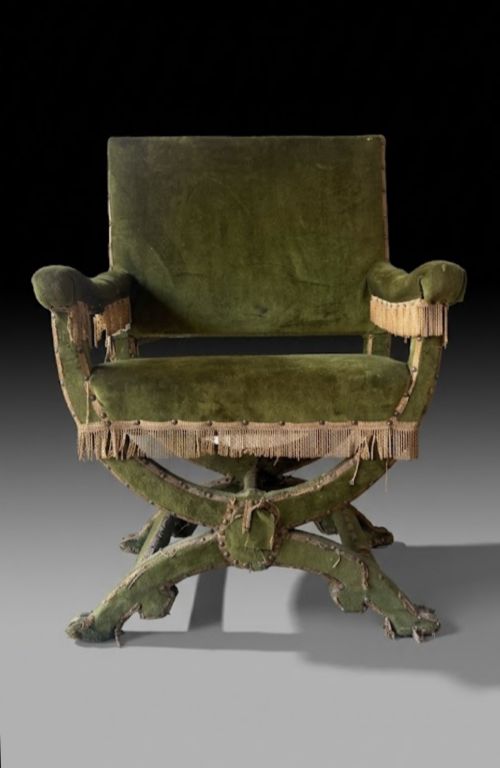
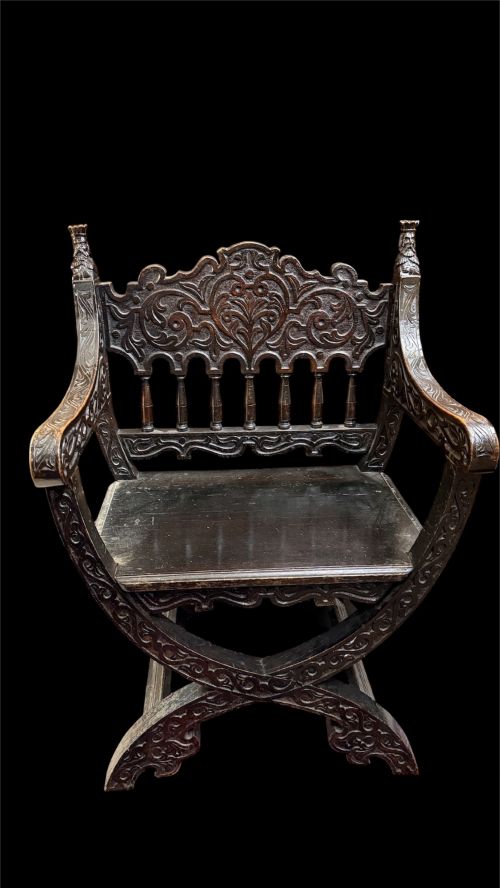
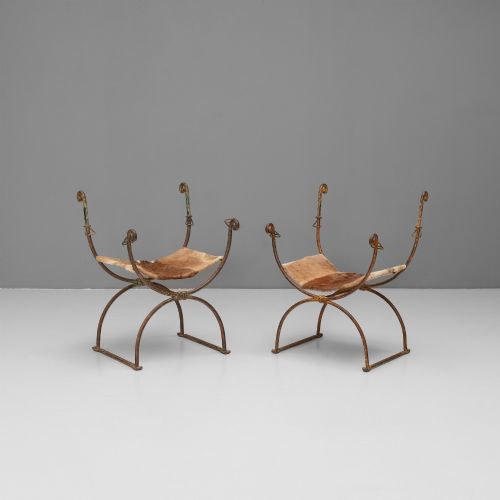
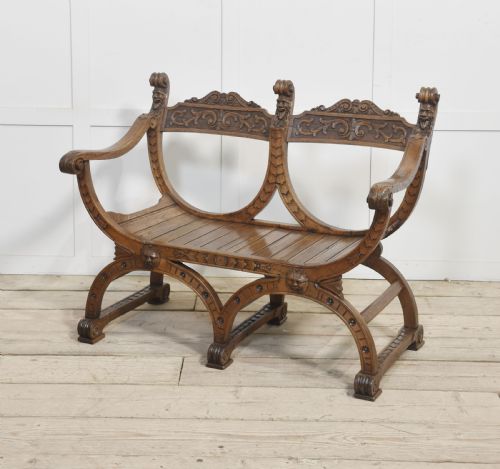
An antique savonarola seat is a folding X-frame chair or stool rooted in historical Renaissance forms. The selection here spans armchairs, side chairs, hall chairs, benches, and stools dating from the nineteenth century up to the nineteen-thirty period.
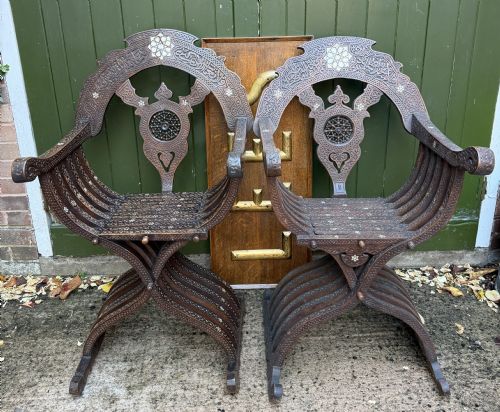
Makers drew on diverse regional traditions, resulting in styles that range from Renaissance Revival and Gothic Revival to Moorish Revival, Syrian Ottoman, and Neoclassical. Buyers will most frequently encounter walnut and oak examples featuring intricate carved woodwork alongside upholstered elements.
Origin points stretch from Britain and Austria-Hungary to Spain and Syria, giving collectors a wide geographical spread within the same folding chair typology. These seating forms function effectively as accent chairs or static armchairs in modern rooms.
How they were made
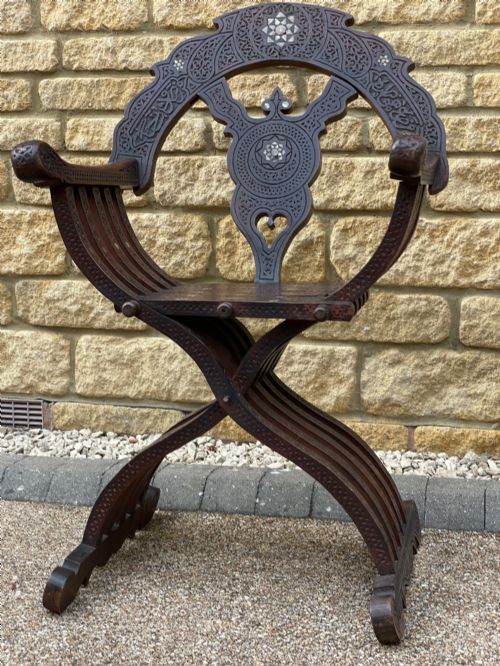
Craftsmen shaped these X-frame structures primarily from solid hardwoods like oak and walnut, using interlocking curved slats to achieve the signature folding mechanism. Many frames exhibit deep hand-carving along the arms, crest rails, and vertical supports.
Decoration extended beyond simple woodwork into complex surface enrichment utilising mother-of-pearl, bone inlay, and brass accents. Textile integration remains central, with original or replacement upholstery utilising fabrics such as damask and woven textiles.
Antique Savonarola Seat Retail Price Guide 2026
Typical asking prices for savonarola seat among the pieces listed under this phrase on Sellingantiques today, from the lower quarter to the upper quarter. They describe what is for sale here now, not the wider market.
Some chairs fold up neatly enough to hide behind a grand piano, proving that Renaissance monks understood urban space-saving.
What varies in quality
Quality in an antique savonarola seat rests upon the crispness of the wood carving and the precision of the interlocking X-frame joints. Superior examples maintain structural stability in their folding mechanism without excessive play in the pivot points.
The degree of decorative enrichment further separates standard production from finer pieces, particularly where artisans applied dense mother-of-pearl or bone inlay. The retention of period upholstery materials, such as red damask, adds to the integrity of the piece.
White, Allom And Co
The Antique Savonarola Seat Glossary
- Savonarola
- A type of folding chair formed from multiple curved wooden slats intersecting to create an X-shape, named after the sixteenth-century Florentine friar. This form typically includes carved armrests and a high back rail.
- X-Frame
- A structural furniture design utilising two intersecting diagonal members that support the seat. This configuration allows many variants to fold flat for transport or storage.
- Damask
- A reversible figured fabric traditionally woven on a drawloom with patterns formed through contrasting warps and wefts. It frequently appears as upholstery on nineteenth-century revival seating.
- Bone Inlay
- A decorative technique where small pieces of shaped bone are pressed and glued into recesses carved into a wooden substrate. This method is prominent in Syrian and Middle Eastern woodwork.
- Renaissance Revival
- A nineteenth-century design movement that reinterpreted sixteenth-century classical motifs, forms, and ornamentation. Furniture from this style often employs heavy carving and architectural proportions.
Antique Savonarola Seat: Frequently Asked Questions
Did antique savonarola seats actually fold?
Many examples retain their original operational hinges and intersecting slat design, which allowed the furniture to collapse for travel. Other pieces were built as stationary armchairs or benches using the same X-frame aesthetic without the folding capability.
Buyers should examine the pivot points beneath the seat to determine whether a specific item operates as a folding chair or remains fixed in an open position.
Where should I place an antique savonarola seat?
These chairs function well as accent seating in hallways, libraries, or living rooms where their carved frames and historical presence can be viewed from multiple angles. Stools and side chairs fit easily into smaller spaces or serve as occasional seating.
Because of their distinct profiles, they pair effectively with both traditional period interiors and modern minimalist settings as a contrasting focal point.
How do I distinguish regional styles?
European pieces from Britain, Austria-Hungary, or Spain typically rely on heavy oak or walnut with Gothic and Renaissance Revival carved motifs. Syrian and Middle Eastern examples are frequently distinguished by extensive mother-of-pearl or bone inlay on darker wood frames.
Looking closely at the specific ornamentation and timber choice usually reveals whether the piece originated from European revival workshops or Eastern traditions.
What upholstery is appropriate for these seats?
Original examples often feature heavy woven textiles, patterned damask, or exposed wooden seats without padding. When replacement or conservation is necessary, matching the period aesthetic with traditional textile choices maintains the visual balance of the carved frame.
Upholstery style generally depends on whether the chair follows a formal Neoclassical design or an elaborate Moorish Revival scheme.