







Antique Satinwood Etagere
These antique satinwood etagere pieces are tiered display tables defined by shimmering timber veneers and light frames, designed to hold small ornaments.
Antique Satinwood Etagere
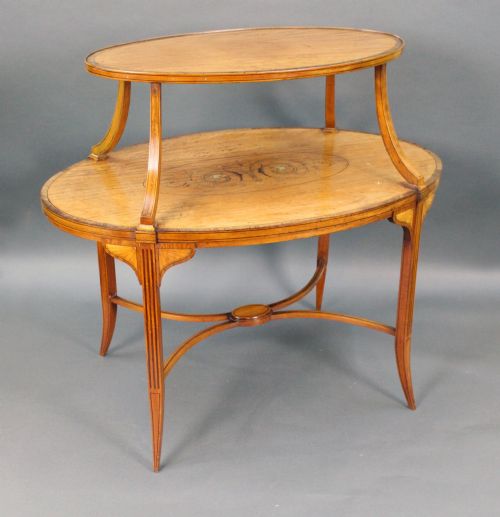
An antique satinwood etagere is a multi-tiered open table used for display, appearing predominantly in Victorian, Edwardian, and nineteenth-century forms across these listings. Buyers frequently encounter oval or rectangular two-tier tables, alongside occasional tray tables and corner cabinets that utilise the same stepped architecture.
The aesthetic leans heavily toward Sheraton Revival and Edwardian interpretations, where slender uprights support stacked shelves intended for porcelain or small decorative objects. These pieces often function as versatile side or console tables in drawing rooms, occupying minimal floor space while offering multiple display surfaces.
Origins span standard English cabinetmaking to French revival pieces and Anglo-Indian Colonial production, bringing varied inlay and timber combinations to the basic tiered form. Most examples on this page date from the nineteenth century into the early twentieth century, reflecting the peak periods of decorative marquetry.
How they were made
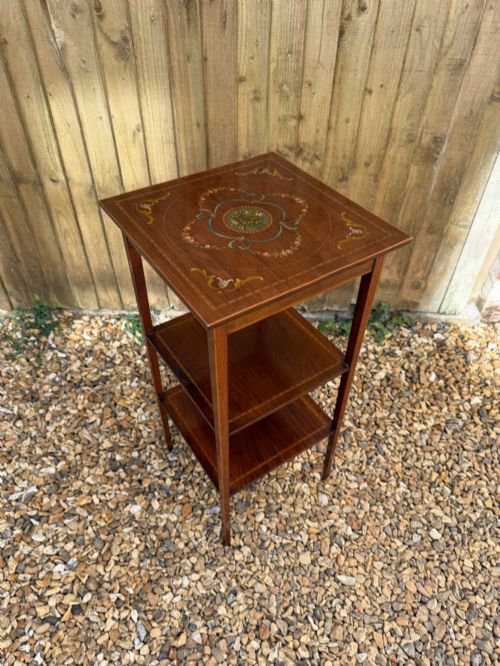
Makers constructed these etageres using a primary carcass of mahogany, rosewood, or walnut, overlaid with figured satinwood veneers to create pale, reflective surfaces. Cabinetmakers then applied delicate stringing, floral marquetry, and bone or ebony inlays to define the borders and central panels of the shelves.
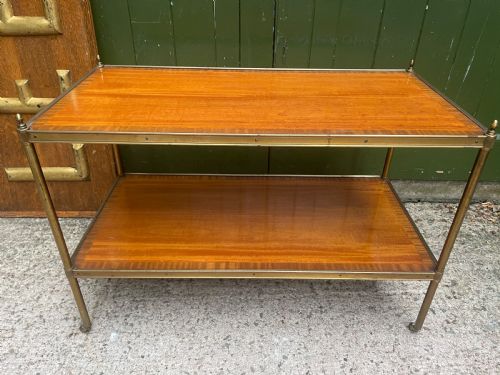
Structural joints relied on traditional cabinet techniques, paired occasionally with brass frames or brass-framed components on low rectangular formats. Finishers polished the timber to a smooth lustre, protecting the intricate grain patterns and inlaid motifs without obscuring the natural yellow-gold tones of the satinwood.
Antique Satinwood Etagere Retail Price Guide 2026
Typical asking prices for satinwood etagere among the pieces listed under this phrase on Sellingantiques today, from the lower quarter to the upper quarter. They describe what is for sale here now, not the wider market.
Bone and ebony inlays catch the afternoon sun, proving that nineteenth-century artisans loved a bit of subtle flash just as much as we do.
What varies in quality
Quality rests primarily in the crispness of the marquetry inlay and the choice of timber veneers, where tightly figured grain commands greater visual presence. Subtle distinctions appear in the fineness of the turned supports, the precision of the edge banding, and the harmony between the satinwood and contrasting woods like ebony or rosewood.
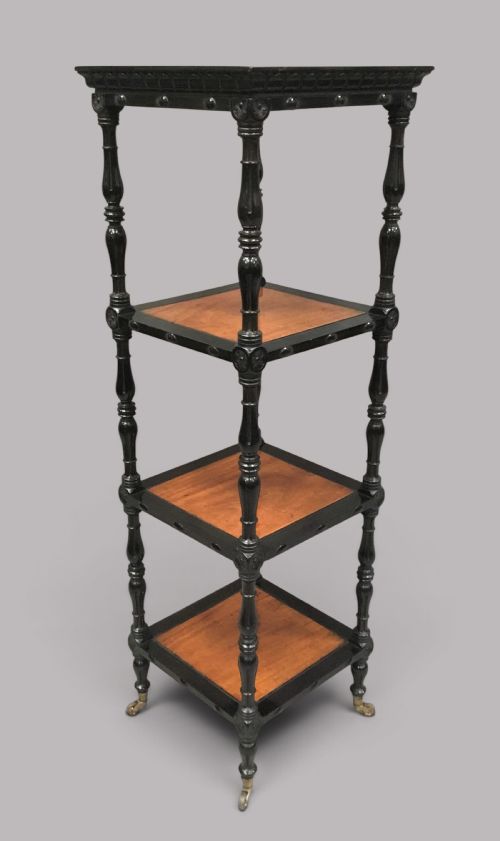
Construction integrity also separates standard utility pieces from finer salon furniture, visible in the stability of the tier joints and the depth of the hand-applied polish. Pieces bearing intricate floral marquetry or specific regional flourishes, such as Celonese ebony accents, demonstrate higher artisan investment.
Donald Ross
The Antique Satinwood Etagere Glossary
- Satinwood
- A dense tropical timber yielding a lustrous, yellow-gold grain. It forms the primary decorative veneer on these tiered display pieces.
- Etagere
- A set of open shelves or tiers designed for displaying ornaments. The form developed in France before being adopted by British cabinetmakers.
- Marquetry
- The art of applying decorative veneer pieces to a structure to form pictorial or geometric patterns. Floral motifs appear frequently in these listings.
- Sheraton Revival
- A late nineteenth and early twentieth century design movement drawing on the lighter neoclassical furniture forms of Thomas Sheraton. This style informs many Edwardian etageres.
- Whatnot
- A nineteenth century term for an open tiered shelving unit used for books or ornaments. It shares a similar function with the etagere.
Antique Satinwood Etagere: Frequently Asked Questions
What is an antique satinwood etagere used for?
These tiered pieces serve as display surfaces for small decorative objects, porcelain, and books in sitting rooms or hallways. Their open shelves provide multiple levels for arrangement without blocking light or overwhelming a room.
Historically, they functioned as mobile or fixed side tables for drawing room collections. Today, buyers use them to add reflective timber tones and practical surface area to period or eclectic interiors.
How do I distinguish Edwardian from Victorian etageres?
Victorian examples often display heavier timber combinations, bolder marquetry, and darker secondary woods like rosewood or walnut. They lean toward rich, substantial forms.
Edwardian pieces, particularly those in the Sheraton Revival style, tend to present lighter proportions with refined satinwood veneers and delicate inlay work. The overall aesthetic prioritizes airiness and bright neoclassical restraint.
Are these pieces stable enough for daily use?
Most tiered tables are constructed to hold decorative items rather than heavy loads, relying on slender uprights for their elegant silhouette. Gentle placement of lamps or ceramics suits their original structural design.
Placing the etagere away from heavy foot traffic areas and direct heat sources preserves the timber joints and veneer stability. Routine dusting keeps the polished satinwood and inlay secure.
What materials accompany satinwood on these tables?
Mahogany, rosewood, and walnut frequently form the structural carcass or contrasting banding on these pieces. Ebony and bone appear in precise stringing and geometric inlay details.
Certain examples incorporate brass frames or glass elements, particularly on low rectangular formats from the early twentieth century. These mixed materials enhance the decorative contrast of the tiered shelves.