


Antique Sapphire Jewellery Set
An antique sapphire jewellery set brings together rich blue stones and glittering diamonds in matched platinum, gold, or silver mountings from past centuries.
Antique Sapphire Jewellery Set
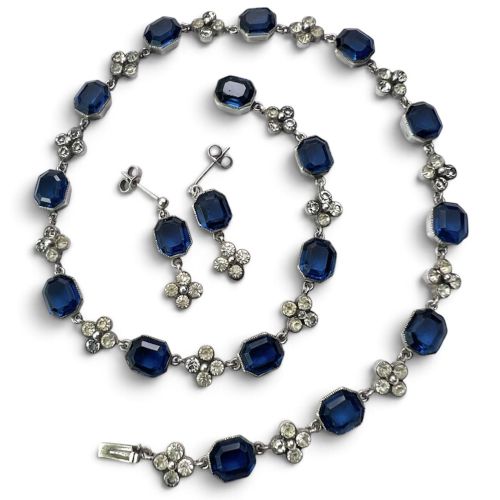
An antique sapphire jewellery set comprises matched or coordinated pieces such as earrings, necklaces, rings, and bracelets incorporating blue corundum stones. The pieces found here span the Victorian, Edwardian, and Art Deco eras, alongside mid-century examples.
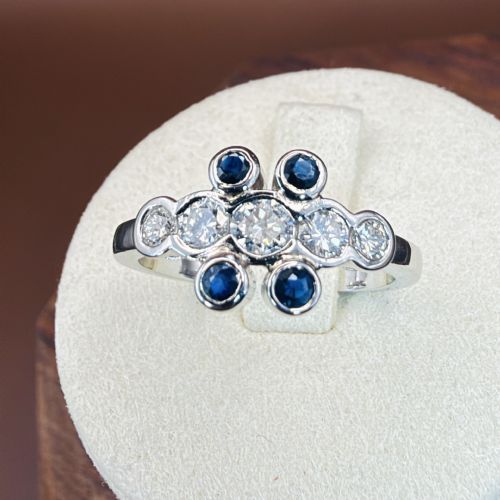
Buyers encountering this search phrase often discover paired earring and necklace sets, alongside multi-stone clusters and targeted suites incorporating diamonds. These matched assemblies reflect the prevailing design sensibilities of their respective periods, from geometric Art Deco configurations to romantic Victorian motifs.
Materials and construction methods
Goldsmiths utilised 18ct yellow gold, 18ct white gold, platinum, and silver to mount sapphires alongside old-cut diamonds, rubies, and pearls. Platinum gained prominence during the Edwardian and Art Deco periods for its strength and delicate appearance.
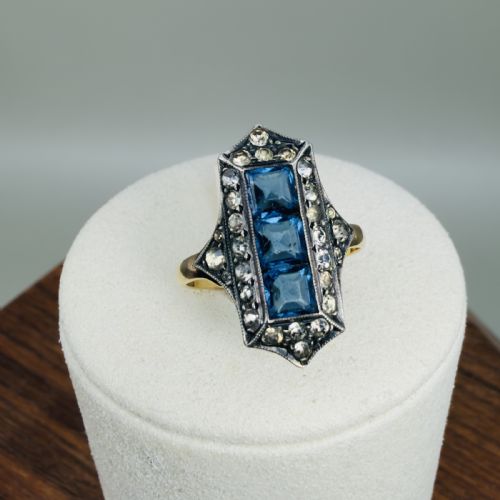
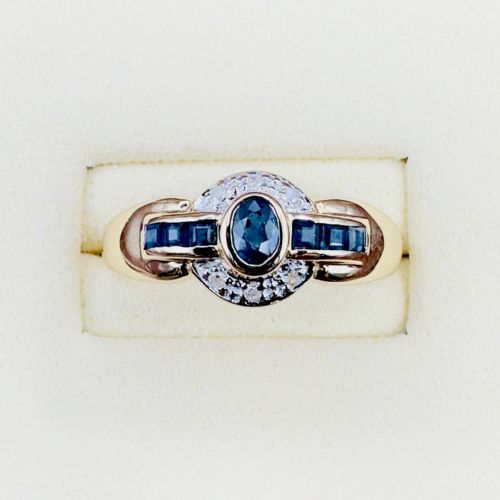
Stone settings rely on traditional techniques such as claw, bezel, and cluster arrangements, often paired with hand-carved or pierced metalwork. Paste stones also appear in period pieces as vibrant alternatives to diamonds.
Distinguishing quality across pieces
Quality rests upon the natural origin and saturation of the sapphires, with Burmese and Ceylon stones holding particular significance. The cut, clarity, and brilliance of accompanying diamonds also dictate the caliber of a set.
The precision of metal fabrication, preservation of original hallmarks, and structural integrity of delicate settings separate standard items from superior examples.
The Antique Sapphire Jewellery Set Glossary
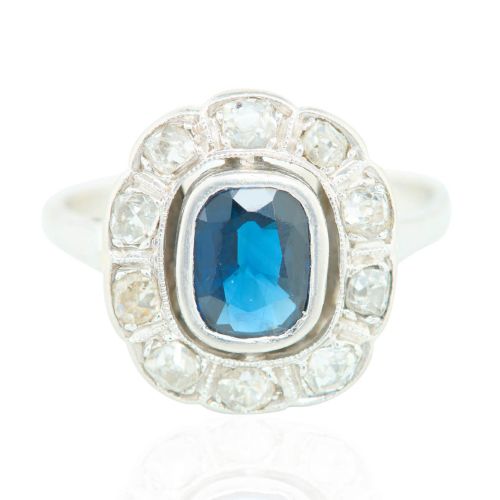
- Cluster ring
- A central stone surrounded by a border of smaller gems. This configuration maximises visual impact and light reflection.
- Old-cut diamond
- A hand-faceted diamond cut before modern machinery standardised proportions. These stones exhibit smaller tables and distinctive culets.
- Gypsy ring
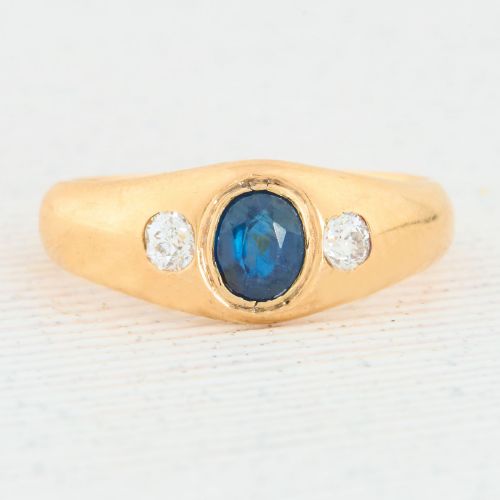
- A band where gems are flush-set directly into the metal. The style gained popularity during the Victorian era.
- Trilogy ring
- A three-stone ring representing the past, present, and future. Central stones are typically flanked by two matching gems.
- Paste
- Hand-cut lead glass used as a gemstone substitute in historical jewellery. It offers high refractive index and vibrant colour.
Antique Sapphire Jewellery Set: Frequently Asked Questions
How do I identify period styles?
Period styles are recognised through characteristic mounting techniques, metal choices, and gemstone cuts. Victorian pieces often feature rich yellow gold and romantic motifs, whereas Edwardian items favour platinum and lace-like openwork.
Art Deco creations introduce geometric lines and sharp contrasts. Examining hallmarks and overall construction helps confirm the era of manufacture.
Are sapphires always blue?
Sapphires occur in a wide spectrum of colours beyond traditional blue, including pink, orange, and colourless varieties. Historical pieces frequently incorporate these varied hues, particularly within multi-gem clusters and cocktail rings.
Natural unheated stones and synthetic variations both appear in antique and vintage items.
How should I care for antique sets?
Antique sets require gentle handling due to their age and delicate settings. Cleaning should be restricted to warm soapy water and a soft brush, avoiding harsh ultrasonic cleaners that might dislodge fragile stones.
Storage in individual lined compartments prevents metal scratching and stone abrasion between wearings.
What metals were used historically?
Jewellery makers utilised various precious metals depending on the prevailing fashion and decade of production. Yellow gold dominated Victorian workshops, while platinum became the preferred medium for Edwardian and Art Deco jewellers.
Silver and white gold also appear frequently, particularly in combination settings that highlight contrasting metal tones.