

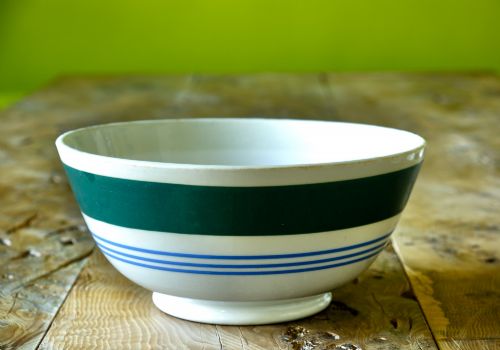


Antique Salad Bowl
An antique salad bowl brings tactile warmth to the table, combining functional craftsmanship with enduring aesthetic appeal from centuries past.
Antique Salad Bowl
The objects listed range from sturdy oak treen and glazed earthenware to cut crystal paired with silver plate. Forms vary from rustic dairy vessels and mixing bowls to formal presentation pieces equipped with matching servers.
Origins stretch from rural English farmhouses to established urban potteries, reflecting both everyday utility and refined dining customs. Each specimen demonstrates the specific material choices and stylistic preferences of its era.
Materials and construction methods
Maker techniques rely heavily on the natural properties of timber, ceramic and glass, shaped by traditional turning, moulding and cutting methods. Oak and sycamore items demonstrate historic woodworking skills, often leaving visible tool marks on turned treen bodies.
Ceramic examples utilise earthenware and stoneware bodies finished with detailed glaze applications, including majolica coloration and banded pottery designs. Metal components incorporate sterling silver and silver plate, frequently applied as rims, mounts or fitted servers to complement glass and wood.
Antique Salad Bowl Retail Price Guide 2026
Typical asking prices for salad bowl among the pieces listed under this phrase on Sellingantiques today, from the lower quarter to the upper quarter. They describe what is for sale here now, not the wider market.
Materials documented across the inventory include oak, sycamore, sterling silver, silver plate, stoneware, earthenware, and cut crystal.
Understanding quality differences
Quality manifests in the integrity of the material and the precision of the execution, distinguishing standard utilitarian wares from presentation pieces. Superior examples exhibit expert throwing or turning alongside well-preserved surface finishes and crisp decorative detailing.
The presence of original associated elements, such as matched silver servers or contemporary silver mounts, elevates a piece's historical completeness. Material purity, such as high-grade sterling silver fittings versus standard silver plate, also distinguishes the upper tier.
T G Green Pottery·Doulton Lambeth
The Antique Salad Bowl Glossary
- Treen
- Small handmade wooden objects of domestic use. These pieces show traditional turning and carving techniques.
- Majolica
- A type of earthenware glazed with opaque tin enamel and brightly coloured lead glazes. It became popular during the nineteenth century for decorative tableware.
- Stoneware
- A robust, vitrified ceramic fired at high temperatures. It resists liquid absorption without requiring a traditional glaze.
- Silver Plate
- A base metal coated with a thin layer of silver through electroplating or older mechanical methods. It provides the appearance of solid silver at a different cost point.
- Cut Crystal
- Clear glass shaped by blowing and decorated with geometric facets cut by abrasive wheels. This technique enhances brilliance and light refraction.
Antique Salad Bowl: Frequently Asked Questions
Can I still serve food in ceramic bowls?
Most glazed ceramic and glass vessels remain suitable for serving dry or cold foods. Check the interior glaze for stability and historic repairs before putting them into regular use.
Avoid serving highly acidic dressings in porous earthenware if the glaze shows hairline cracks. Modern usage should respect the age and material sensitivity of each item.
How do I identify a Victorian ceramic bowl?
Victorian ceramics often feature distinct majolica glazes, heavy earthenware bodies or factory stamps specific to nineteenth-century potteries. Stylistic motifs lean towards naturalistic leaf and fruit patterns.
Examine the base for impressed marks or registry numbers that indicate the decade of production. Stylist cues like vibrant coloured bands also point towards this era.
What is the difference between treen and pottery?
Treen encompasses items turned or carved exclusively from wood, such as sycamore dairy bowls and oak vessels. Pottery includes fired ceramic bodies made from clay, stoneware or earthenware.
Wood offers tactile warmth and lightweight utility, while ceramic provides glazed surfaces impervious to liquids. Both materials served essential roles in historic domestic kitchens.