


Antique Ruby Wine Glasses
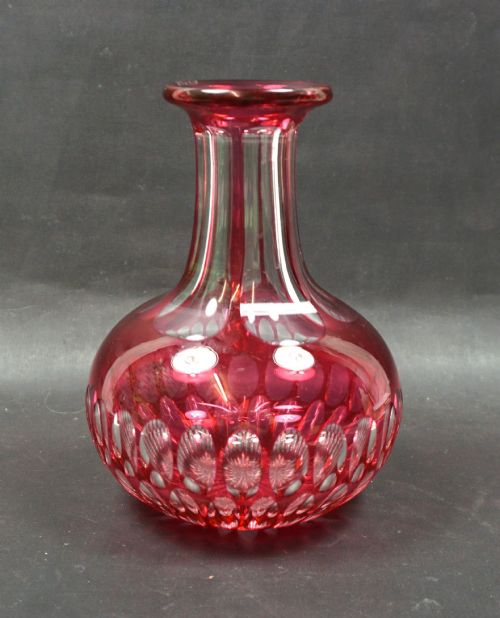
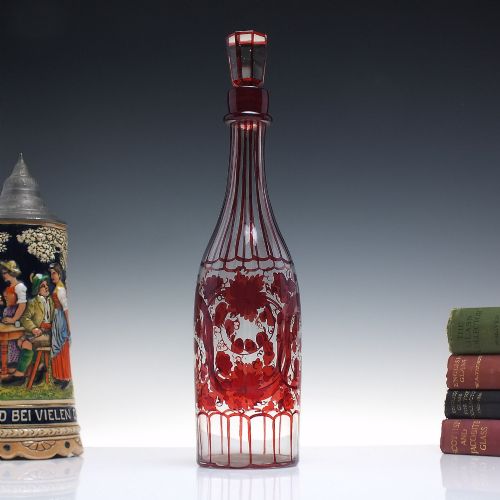
Antique ruby wine glasses are deep red drinking vessels and matching decanters that bring rich colour to a traditional table setting.
Antique Ruby Wine Glasses
The objects span periods from the mid nineteenth century through to the early twentieth century, with English and Bohemian origins appearing frequently. You will readily find sets of hand blown wine glasses alongside larger matching serving bottles and decanters.
Victorian examples dominate the selection, often displaying rich cranberry tones and engraved decoration depicting vines or birds. These pieces serve both a decorative display purpose and a functional role on the dining table.
Materials and technique
Makers utilised glass as the primary medium, frequently employing cranberry glass and ruby glass alongside clear glass and cut crystal. Overlay techniques involved fusing a layer of red glass over a clear crystal base before cutting through the surface.
Craftsmen shaped the vessels through hand blowing and hand painting, occasionally mounting pieces with sterling silver or incorporating enamel details. Engraving was executed by hand to reveal the clear crystal beneath the red overlay.
Some items combined glass with silver plate elements, particularly on decanters and serving jugs intended for formal hospitality.
The listings span the Victorian and Edwardian periods, featuring cranberry glass, clear glass, and silver plate.
Assessing quality
The depth and consistency of the red colouration across a set indicate the standard of the glasshouse production. Rich cranberry hues and even saturation separate superior examples from standard commercial output.
The crispness and precision of hand engraved motifs, such as fruiting vines or birds, demonstrate the skill of the artisan. Deep wheel cutting through an overlay layer requires considerable dexterity compared to surface etching.
Completeness within a set of wine glasses and the matching quality of associated decanters or carafes elevate the desirability of the grouping.
The Antique Ruby Wine Glasses Glossary
- Cranberry glass
- A transparent pinkish-red glass coloured with gold chloride. It became immensely popular during the Victorian period for tableware and decorative items.
- Ruby glass
- A deep red glass produced using copper or gold oxides. It appears frequently in nineteenth century decanters and stemware.
- Overlay
- A technique where a layer of coloured glass is fused over a base of clear glass. Subsequent cutting removes parts of the coloured layer to expose the clear crystal beneath.
- Claret jug
- A large serving vessel specifically designed for pouring red wine at the dining table. They often feature silver mounts or handle attachments.
- Hook wine glass
- A traditional German or Bohemian glass style characterised by a studded or textured bowl above a tall stem. These pieces often appear in coloured glass.
Antique Ruby Wine Glasses: Frequently Asked Questions
What is cranberry glass?
Cranberry glass is a transparent red glass coloured using gold chloride during the melting process. It gained widespread popularity during the Victorian era for decorative tableware.
Craftsmen utilised this material to create wine glasses, decanters, and finger bowls that added vibrant colour to formal dining rooms.
How do I care for antique wine glasses?
Antique ruby wine glasses require gentle hand washing in warm water using a mild detergent. You should avoid sudden temperature changes to protect the historic glass.
Storing them securely away from edge hazards prevents rim chips and preserves the integrity of hand blown stemware.
Are these glasses safe to use?
Most nineteenth century glass is chemically stable and suitable for serving wine during special occasions. Hand washing ensures the preservation of any delicate enamel or gilt detailing.
You should inspect individual pieces for historical damage before deciding to use them for dining.
How do I date antique decanters?
Dating involves examining the pontil mark on the base, the style of the stopper, and the manufacturing technique. Victorian and Edwardian examples often feature polished pontils and specific decorative motifs.
Comparing the form and engraving style with dated examples helps establish the likely period of manufacture.