






Antique Ruby Decanter
An antique ruby decanter brings rich red glass and silver mounts to the table, catching the light with Victorian and Edwardian brilliance.
Antique Ruby Decanter
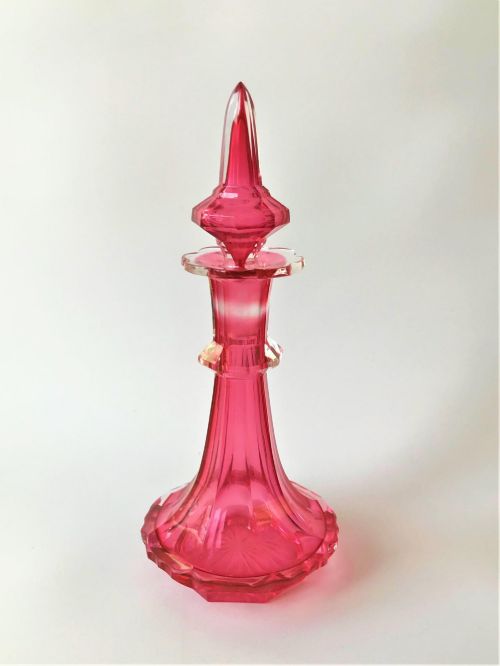
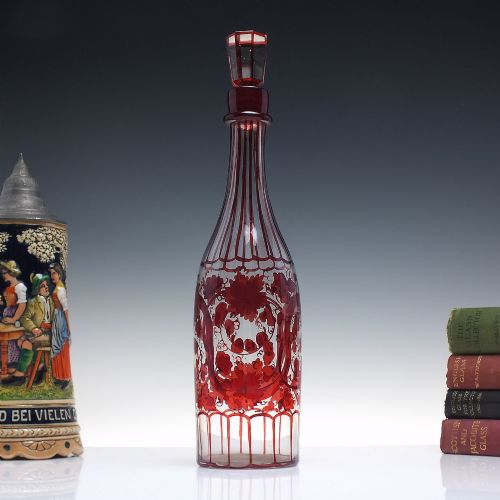
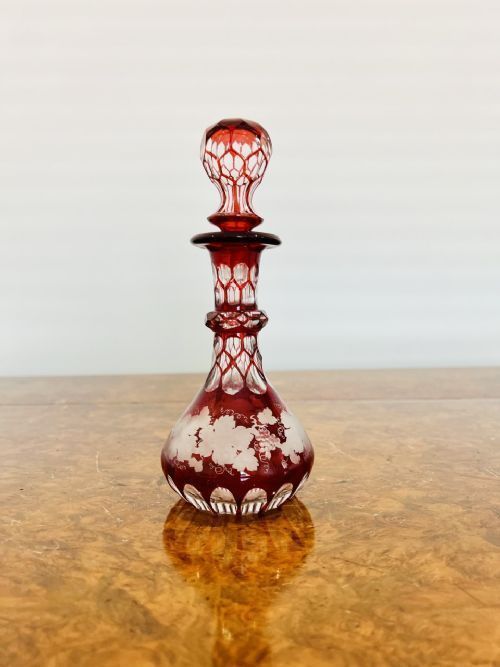
An antique ruby decanter is a vessel designed for holding and serving spirits or wine, formed primarily from deep red coloured glass. The selection centres on Victorian and Edwardian pieces, alongside earlier 19th Century examples.
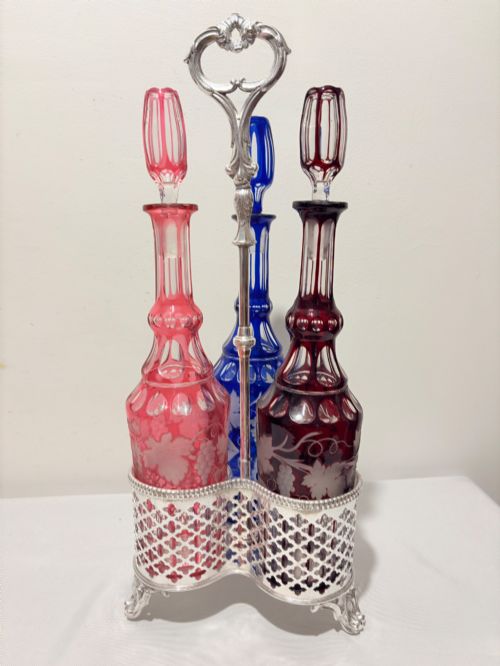
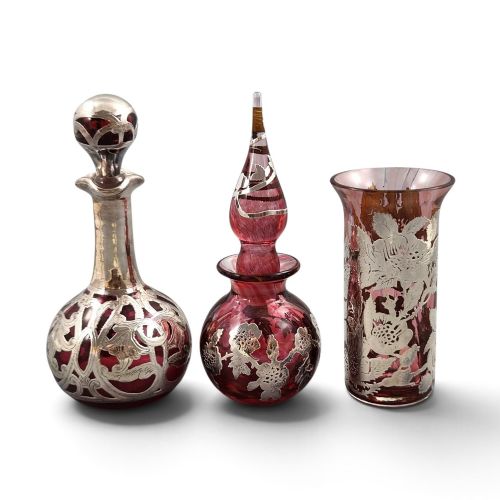
Most items appear as single bottles or matched pairs, ranging from straightforward serving flasks to complex claret jugs and decanter stands. Many incorporate clear glass stoppers, while others feature sterling silver mounts or silver plate.
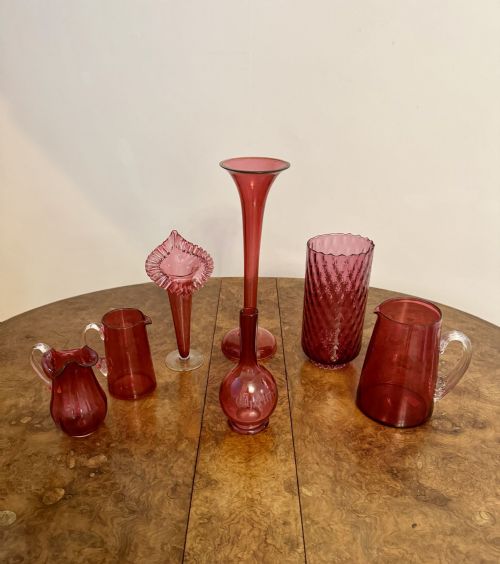
Buyers also encounter related items such as spirit perfume bottles, scent bottles, and overlay glass vessels. English workshops and Bohemian makers dominate the origins of these deep red glass pieces.
How they were made
Glassmakers created the characteristic red tone through the addition of gold salt additive into the molten mix, yielding cranberry glass or ruby glass. Artisans then shaped the vessels by hand, often applying clear glass handles and matching stoppers.
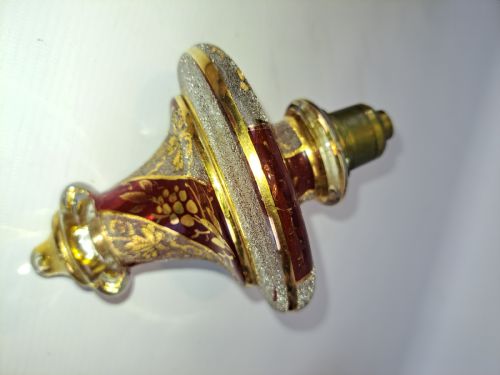
Decoration involved several skilled techniques, including wheel engraving, hand painting, etching, and gilding. Overlay glass methods allowed craftsmen to cut through an outer red layer to reveal clear glass beneath, forming detailed patterns of vines and birds.
Antique Ruby Decanter Retail Price Guide 2026
Typical asking prices for ruby decanter among the pieces listed under this phrase on Sellingantiques today, from the lower quarter to the upper quarter. They describe what is for sale here now, not the wider market.
English and Bohemian workshops produced these decanters, utilising techniques like glass overlay, hand painting, etching, and engraving.
What varies in quality
Quality rests in the depth and evenness of the coloured glass, particularly where gold salt additives create rich cranberry hues. The crispness of wheel engraving on overlay pieces and the delicacy of surface gilding also separate standard items from superior works.
Integration with metalwork marks another distinction, as pieces mounted in sterling silver or fitted into intricate silver plate stands demonstrate greater ambition. The survival of original, matching stoppers completes the integrity of the vessel.
The Antique Ruby Decanter Glossary
- Cranberry glass
- A transparent pinkish-red glass created by adding gold chloride to the molten batch. It became extremely popular during the Victorian period.
- Ruby glass
- A deep red glass coloured with copper or gold, sharing similarities with cranberry glass. The terms often overlap in 19th Century descriptions.
- Overlay glass
- A technique where a layer of coloured glass is fused over a base of clear glass. Artisans cut away portions of the outer layer to expose the contrasting glass underneath.
- Sterling silver
- A silver alloy containing 92.5 percent pure silver by mass. It appears on mounts and collars of Edwardian decanters.
- Claret jug
- A large serving vessel designed specifically for pouring red wine. These often feature elaborate glass handles and silver mounts.
Antique Ruby Decanter: Frequently Asked Questions
Can I use these decanters for serving wine?
These historical vessels function well for serving wine and spirits provided the interior remains clean and free from old residue. Inspect the inner base for staining before pouring.
Hand wash the vessel immediately after use to protect the coloured glass and any delicate surface engraving from prolonged exposure to wine acids.
How do I date a ruby decanter?
Examine the base for pontil marks, manufacturing style, and overall weight, which help distinguish 19th Century production methods. Silver mounts frequently carry hallmarks that provide precise assay years.
Stylistic cues such as heavy wheel-engraved vines point towards mid-Victorian English design, while lighter floral gilding often indicates Edwardian preferences.
What is the difference between ruby and cranberry glass?
Cranberry glass specifically describes a lighter, pinker shade achieved through gold salt additives, widely favoured by Victorian glassmakers. Ruby glass typically encompasses a broader spectrum of deeper red tones.
Both materials share similar production roots in 19th Century English and Bohemian kilns, though collectors use the terms to describe subtle variations in shade.