
Antique Repousse Silver
Antique repousse silver brings together hammered relief metalwork and functional objects from the Georgian, Victorian, Edwardian, and later periods.
Antique Repousse Silver
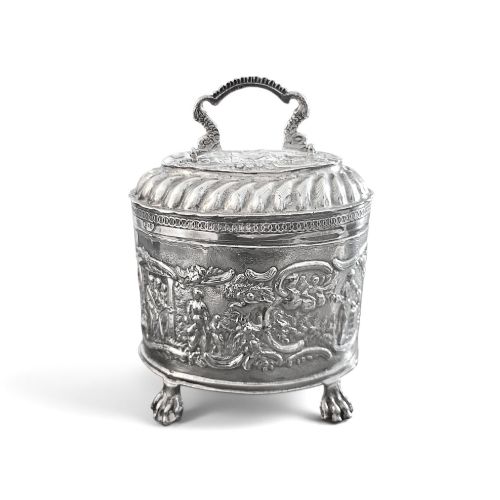
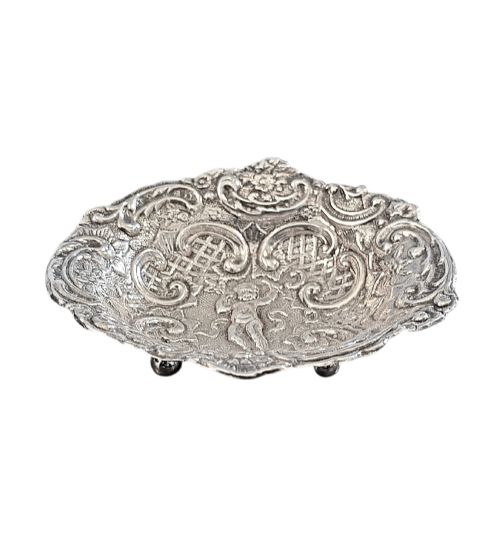
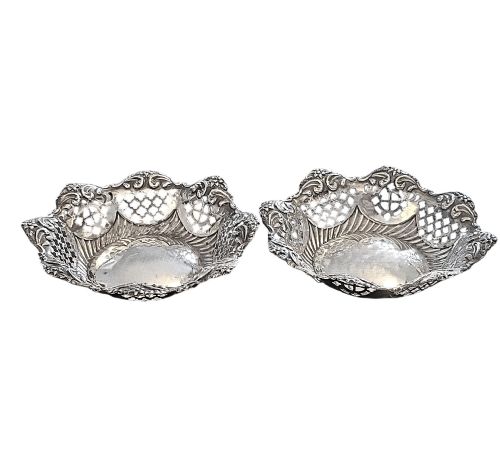
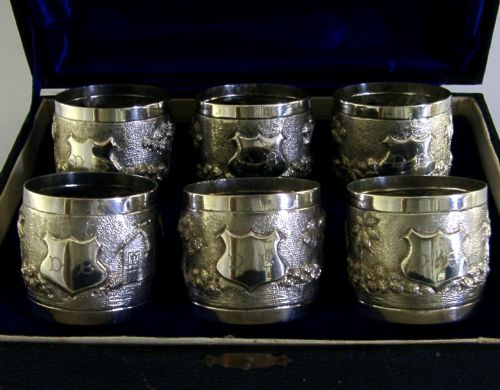
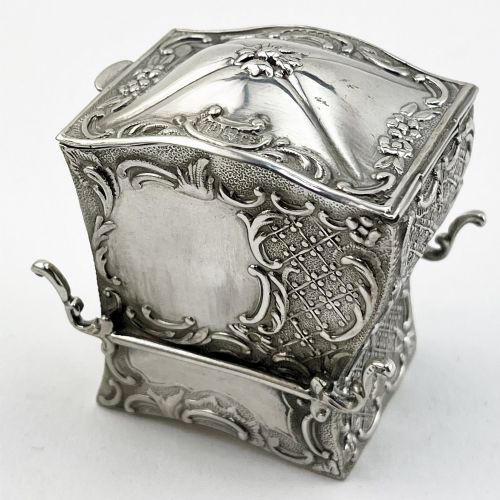
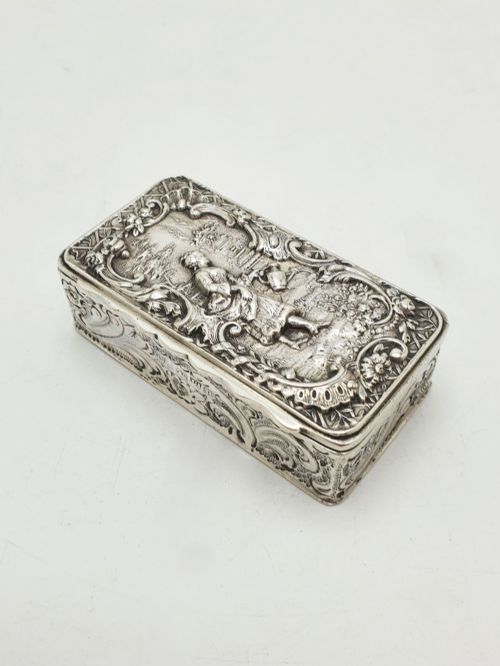
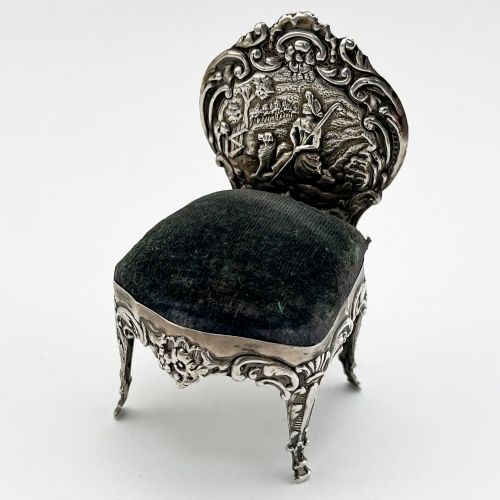
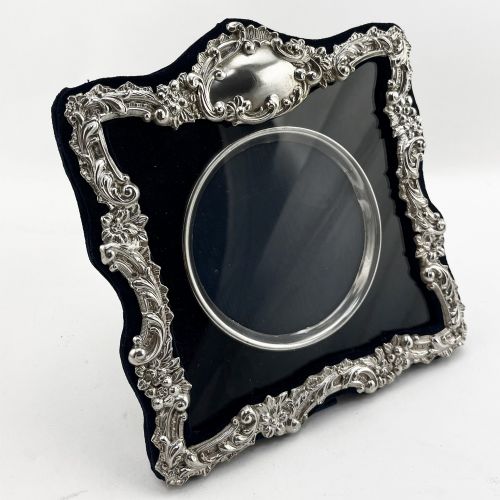
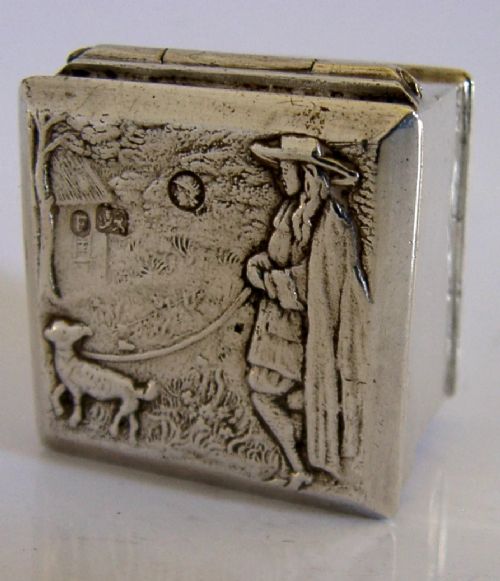
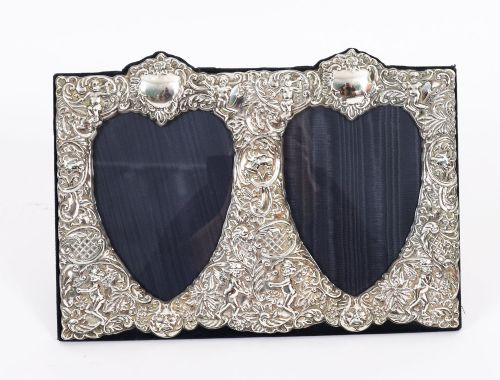
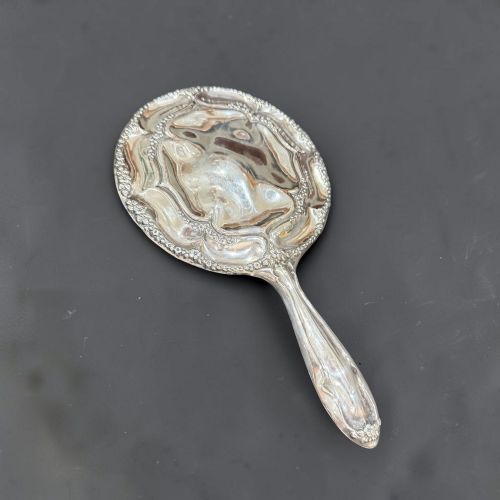
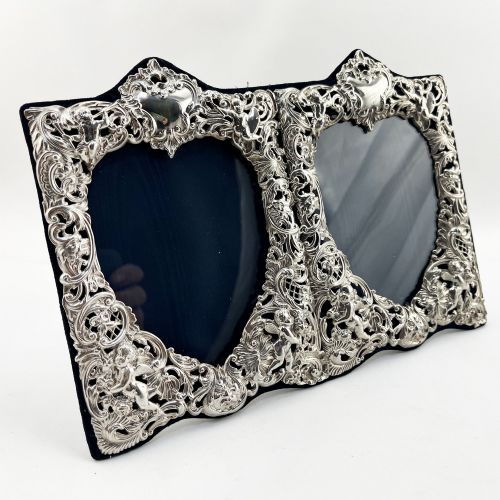
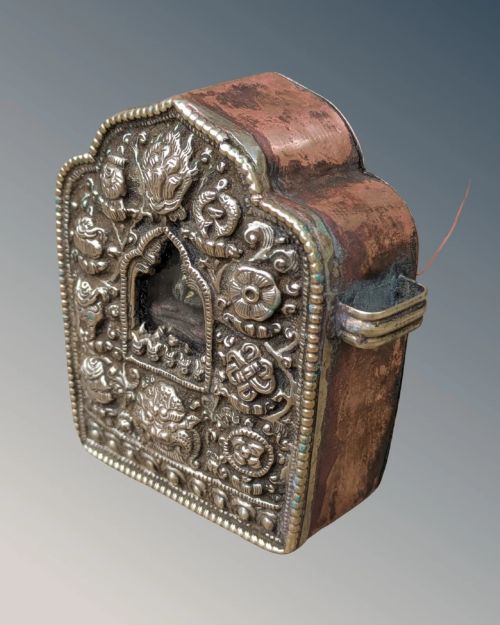
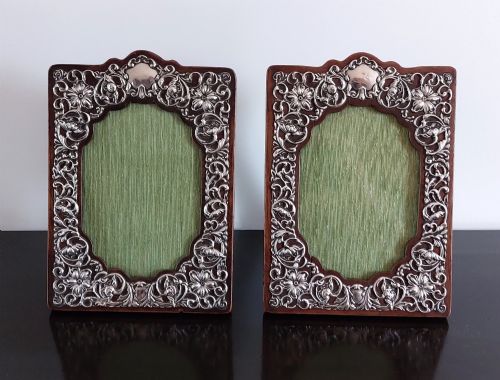
When searching for antique repousse silver, buyers encounter functional and decorative vessels including tea caddies, snuff boxes, photo frames, trinket boxes, and decorative bowls.
The objects span multiple origins and stylistic revivals, taking forms such as German table boxes, Dutch caddies, Chinese export bowls, and English domestic silver from the nineteenth and early twentieth centuries.
Victorian and Edwardian examples predominate on this page, alongside Georgian pieces and international items from Ottoman, Indian, and East Asian makers.
Materials and technique
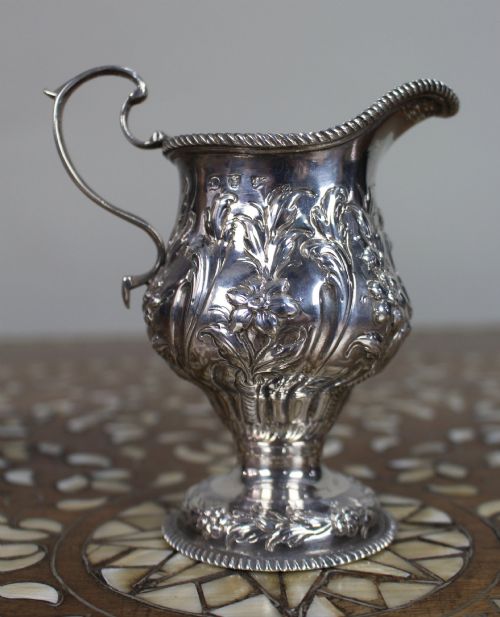
Makers utilised sterling silver, solid silver, and white metal, often hammering the metal from the reverse side to create raised ornamentation.
Internal gilt treatments appear in boxes, while secondary materials such as velvet, wood, glass, and silk line photo frames and caddies.
Dogs walking and cherubs peer out from the hammered metal surfaces of these nineteenth-century boxes.
What varies in quality
The crispness of the hammered relief defines the visual impact, separating sharply defined motifs from worn or shallow embossing.
Design complexity and structural integrity, from hinged boxes to weighted ewers, distinguish standard domestic items from finely detailed continental and export silver.
William Aitken·Mitchell Bosley And Co·William Barrett II·William Comyns·Henry Matthews
The Antique Repousse Silver Glossary
- Repousse
- Metalworking technique where the design is hammered into relief from the reverse side. This creates three-dimensional patterns across boxes, bowls, and frames.
- Sterling silver
- An alloy containing a high standard of pure silver used widely by British and international silversmiths. It provides durable substance for functional domestic items.
- Gilt
- A thin layer of gold applied to the interior surface of silver objects such as snuff boxes. This protects the metal from corrosive contents.
- White metal
- An alloy grouping used for certain Asian and continental export items that lack standard British hallmarks. It covers unhallmarked silver-coloured compositions.
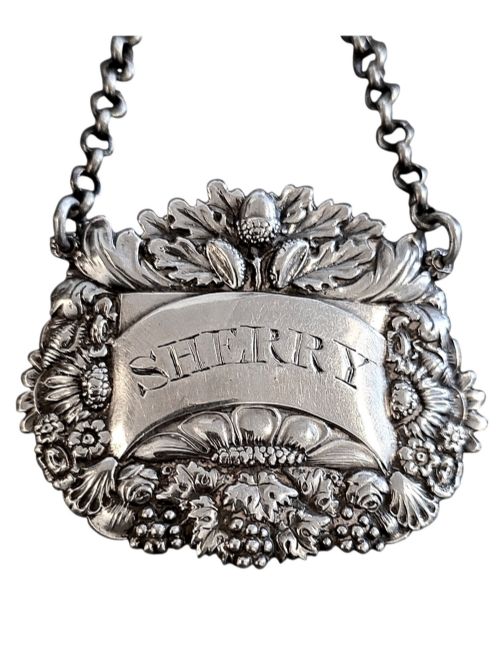
- Decanter label
- A small silver tag hung by a chain around the neck of a decanter to identify the contents. Examples often feature decorative borders.
Antique Repousse Silver: Frequently Asked Questions
How do I clean antique silver?
Use a soft cloth and specialised silver cleaner designed to remove tarnish without harming the raised metalwork.
Avoid abrasive brushes that can flatten fine details in the hammered design.
What is a tea caddy?
A tea caddy is a lidded container originally built to store loose tea leaves safely away from light and moisture.
Many surviving examples feature decorative relief patterns and fitted lids.
How can I date my silver?
British pieces carry hallmarks indicating the assay office, date letter, and maker's mark.
International items rely on stylistic clues, stamps, and comparative records.
Where were these items made?
The selection includes items produced across Britain, Germany, the Netherlands, China, India, and the Ottoman Empire.
Each region applied distinct regional motifs and metalworking methods to domestic objects.